
24/7 Customer Support

Free returns

Same-day & Next-day Delivery

Quality Guaranteed

Unlock Your Welcome Offers: FREE Delivery | Up to 80% OFF | Free 30-day JoyPlus trial
Download the APP
A flat car battery is more than an inconvenience; it’s a day disrupted. Whether you're facing a cold morning commute, returning to your car at the airport or stranded in a remote car park, that tell-tale clicking sound from the ignition is a moment of pure frustration. While a car jump starter power pack offers a quick and self-reliant solution, the market is flooded with options that can be confusing.
As a Joybuy Product Recommendation Officer, my role is to help you cut through the clutter. Many drivers end up with a device that fails when they need it most. Let's look at the common pitfalls to avoid before you buy.
To ensure you get a dependable emergency car starter, focus on these three non-negotiable specifications.
Instead of focusing only on the peak number, look for the manufacturer's stated engine compatibility. This is a far more practical measure of a jump starter's capability.
A modern 12V jump box should be more than just a battery. Look for a model with a "smart clamp" system that includes a clear set of built-in safety functions. These are not optional extras; they are essential for protecting both you and your vehicle. Key features to verify include:
A durable, robust casing is important for a tool that will live in your car boot or glove box. Beyond that, consider what other functions add real value. Many units double as a portable car battery booster and power bank for charging phones and tablets via USB. Some also include a built-in LED torch with steady, strobe and SOS modes, which is incredibly useful for nighttime emergencies.
Here are a few options that align with specific UK driver profiles, chosen because they address the common pitfalls and deliver on the features that matter.
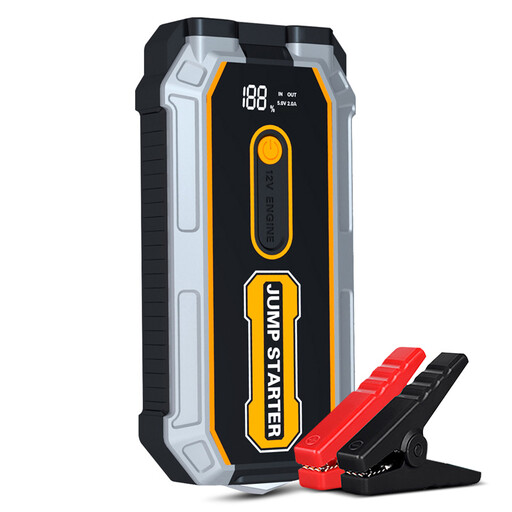
Why This Fits Their Persona: Ideal for drivers of standard petrol or smaller diesel cars in the UK. It's compact enough for the glove box and provides ample power for everyday vehicles without the cost of a high-end unit.
It offers a realistic 1200A peak current, suitable for most cars, avoiding the trap of overpaying for unnecessary power based on inflated marketing numbers.
Features a clear LCD screen to monitor remaining battery, so you're never caught out. Also functions as a USB power bank for your devices.
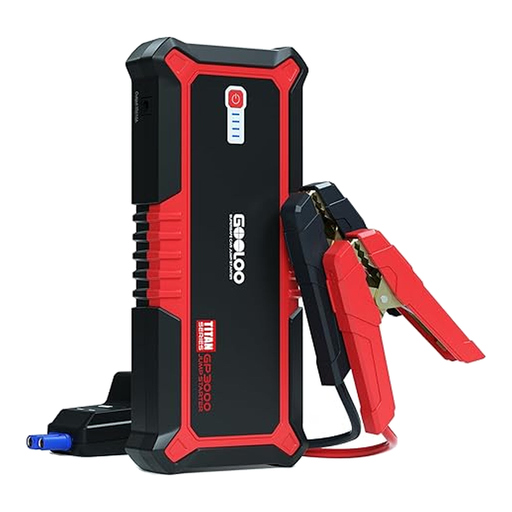
Why This Fits Their Persona: Perfect for owners of large SUVs, vans or trucks with big petrol or diesel engines. This provides the high cranking power needed for a reliable start, even for deeply discharged batteries.
It backs up its 3000A jump starter claim with clear engine size ratings (9L/7L) and a "BOOST" function for dead batteries, providing genuine power, not just a marketing number.
Features 10 layers of safety protection, including spark-proof clamps and reverse polarity alerts, ensuring safe use with high-value vehicles.
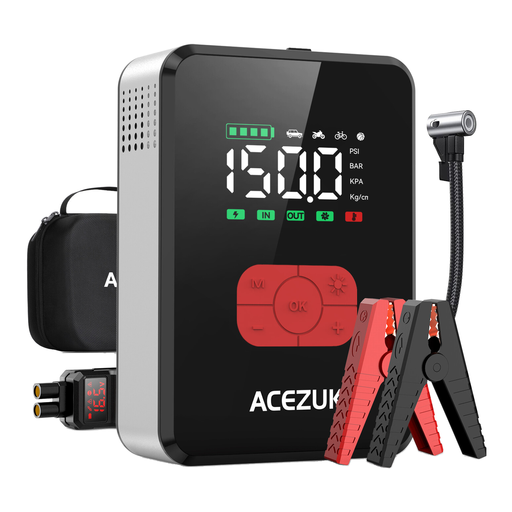
Why This Fits Their Persona: For the driver who wants a complete roadside emergency tool. This is more than a jump starter; it's a solution for flat batteries and flat tyres, making it ideal for campers, boaters and long-distance travellers.
Unlike basic models with a weak torch, this unit integrates a genuinely useful 150 PSI air compressor, consolidating two essential tools and saving space and money.
The smart air compressor features auto shut-off and preset modes for cars, bikes and more, making tyre inflation simple and precise.
We have compiled a complete, real-time list of products that fully satisfy these strict selection criteria and UK safety regulations.
To ensure your lithium battery booster is ready for an emergency, it's good practice to check its charge level and top it up every 3 to 4 months. Storing it in extreme temperatures (like a very hot car in summer) can affect battery life, so a more frequent check is wise in those conditions.
Modern lithium-ion jump starters are significantly smaller, lighter and more portable than the old, heavy lead-acid "jump boxes". They also hold their charge for much longer and often include extra features like USB ports and LED lights, making them a more versatile portable car battery booster for the average driver.
No. Once your vehicle's engine has started, you should disconnect the jump starter clamps from the battery within 30 seconds. Leaving it connected can damage the jump starter's internal battery and potentially your car's electrical system. Always follow the manufacturer's specific instructions.