
24/7 Customer Support

Free returns

Same-day & Next-day Delivery

Quality Guaranteed

Unlock Your Welcome Offers: FREE Delivery | Up to 80% OFF | Free 30-day JoyPlus trial
Download the APP
A flat battery is more than an inconvenience; it’s a day-disrupting event that always seems to happen at the worst possible moment. Whether you're facing a frosty morning commute, returning to your car at the airport or stranded in a remote car park, a dead battery can leave you feeling helpless. While a portable car jump starter seems like the obvious solution, the market is flooded with options, making it difficult to choose a reliable one.
Many drivers invest in a device only to find it fails when needed most. This is often due to a few common but costly purchasing mistakes. Before you buy, be aware of these pitfalls:
To ensure you get a dependable emergency car starter, focus on the specifications that directly impact performance and safety, not just the marketing headlines.
Instead of getting fixated on the peak amp number, look for the manufacturer's stated engine compatibility. This is usually given in litres (L) for both petrol and diesel engines. Diesel engines require significantly more power to start due to their higher compression ratios.
The capacity, measured in milliamp-hours (mAh), primarily indicates how many times you could charge a phone or tablet when using it as a jump starter power bank. While a higher number is good for secondary use, the quality of the battery cells is more critical for its main purpose. Look for units that specify a long standby time (e.g., holding a charge for 3-6 months) to ensure it's ready when you need it.
A reliable jump starter is a smart device, not just a battery. Non-negotiable safety features should include:
A clear indicator system (e.g., a green light for a correct connection) is a practical feature that removes guesswork and enhances safety.
We've identified several pieces of essential vehicle equipment that align with the needs of different UK drivers. Each selection is based on its practical features and how it addresses common user requirements.
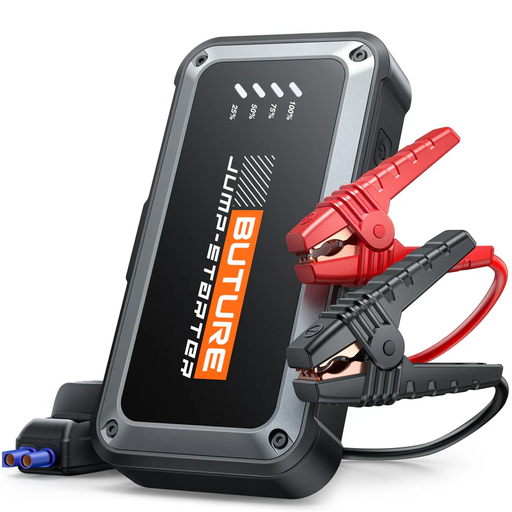
Why This Fits Their Persona: This user needs a powerful, no-fuss solution for any vehicle, from a family SUV to a work van. Reliability is key, as a non-starting vehicle can mean lost time and money. This unit is built for demanding situations.
It moves beyond the "peak amps" trap by clearly stating its capability for large engines (up to 9.0L petrol/8.5L diesel). It also features 10 distinct safety protections, including reverse polarity.
High starting power for a wide range of UK vehicles. Also functions as a 16800mAh power bank and a 4-mode wide-angle emergency LED light, making it a true 3-in-1 tool.
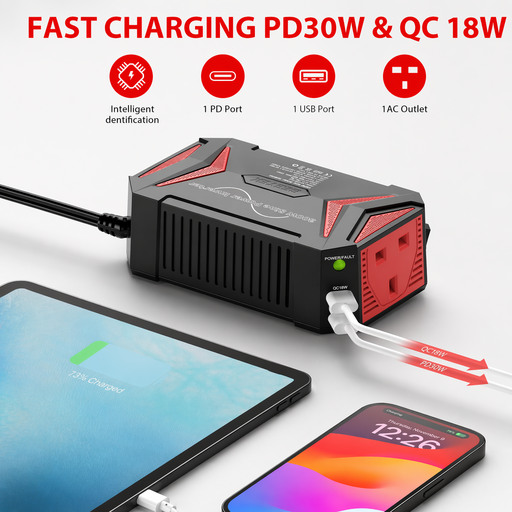
Why This Fits Their Persona: For campers, remote workers or families on long road trips, keeping devices charged is essential. This user needs to power more than just phones, including laptops, cameras or game consoles, directly from their car.
It avoids the trap of cheap, modified sine wave inverters that can damage sensitive electronics. The pure sine wave output provides stable, clean power suitable for laptops and other valuable devices.
Provides a standard 240V AC outlet in your car. Features modern, fast-charging USB ports (PD 30W Type-C and QC3.0) to efficiently power multiple devices simultaneously.

Why This Fits Their Persona: For those whose journeys always include a four-legged companion, being prepared means ensuring their safety and comfort. This user prioritises secure and well-ventilated transport for their pet on any trip.
It avoids the common pitfall of flimsy, poorly-ventilated carriers. The steel frame and honeycomb panels provide stability, while the four-sided mesh ensures optimal airflow for the pet's comfort.
Combines a robust, stable structure with a lightweight, foldable design. Safety features like a lockable zipper and safety belt provide peace of mind, and the washable padding makes it easy to maintain.
We have compiled a complete, real-time list of products that fully satisfy these strict selection criteria and UK safety regulations.
To ensure it's always ready for an emergency, it is good practice to recharge your jump starter every 3 to 6 months, even if you haven't used it. This helps maintain the health and longevity of the internal lithium battery. Always check the manufacturer's specific recommendation.
Yes, but you must choose a model with sufficient power. Diesel engines require a much higher cranking current than petrol engines of a similar size. Look for a jump starter that explicitly states it is compatible with larger diesel engines (e.g., up to 8.0L or more), like a powerful jump starter for diesel van. A standard model designed for small petrol cars will likely fail.
Most modern jump starters are designed to be stored in a vehicle and have a specified operating temperature range (e.g., -20°C to 60°C). However, extreme temperatures can affect battery performance and lifespan. It's advisable to store it in the glove box or boot, out of direct sunlight, to protect it from the most intense heat during summer.