
24/7 Customer Support

Free returns

Same-day & Next-day Delivery

Quality Guaranteed

Unlock Your Welcome Offers: FREE Delivery | Up to 80% OFF | Free 30-day JoyPlus trial
Download the APP
That dreaded silence when you turn the key is a feeling most UK drivers know all too well, especially on a frosty morning. A flat battery can ruin your day, leading to missed appointments and expensive call-out fees. A portable car jump starter seems like the obvious solution, but the market is flooded with options that often over-promise and under-deliver.
As the Joybuy Product Recommendation Officer, my role is to help you see past the marketing jargon. Many drivers end up with a device that fails when they need it most. This is often due to a few common but costly pitfalls:
To avoid these traps, you need to understand a few core specifications. Focusing on these will ensure you get a reliable emergency car starter that works for your specific vehicle.
While peak amperage is the most advertised number, the starting current (sometimes called cranking amps) is arguably more important. This is the power the unit can deliver consistently for several seconds to get your engine turning. For larger vehicles, particularly those with diesel engines, a higher starting current is non-negotiable. A good jump starter for diesel will always specify a robust starting current alongside its peak rating.
Battery capacity, measured in milliampere-hours (mAh), determines how many jump starts you can perform on a single charge. It also dictates how useful the device is as a jump starter power bank for charging your phone or tablet.
Beyond capacity, the battery chemistry is crucial. Most use Lithium-ion, but newer technologies like Sodium-ion are emerging. Sodium-ion batteries offer significant advantages in safety, operating temperature range (-40°C to 80°C) and a much lower self-discharge rate, meaning they hold their charge for years, not months.
A modern 12v jump starter should never be just a battery with clamps. Look for a unit with a "smart clamp" system that includes these minimum safety protections:
Instead of a single "one-size-fits-all" recommendation, it's more practical to match a device to your specific driving habits and vehicle.
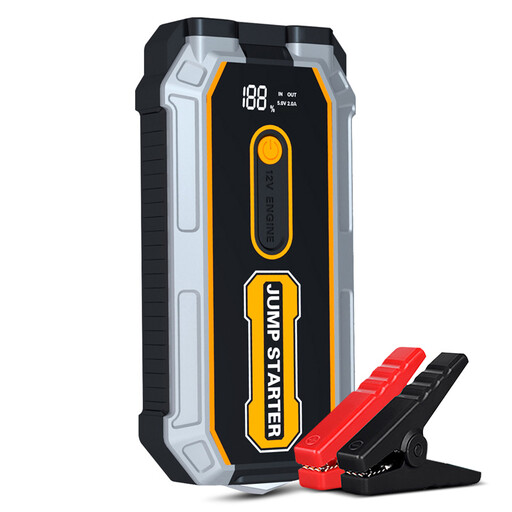
Why This Fits Their Persona: Ideal for drivers of standard petrol or smaller diesel cars. Its compact size means it fits easily in a glovebox, providing peace of mind for daily commutes without unnecessary bulk or features.
It provides a realistic 1200A peak and 600A starting current, which is more than sufficient for most UK passenger cars, avoiding the trap of being underpowered for its intended use.
Ultra-Compact: Weighing only 330g, it is extremely portable. Clear LCD Display: Shows remaining power, so you know when to recharge it.
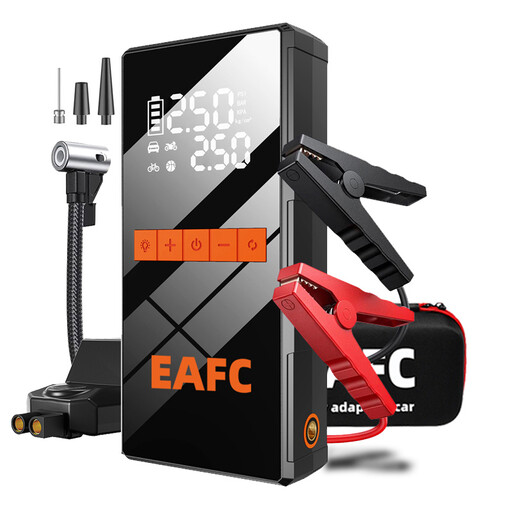
Why This Fits Their Persona: Perfect for family road trips or those who value preparedness. This 4-in-1 device combines a jump starter with a tyre inflator, power bank and torch, consolidating essential emergency tools into one unit.
By clearly stating its engine compatibility (up to 4.0L petrol/2.0L diesel), it helps users avoid the pitfall of buying a device that is mismatched to their larger family car or SUV.
Integrated Air Compressor: Inflates tyres up to 150 PSI with auto shut-off. Multi-functional: Acts as a jump starter, tyre inflator, power bank and LED torch.
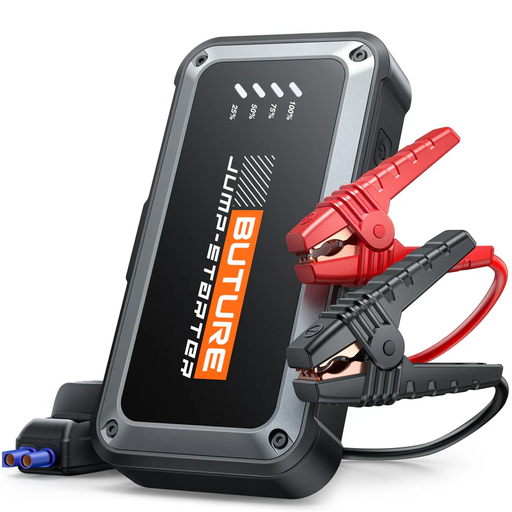
Why This Fits Their Persona: For owners of large SUVs, vans or high-displacement diesel engines. This unit delivers serious power to handle demanding vehicles, ensuring you're never left stranded, no matter the engine size.
It sidesteps the "peak amps illusion" by backing its 3000A peak claim with genuine capability for large engines (up to 9.0L petrol/8.5L diesel), providing the real-world power heavy-duty users need.
High Power Output: Capable of starting very large engines. Rugged Build: Water-resistant, dustproof and shockproof housing for durability.
Many of these devices include a built-in LED light, a crucial feature for any roadside emergency. To complete your vehicle's safety kit, consider dedicated lighting solutions that offer even more power and versatility.
We have compiled a complete, real-time list of products that fully satisfy these strict selection criteria and UK safety regulations.
1. How often do I need to charge a car jump starter? For most standard lithium-ion models, it is advisable to check the charge and top it up every 3 to 4 months to counteract self-discharge. For newer sodium-ion models, the self-discharge rate is much lower and they can often hold a usable charge for several years, but checking it annually is still good practice.
2. Can I leave a portable car battery booster in my car in winter? Yes, but with caution. Most lithium-ion jump starters have an operating temperature range, typically from around -20°C to 60°C. While they will work in a UK winter, extreme cold can reduce their efficiency. Sodium-ion models generally have a wider and more stable operating temperature range, making them a more reliable choice for leaving in a vehicle year-round. Always check the manufacturer's specified temperature range.
3. Is a 1200A jump starter enough for my car? For the majority of petrol cars and smaller diesel engines (under 2.0L) in the UK, a 1200A peak current with a decent starting current (e.g., 600A) is sufficient. However, if you drive a large SUV, a van or a diesel vehicle with an engine over 2.5L, you should look for a unit with a higher rating, such as 2000A or more, to ensure it has enough power, especially in cold weather.