There are few things more frustrating than turning the key in your ignition and hearing nothing but a faint click. A flat battery can happen to anyone, at any time, often leaving you stranded and waiting for roadside assistance. In the past, the only solution was a cumbersome set of jump leads and a willing second driver. Today, a modern car jump starter offers a compact, powerful and independent solution.
These portable devices are small enough to store in your glove compartment but powerful enough to bring a dead battery back to life in seconds. However, with so many options on the market, choosing the right one for your vehicle can feel overwhelming. This guide is designed to help you understand the key features to look for, so you can find a reliable car battery booster that gives you peace of mind on every journey.
Choosing the Right Portable Jump Starter: A Quick Guide
Before looking at specific models, it helps to understand what separates one jump pack from another. Consider these points to narrow down your search.
1. Match the Power to Your Engine
The most critical factor is ensuring the jump starter has enough power for your vehicle's engine. This is measured in Peak Amps (A).
- Engine Size and Type: Smaller petrol engines require less power than large petrol or diesel engines. A jump starter for diesel engines typically needs a higher peak amp rating because they have higher compression ratios. As a general rule, look at the engine displacement (in litres). A device suitable for a 10.0L diesel engine will have no trouble with a 2.0L petrol car, but the reverse is not true.
- Voltage: Most cars, vans and motorcycles in the UK use a 12V system. Ensure the 12v jump starter you choose is compatible with this standard. Heavy goods vehicles may use 24V systems, which require a different type of device.
2. Consider Battery Technology and Safety
The technology inside the car starter pack affects its performance, safety and lifespan.
- Lithium-ion: Most modern units are a form of lithium battery booster. They are lightweight, compact and hold their charge well. Look for models with built-in safety features, such as reverse polarity protection (prevents damage if you connect the clamps incorrectly), short-circuit protection and over-temperature protection.
- Sodium-ion: An emerging technology in this space, sodium-ion batteries offer some distinct advantages, particularly in their operational temperature range and lifespan. They can often withstand more extreme cold and heat and may offer a significantly higher number of charge cycles compared to their lithium counterparts.
Many jump starters are multi-functional devices, adding extra value.
- Power Bank Functionality: A jump starter power bank with USB ports (including USB-C and Quick Charge) can be a lifesaver for charging your phone, tablet or laptop on the go. Some high-end models even offer fast charging capabilities comparable to a wall adapter.
- Built-in Torch: A bright LED light with different modes (e.g., solid beam, SOS, strobe) is incredibly useful for jump-starting your car in the dark or during an emergency.
- DC Output: A 12V or 15V DC output port allows you to power other accessories, such as a tyre inflator or a portable cooler, directly from the jump starter.
Our Top Product Recommendations
Here are a few standout options that cater to different needs and vehicle types, selected to help you make an informed choice.
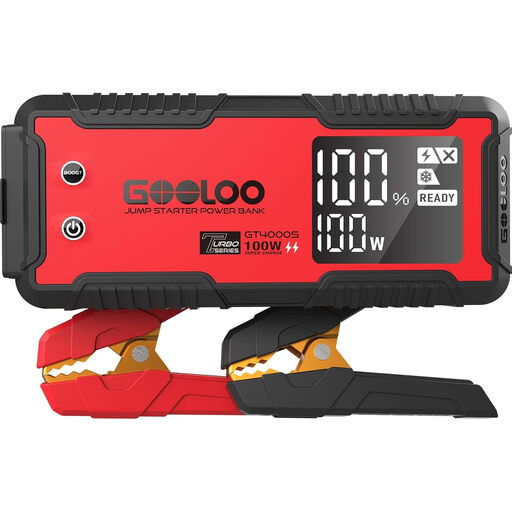
- Why It Stands Out: The GT4000S is a heavy duty jump starter built for power and speed. Its standout feature is the 100W two-way fast-charging, which allows the unit itself to be fully recharged in just over an hour. With a 4000A peak current, it has the muscle to start very large engines.
- Pros:
- Capable of starting up to 10.0L diesel and all petrol engines.
- Extremely fast recharging means less downtime.
- Functions as a high-speed power bank for laptops and other devices.
- A large 3.2-inch screen clearly displays status and instructions.
- Who is it for? Drivers of large vehicles like trucks, RVs, vans and boats, or anyone who values rapid recharging and maximum power in their emergency kit.
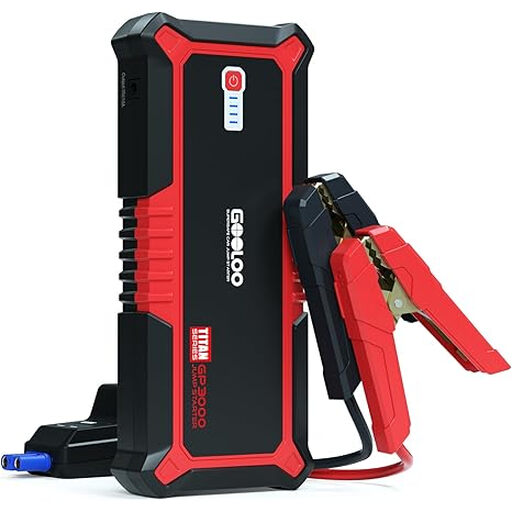
- Why It Stands Out: The GP3000 offers a fantastic balance of power and portability for the everyday driver. Its 3000A peak current is more than sufficient for most cars, SUVs and vans on UK roads. It also includes a "BOOST" mode for starting batteries that are completely dead.
- Pros:
- Starts up to 9.0L petrol or 7.0L diesel engines.
- Features 10 layers of safety protection, including spark-proof clamps.
- Includes USB Quick Charge 3.0 and a 15V DC port for accessories.
- Rugged, shock-resistant casing designed for durability.
- Who is it for? The everyday commuter and family car owner looking for a reliable, powerful and safe portable jump starter without needing the extreme capacity for very large commercial engines.
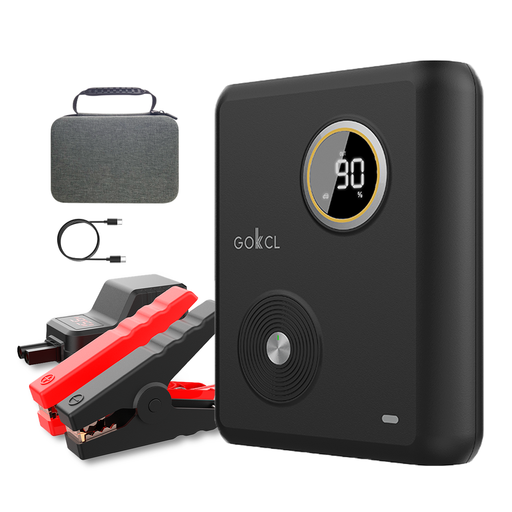
- Why It Stands Out: This model moves away from traditional lithium and uses a sodium-ion battery, focusing on longevity, safety and reliability. Its key benefit is an extremely wide operating temperature range (-40°C to 80°C) and a very low self-discharge rate, allowing it to hold a charge for up to 5 years.
- Pros:
- Exceptional durability with a claimed cycle life of over 6,000 cycles.
- Stable and safe in extreme temperatures, making it ideal to leave in a car year-round.
- Can be reactivated even if fully discharged to 0V, a common failure point for lithium packs.
- Features PD60W fast charging for both input and output.
- Who is it for? Users who prioritise long-term reliability, safety and minimal maintenance. It's an excellent choice for those living in areas with cold winters or who want a "set and forget" device they can count on years from now.
Exploring Other Power Solutions
If you're still exploring your options or are interested in different types of portable power for camping, work or home backup, you can browse our wider selection of rechargeable battery pack solutions.
Frequently Asked Questions
Can a portable jump starter damage my car's electronics?
Modern, high-quality jump starters are designed with multiple safety features to prevent this. Look for models with reverse polarity protection, over-current protection, overload protection and short-circuit protection. These systems ensure that power is only delivered safely, protecting both you and your vehicle's sensitive electronics.
How often do I need to charge a car jump starter?
This depends on the model and its battery technology. Most lithium-ion units can hold a charge for 6 to 12 months, but it is good practice to check the charge level and top it up every 3-4 months to ensure it's ready when you need it. Some newer technologies, like the sodium-ion battery in the GOKKCL GK03, have a much lower self-discharge rate and can hold a usable charge for years.
What is the difference between a car battery booster and a battery charger?
A car battery booster (or jump starter) is designed to deliver a very high burst of current for a short period to start an engine with a flat battery. It is not designed to fully recharge the battery. A battery charger, on the other hand, is a device that plugs into a mains socket and slowly replenishes a battery's charge over several hours. A jump starter gets you moving again; a charger is for battery maintenance at home.


