
24/7 全天候客户支持

免费退货

当日/次日达

品质保障

开启新人专享福利: 全场免邮 | 低至 2 折 | 免费试用 30 天 JoyPlus 会员
下载 Joybuy
That dreaded clicking sound. The dimming dashboard lights. A flat car battery is an unwelcome surprise that can disrupt your day, whether you are on your morning commute, heading out on a family holiday or working on a job site. While jumper cables have been the traditional solution, they rely on the kindness of a stranger and another running vehicle. A modern car jump starter offers a far more convenient and self-reliant alternative.
These compact yet powerful devices can get your vehicle running again in minutes, without needing a second car. However, the market is filled with options, each with different power ratings, features and technologies. This guide is designed to help you understand the key considerations and browse a selection of noteworthy models, so you can find a reliable portable jump starter for your specific needs.
Making the right choice comes down to a few key factors. Focusing on these will ensure you get a device that is not only compatible with your vehicle but also provides genuine utility.
The most important specification is the peak amperage (A). This number indicates the maximum burst of power the unit can deliver to crank your engine. A higher peak amp rating means the starter can handle larger, more demanding engines.
Many modern jump starters are multi-functional devices. While a basic model will get your car started, others come with integrated features that can be incredibly useful.
A quality jump starter should be safe and simple to use, even for a novice. Look for models with built-in safety protections like reverse polarity, short-circuit and over-current protection. These features prevent sparks and protect your car's delicate electronics from damage if the clamps are connected incorrectly.
The internal battery technology also plays a role. While most use Lithium-ion batteries, newer Sodium-ion models are emerging, offering different benefits in terms of standby time and performance in extreme temperatures.
Here are a few standout options that cater to different user needs, from rapid charging to all-in-one functionality.
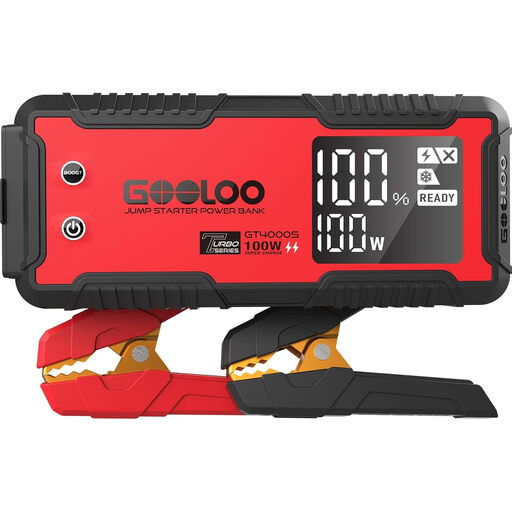
Why It Stands Out: The standout feature of the GT4000S is its 100W two-way fast charging. According to the brand, it can be fully recharged in just 1.2 hours, and a mere 5 minutes of charging can provide enough power for a single jump start. This makes it exceptionally convenient for those who need a quick turnaround.
Pros:
Who is it for?: Ideal for busy professionals, road-trippers and drivers of large vehicles who value speed and need a device that can be made ready for use at a moment's notice.
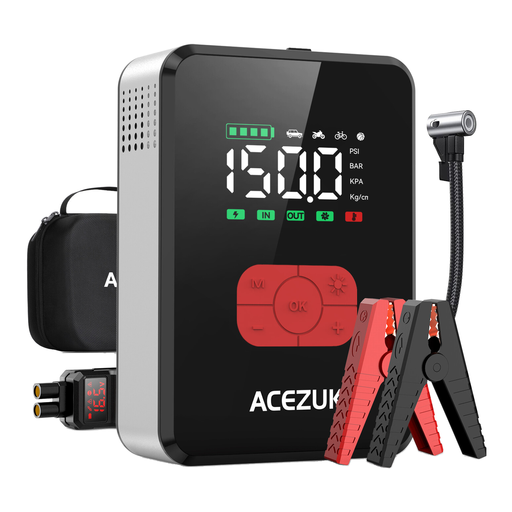
Why It Stands Out: This is a true all-in-one roadside emergency tool. It combines an extremely high peak current with a fully functional 150 PSI air compressor, making it suitable for not just starting your vehicle but also handling a flat tyre.
Pros:
Who is it for?: A great choice for drivers of heavy-duty vehicles, RV and caravan owners and anyone wanting a single, comprehensive tool for complete emergency preparedness.
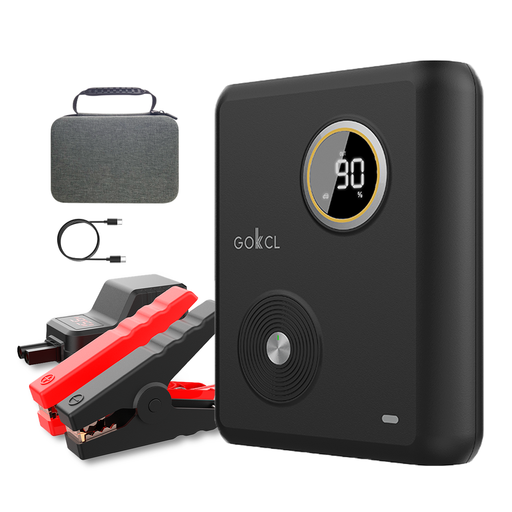
Why It Stands Out: The GK03 uses innovative Sodium-ion battery technology, which offers significant advantages in longevity and safety. The manufacturer states it has a standby time of up to 5 years and can operate in a very wide temperature range (-40°C to 80°C), making it a true 'set and forget' device to keep in your car.
Pros:
Who is it for?: Perfect for users who prioritise long-term reliability, minimal maintenance and safety, especially those who store the device in their vehicle year-round in the UK's fluctuating temperatures.
The models above represent a fraction of the available options. If you are looking for a more compact unit for a small car, a different combination of features or simply want to compare more models, there is a device out there for you.
Explore our full range of Portable Car Power Pack options to find the perfect match for your vehicle and peace of mind.
1. Can a car jump starter damage my car's electronics? Reputable modern jump starters are equipped with multiple safety features, such as reverse polarity, short-circuit and over-voltage protection. These systems are designed to prevent electrical surges and ensure that power is only delivered when the clamps are connected correctly, safeguarding your vehicle's ECU and other sensitive electronics.
2. How many amps do I need for my car jump starter? This depends entirely on your vehicle's engine. As a general guide: small petrol cars may only need 400A-600A, while larger petrol SUVs and vans benefit from 1500A or more. Diesel engines require more power, with larger ones needing 2000A to 4000A+. Always check your vehicle's manual for specific recommendations if you are unsure.
3. How long does a portable jump starter hold its charge? This varies by battery technology. Most standard Lithium-ion jump starters should be checked and recharged every 3 to 6 months to ensure they are ready when needed. Newer Sodium-ion models have a much lower self-discharge rate and can, according to their manufacturers, hold a usable charge for several years, requiring far less maintenance.