
24/7 Customer Support

Free returns

Same-day & Next-day Delivery

Quality Guaranteed

Unlock Your Welcome Offers: FREE Delivery | Up to 80% OFF | Free 30-day JoyPlus trial
Download the APP
That dreaded silence when you turn the key is a moment every UK driver fears, especially on a cold, dark morning. While breakdown services are an option, waiting hours for assistance is often impractical. A modern portable jump starter offers a quick, self-reliant solution, getting you back on the road in minutes.
However, the market is flooded with devices making bold claims. Many buyers find themselves with a product that fails when it's needed most. As a Joybuy Product Recommendation Officer, my role is to help you navigate the marketing jargon. Here are the common pitfalls to avoid and the key features to look for.
Before you add any emergency car starter to your basket, be aware of these misleading tactics and design flaws that can leave you with an ineffective gadget.
To make an informed choice, focus on these three non-negotiable specifications.
As mentioned, peak amperage is only part of the story. The crucial metric is the starting current, which provides the sustained power to turn your engine over. While not always listed, a higher peak amperage from a reputable brand generally correlates with a higher starting current. For a standard UK car (e.g., 1.0-2.0L petrol), a unit with a peak of 1500A-2000A is usually sufficient. For larger SUVs or diesel engines, look for 3000A or more.
Always check the manufacturer's recommended engine size compatibility. Diesel engines use higher compression and require significantly more power to start than petrol engines of the same size. A 12v jump starter designed for a 7.0L petrol engine might only be rated for a 5.5L diesel engine. Be realistic about your vehicle's needs—don't buy a unit that is at the very limit of its stated capability. A modern lithium jump starter is lightweight but powerful, though matching it to your engine is still essential.
The battery capacity, measured in milliamp-hours (mAh) or watt-hours (Wh), determines how many jump starts you can perform on a single charge. It also dictates how useful the device is as a jump starter power pack for charging your phone, tablet or other electronics. For those who travel frequently or enjoy the outdoors, a model with a built-in LED torch or an integrated jump starter with air compressor can be an invaluable all-in-one emergency tool, saving space and offering greater utility.
Based on these practical criteria, here are a few recommendations matched to different types of UK drivers.
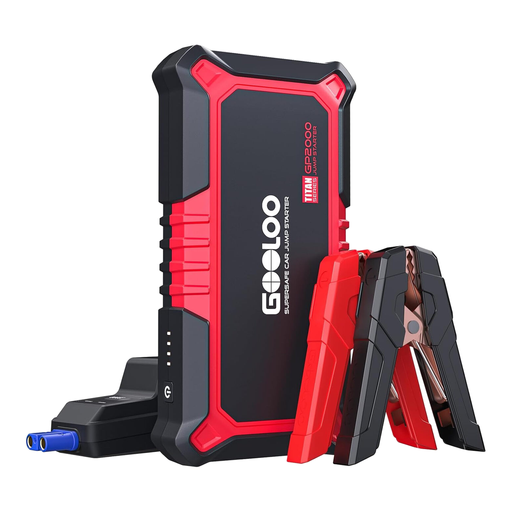
Why This Fits Their Persona: An ideal choice for drivers of small to medium-sized cars (e.g., Ford Fiesta, VW Golf and Nissan Qashqai) who want reliable emergency backup without a significant investment. It's compact enough to live in the glovebox, providing peace of mind for daily commutes.
It avoids the "unrealistic engine claims" trap by providing a clear and sensible rating (up to 8.0L petrol/6.0L diesel), which is more than adequate for the vast majority of UK passenger cars, rather than promising to start heavy-duty machinery.
Features 10 safety protections, including spark-proof technology and reverse polarity alerts. It also doubles as a portable power bank with two USB outputs for charging devices.
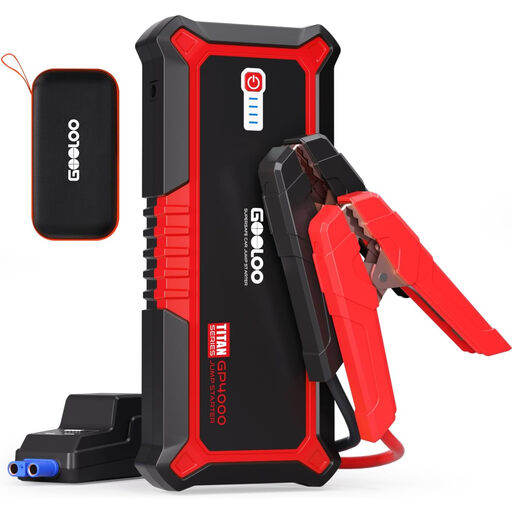
Why This Fits Their Persona: For those with larger vehicles like a Land Rover Discovery, BMW X5 or a work van. This unit's high power provides the confidence to start larger petrol and diesel engines, while its capacity is great for keeping the family's devices charged on road trips.
It counters the "Peak Amps Myth" by delivering a genuinely high 4000A peak current, backed by quality all-metal clamps and a "BOOST" function for deeply discharged batteries. This isn't just a number on a box; it's functional power.
Starts all petrol engines and diesel engines up to 10.0L. The rugged, drop-resistant housing and reliable performance in extreme cold make it a dependable year-round tool.
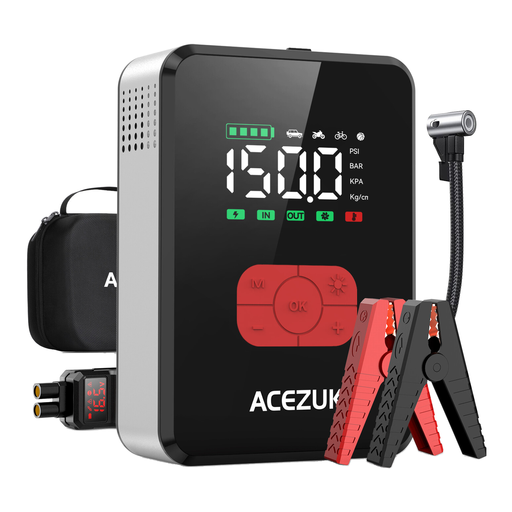
Why This Fits Their Persona: This is the ultimate all-in-one tool for campers, 4x4 owners and anyone who relies on their vehicle in remote locations. It combines immense starting power with the utility of a tyre inflator, saving valuable space and covering multiple emergency scenarios.
It directly counters the "flimsy features" trap by integrating a genuinely useful 150 PSI air compressor with auto shut-off. Its patented intelligent clamp features its own display, providing clear feedback and preventing incorrect connections—a major safety upgrade.
Massive 7000A peak current reliably starts all petrol and large 12L diesel engines. The combination of jump starter and air compressor makes it a complete roadside emergency solution.
We have compiled a complete, real-time list of products that fully satisfy these strict selection criteria and UK safety regulations.
How often do I need to recharge a car jump starter? To ensure it's ready when you need it, it's good practice to check the charge level every 2-3 months. Most manufacturers recommend recharging the unit if the battery level drops below 75%. A fully charged device will provide the most effective jump-starting power, especially in cold weather.
Is it safe to keep a lithium jump starter in a cold car? Yes, modern lithium-ion jump starters are designed to be stored in a vehicle. They typically have a wide operating temperature range, often from -20°C to 60°C. However, their efficiency can decrease in extreme cold. For this reason, buying a unit with more power than you think you need is a wise strategy for UK winters. Always check the manufacturer's specified operating and storage temperatures.
Why do diesel engines need a more powerful jump starter? Diesel engines use a higher compression ratio to ignite fuel, which means the starter motor needs to work much harder to turn the engine over. This requires a significantly higher amount of electrical current compared to a petrol engine of a similar size. This effect is even more pronounced in cold weather when engine oil is thicker and the battery's chemical reactions are slower.