
24/7 Customer Support

Free returns

Same-day & Next-day Delivery

Quality Guaranteed

Unlock Your Welcome Offers: FREE Delivery | Up to 80% OFF | Free 30-day JoyPlus trial
Download the APP
A flat battery can leave you stranded outside your home, at a supermarket or on an unlit rural road. A car jump starter offers a portable alternative to waiting for roadside assistance, but choosing the right model requires more than comparing the largest amp number on the box.
Many UK drivers buy a portable car battery jump starter based on marketing claims, only to discover that it is incompatible with their engine, difficult to recharge or unsuitable for storage in a vehicle. The right jump starter power pack should match your vehicle, driving habits and the conditions in which you are likely to use it.
A high peak-current figure can attract attention, but it does not tell you everything about starting performance. Engine size, petrol or diesel configuration, battery condition and temperature all affect whether a jump starter can provide sufficient power.
Check the manufacturer’s stated compatibility for your vehicle rather than assuming that a 4,000A or 8,000A label guarantees universal use. Most products in this guide are designed for 12V systems. They should not be connected to 24V commercial vehicles or 6V equipment.
Capacity is usually shown in mAh or Wh. It indicates how much stored energy the unit has for jump starts and USB charging, but a larger capacity does not automatically mean stronger starting output.
For a car battery booster, compare the stated peak current, starting current where available and compatible engine size. A compact jump starter power bank may be suitable for a small petrol car, while a diesel van or large SUV may need a higher-rated unit.
Lithium jump starters still need sensible care. Some require charging every two or three months, while others recommend a longer interval. A device left in a cold boot at low charge may not perform as expected when needed.
Look for a clear battery display, protective case and smart jumper cables with safeguards such as reverse-polarity, short-circuit, over-current and over-temperature protection. These features reduce the likelihood of connection errors, but they do not replace careful use of the manual.
Start with your vehicle handbook and confirm:
A petrol and diesel jump starter may list different limits for each fuel type. Diesel engines commonly require greater starting power, so do not rely solely on the petrol compatibility figure.
For regular cars and motorcycles, a lower-rated 12V jump starter may be easier to store and carry. Larger engines, older vehicles and diesel vans may justify a higher current rating.
Useful features include:
A jump starter with LED torch functionality is useful for checking terminals at night or making your vehicle visible at the roadside. Look for steady, strobe and SOS modes if you also camp or travel outdoors.
Correct connection remains essential: normally, connect the red clamp to the positive terminal and the black clamp to the negative terminal or a suitable unpainted earth point, following the product instructions. Remove the clamps promptly after the engine starts.
For UK use, also consider:
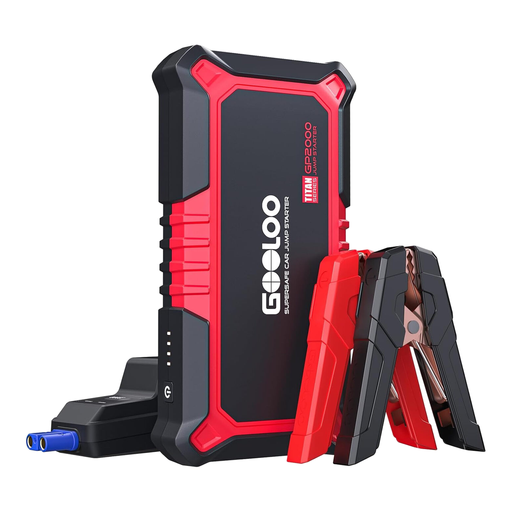
Why This Fits Their Persona: A compact option for everyday UK cars, motorcycles, SUVs and other 12V vehicles, with a listed 2,000A peak current and support for engines up to 8.0L petrol or 6.0L diesel.
Its LCD screen shows remaining charge, helping prevent storage with an unexpectedly empty battery. Smart clamps include listed protection against reverse polarity, over-current and short circuits.
Dual USB outputs, LED torch modes and a stated weight of about 1.2 lb make it practical for boot storage and roadside use.
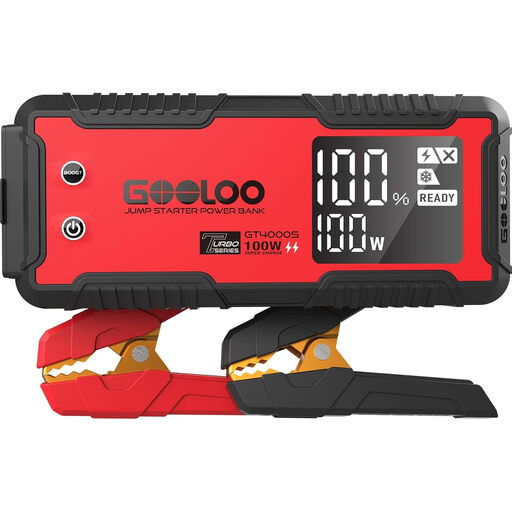
Why This Fits Their Persona: Designed for drivers wanting fast recharging and broader 12V vehicle coverage, with stated support for petrol engines up to 12.0L and diesel engines up to 10.0L.
The 3.2-inch display provides product-status information, while the listed 10 protection functions address common connection and charging risks.
Up to 100W two-way charging, three USB ports, a 15V DC port and a 400-lumen light support wider roadside and travel uses.
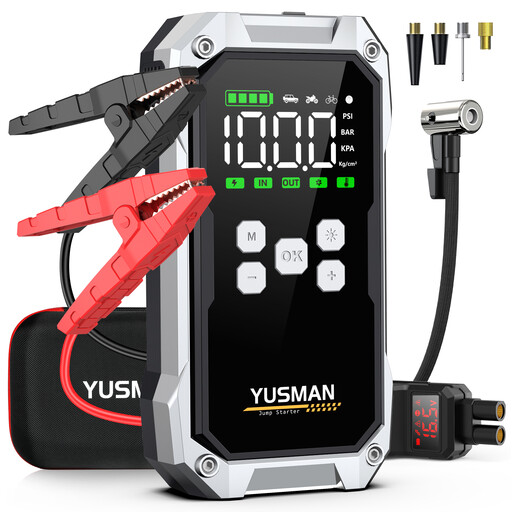
Why This Fits Their Persona: Suitable for motorists, campers and van or SUV owners who want a jump starter with air compressor functionality as well as emergency starting power.
The LCD screen displays operating status and tyre pressure, while smart clamps list protections including reverse polarity, overheating and overvoltage.
The built-in compressor is rated up to 150 PSI, and the unit includes USB outputs, four LED modes and a carrying case.
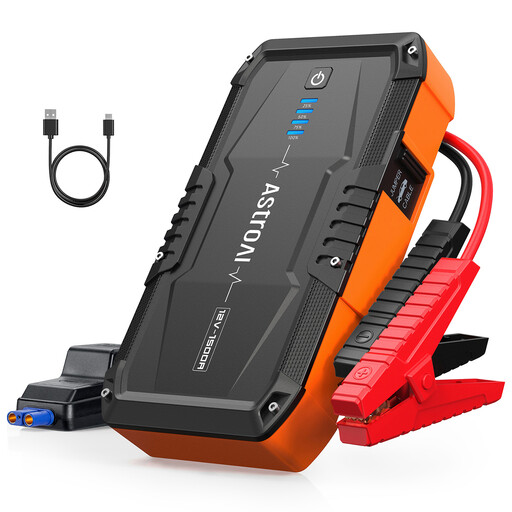
Why This Fits Their Persona: A small 12V jump box for drivers of cars, SUVs, pick-ups, motorcycles or lawnmowers, with stated support up to 6.0L petrol and 3.0L diesel engines.
The model lists eight integrated protections and a boost mode for low-voltage batteries, subject to following the supplied instructions.
Its listed 37Wh capacity, dual USB-A outputs, USB-C input and three-mode LED torch provide useful everyday functions.
We have compiled a complete, real-time list of products that fully satisfy these strict selection criteria and UK safety regulations.
Never use a 12V jump starter on a 24V system, and stop if the casing, cable or battery appears damaged.
Some models are designed for both, but the supported engine sizes can differ. Check the separate petrol and diesel limits before buying. Diesel vans and larger engines generally require a higher-rated car battery booster.
Service life depends on battery chemistry, storage temperature, charging habits and frequency of use. Follow the manufacturer’s recharge guidance and avoid leaving the pack completely discharged. Capacity may reduce over time, even when the unit is seldom used.
Electricity costs for recharging are generally modest, but the unit must be maintained and replaced when its battery no longer holds sufficient charge. Models with USB outputs, LED lighting or an air compressor may offer additional value by replacing several separate emergency accessories.