
24/7 Customer Support

Free returns

Same-day & Next-day Delivery

Quality Guaranteed

Unlock Your Welcome Offers: FREE Delivery | Up to 80% OFF | Free 30-day JoyPlus trial
Download the APP
There are few things more frustrating for a UK driver than the dead silence that follows turning the ignition key, especially on a frosty morning or in a remote car park. For years, the only solutions were to find a helpful stranger with jump leads or face a long wait for breakdown assistance. Today, a portable car jump starter offers a far more convenient and self-reliant solution.
These compact devices pack enough power to bring a dead battery back to life in minutes, getting you back on the road without delay. However, the market is filled with options, each with different specifications and features. This guide is designed to help you understand what truly matters, cut through the clutter and find a reliable emergency car starter that suits your vehicle and needs.
Choosing the right device comes down to a few key factors. Focusing on these will ensure you get a product that performs when you need it most.
The most critical specification is the jump starter's power, measured in Peak Amps (A). This figure indicates the maximum current the device can deliver to start your engine. A higher peak amp rating means more starting power.
A modern emergency car starter should be simple and safe to use, even for someone with no mechanical experience. Look for units equipped with smart jumper cables. These intelligent clamps have built-in protections against common mistakes, such as:
The internal battery technology is also important. Most modern units use lithium-ion batteries, which are lightweight and powerful. Newer sodium-ion models are also emerging, offering potential benefits in extreme temperature stability and lifespan.
Many devices offer more than just emergency power. A jump starter power bank is a common dual-purpose feature, with USB ports to charge your phone, tablet or GPS. This can be invaluable if you're stranded and need to make a call with a low phone battery.
For ultimate utility, consider a jump starter with an air compressor. These multi-function units can not only start your car but also inflate a flat tyre, making them a comprehensive roadside emergency tool.
Here are a few standout options that cater to different types of UK motorists.
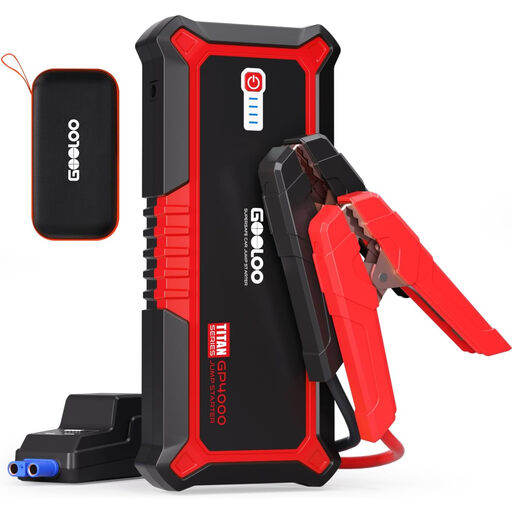
Why It Stands Out: With a substantial 4000A peak current, the GP4000 is built for demanding tasks. It provides confidence for owners of large-displacement vehicles who need serious starting power.
Pros:
Who is it for? Drivers of large SUVs, vans, pickup trucks and RVs who require a powerful and reliable petrol and diesel jump starter for peace of mind.
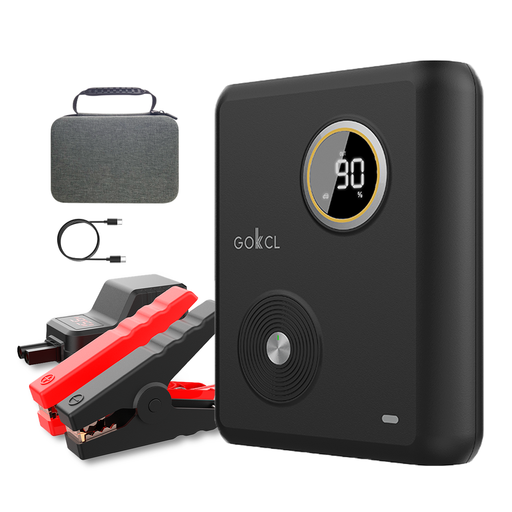
Why It Stands Out: The GK03 uses sodium-ion battery technology, which offers remarkable stability and longevity. Its key feature is a very low self-discharge rate, meaning it can hold its charge for an extended period.
Pros:
Who is it for? The practical motorist who wants a low-maintenance, long-lasting jump starter they can store in their vehicle year-round without worrying about frequent recharging.
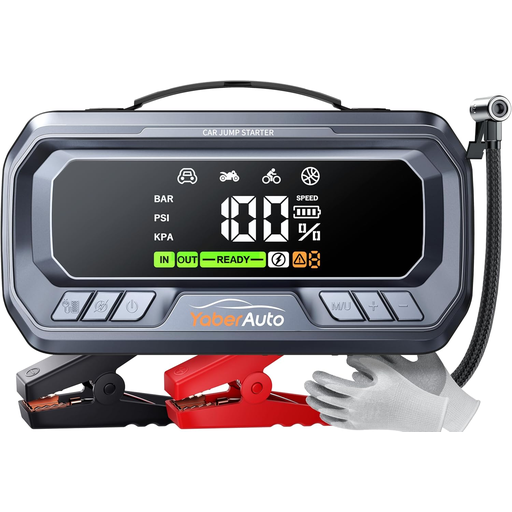
Why It Stands Out: The YA90 is a comprehensive all-in-one emergency tool. It combines an exceptionally high peak current with a powerful air compressor and advanced charging capabilities.
Pros:
Who is it for? The tech-savvy driver or family who values convenience and wants a single, powerful device to handle flat batteries, flat tyres and charging all their electronics on the go.
If these models aren't quite what you're looking for or if you drive a smaller car or motorcycle with different requirements, there are many other choices available. You can explore a wider selection to find the perfect match for your vehicle and budget.
Explore our full range of battery starter products here.
Yes, most portable jump starters are designed to be stored in a vehicle. However, it's important to consider the temperature range. Extreme cold can reduce a battery's effectiveness, while extreme heat can degrade it over time. Models like the GOKKCL GK03, with its wide operating temperature of -40°C to 80°C, are particularly well-suited for being left in a car year-round. Always check the manufacturer's storage recommendations.
This depends entirely on your vehicle's engine. A small to medium petrol car can typically be started with a device offering 400A-800A peak current. Larger petrol engines, SUVs and most diesel cars will require 1200A or more. For large trucks or vans, a heavy-duty unit with 2000A+ is recommended. If in doubt, choose a model with a higher amp rating than you think you need.
No, they serve different purposes. A car jump starter (or portable car battery booster) delivers a very high, short burst of current to start the engine when the car's own battery is too weak. A car battery charger, on the other hand, is a device that plugs into the mains and slowly recharges a flat battery over several hours. While some jump starters have a function that can act as a car battery charger jump starter, their primary role is for emergency starts, not long-term battery maintenance.