
24/7 Customer Support

Free returns

Same-day & Next-day Delivery

Quality Guaranteed

Unlock Your Welcome Offers: FREE Delivery | Up to 80% OFF | Free 30-day JoyPlus trial
Download the APP
There are few things more frustrating than the dead click of a car that will not start. A flat battery can happen to anyone, at any time, often on a cold morning or in a remote car park. While jump leads are a traditional solution, they rely on the kindness of a passing motorist. A modern car jump starter puts the power back in your hands, offering a reliable and portable way to get your vehicle moving again.
As a Joybuy Product Recommendation Officer, my role is to help you navigate the options. This guide is designed to provide practical advice, cutting through the marketing jargon to help you find a dependable portable car battery booster that suits your vehicle and your needs. We will look at key features to consider and highlight some notable models available for 2026.
Before looking at specific products, understanding a few key specifications will help you make a more informed choice.
The most important factor is the power output, measured in peak amperes (A). This figure indicates the maximum current the jump pack can deliver to start your engine. A higher peak amp rating means more starting power.
The internal battery determines how long the device holds its charge and how it performs in different temperatures. Most units use lithium-ion batteries, which are compact and powerful. However, newer sodium-ion technology is emerging, offering benefits in extreme temperatures and a longer standby time.
Always check for built-in safety features. Reputable models include protections against reverse polarity (connecting the clamps incorrectly), short circuits and overcharging. These are essential for protecting both you and your vehicle's electronics.
Many modern units are more than just a car battery starter. They often double as a jump starter power bank with USB ports for charging phones and tablets. Some models even include a built-in jump starter with air compressor for topping up tyres or a powerful LED torch with SOS modes. Consider which of these extras would be genuinely useful for your emergency car kit.
Here are a few standout options that cater to different needs and vehicle types.
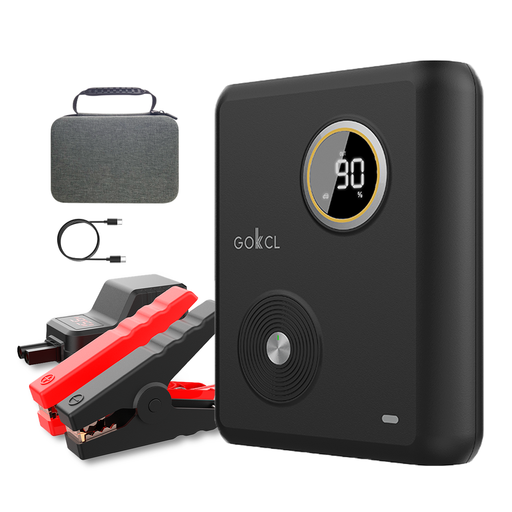
Why It Stands Out: The GOKKCL GK03 uses sodium-ion battery technology, which sets it apart from typical lithium models. It boasts an exceptionally wide operating temperature range (-40°C to 80°C), making it reliable in the depths of a British winter or during a summer heatwave. Its very low self-discharge rate means it can hold a charge for up to five years, offering a low-maintenance "store and forget" solution.
Pros:
Who is it for? Drivers who want a highly durable, low-maintenance jump starter that can be left in the car year-round without worry.
View the GOKKCL GK03 on Joybuy
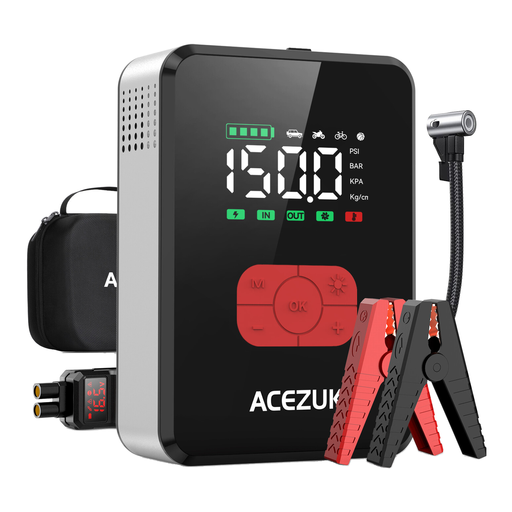
Why It Stands Out: This is a true multi-tool for roadside emergencies. The ACEZUK M06 combines an extremely high 7000A peak current with a built-in 150 PSI air compressor. The intelligent clamp has its own display to help prevent incorrect connections, and the large screen on the main unit makes it easy to select the right mode for inflating tyres on a car, motorcycle or bicycle.
Pros:
Who is it for? Owners of large vehicles, vans or diesel engines, and anyone who values the convenience of an all-in-one emergency device.
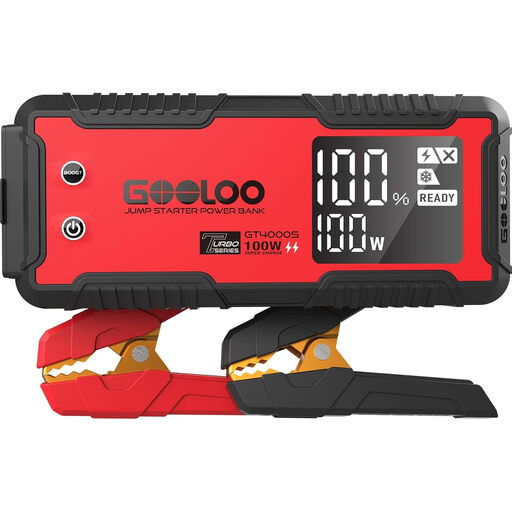
Why It Stands Out: The GOOLOO GT4000S is built for power and speed. Its main feature is the 100W two-way fast charging, which allows the unit itself to be fully charged in just over an hour. It can also deliver that 100W of power to charge a compatible laptop as fast as its original adapter. With 4000A peak current, it is a powerful yet compact heavy duty jump starter.
Pros:
Who is it for? Users with large vehicles (motorhomes, trucks and boats) who need serious power and value the ability to recharge the unit very quickly.
View the GOOLOO GT4000S on Joybuy
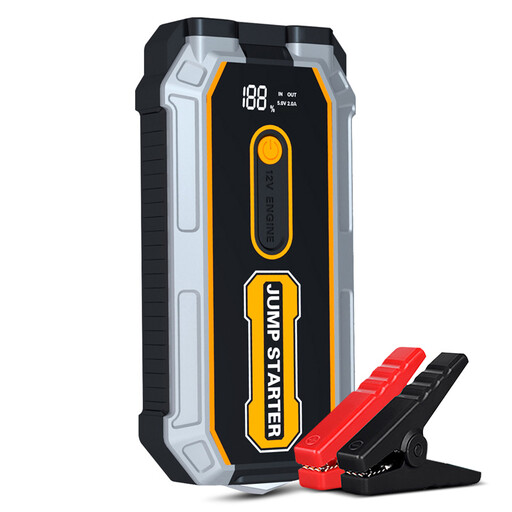
Why It Stands Out: If portability is your priority, the Porbi S306 is an excellent candidate. Weighing approximately 330g and with a slim profile, it is small enough to fit in a glove box or backpack without taking up much space. Despite its size, its 1200A peak current is ample for most standard 12V petrol and smaller diesel vehicles, making it a great everyday emergency car kit component.
Pros:
Who is it for? The everyday driver of a standard petrol or diesel car who wants a simple, compact and affordable safety device.
The models highlighted here represent a fraction of the available choices. If you have different requirements or would like to compare more specifications, you can browse a wider selection.
Explore our full range of Car Portable Power Pack solutions to find the perfect fit for your vehicle.
1. Can a car jump starter damage my car's electronics? Modern portable jump starters are designed with multiple safety systems. Features like reverse polarity, over-current and short-circuit protection are standard on quality units and work to prevent damage to your vehicle's sensitive electronics. It is always important to read and follow the manufacturer's instructions for your specific model.
2. How many amps do I need for my car jump starter? This depends entirely on your vehicle's engine. A small city car with a petrol engine might only require 400-600A. A family SUV or a standard diesel car will likely need 1000A-1500A for a reliable start. For large vans, trucks or vehicles with high-displacement diesel engines (over 3.0L), a heavy duty model with 2000A or more is recommended.
3. How often do I need to recharge my portable car battery booster? For most lithium-ion models, it is good practice to check the charge and top it up every 3 to 6 months to ensure it is ready when you need it. Some newer models with sodium-ion batteries have a much lower self-discharge rate and can hold a usable charge for several years, requiring less frequent maintenance.