
24/7 Customer Support

Free returns

Same-day & Next-day Delivery

Quality Guaranteed

Unlock Your Welcome Offers: FREE Delivery | Up to 80% OFF | Free 30-day JoyPlus trial
Download the APP
A flat battery can turn a normal commute, school run or weekend journey into an expensive roadside wait. A car jump starter offers a portable alternative to relying on another vehicle, but choosing the right model requires more than comparing the largest number on the box.
Marketing can make a small battery booster pack appear suitable for every vehicle and situation. In practice, engine size, battery condition, charging habits and safe operation all affect whether a portable car jump starter is useful when you need it.
A high peak-current figure may attract attention, but it does not tell you everything about starting performance. Starting current, battery capacity in watt-hours and compatibility with your engine are also important.
For example, a jump pack listed for engines up to 6.0L petrol and 3.0L diesel may not be the right choice for a larger diesel van, even if its peak current looks impressive. Always compare the stated petrol and diesel engine limits with your vehicle handbook.
Most portable emergency car starters in this guide are designed for 12V systems. They are not suitable for 6V classic-car systems, 24V commercial vehicles or electric vehicles unless the manufacturer specifically states otherwise.
A motorcycle, lawnmower, boat or small van may also require different cable reach, starting output or connection instructions. Confirm the voltage and engine compatibility before ordering.
Lithium jump starters can gradually lose charge when stored. A device left in a boot for months may not be ready during a cold morning. Some products recommend recharging every three to six months, while others list a lower self-discharge rate.
Heat is another concern. Avoid leaving a battery booster pack on a dashboard in direct sunlight, and store it in a dry place away from damage. Check the manual for operating and charging temperature limits.
Use peak current as a comparison point, not a guarantee of performance. A 12V jump starter should clearly state supported engine sizes for petrol and diesel vehicles. Diesel engines commonly require more starting power than petrol engines of a similar displacement.
For everyday UK cars, a model rated for your engine size with some headroom may be more practical than selecting solely by the highest advertised amp figure. Larger vehicles, vans, SUVs and boats may need a higher-rated car battery booster.
Battery capacity is often shown in mAh or Wh. Watt-hours provide a more useful comparison between products with different battery voltages. Capacity can influence the number of starting attempts and how many times the unit can charge a phone.
Charging speed matters if the device is used regularly. Some models charge through USB-C, while others support higher-power inputs. Check whether a wall charger or car charger is included, as certain listings specify the jump starter only and do not include an adapter.
Look for smart jumper cables and clearly explained protection features, such as:
These features reduce the chance of incorrect operation, but they do not replace careful connection. Switch off vehicle accessories, connect red to positive and black to negative or the recommended earth point, then follow the product manual. Remove the clamps promptly after the engine starts.
A jump starter with air compressor adds another function, but check maximum pressure, hose connection and duty cycle. A pump may need cooling breaks and should not be operated continuously for too long.
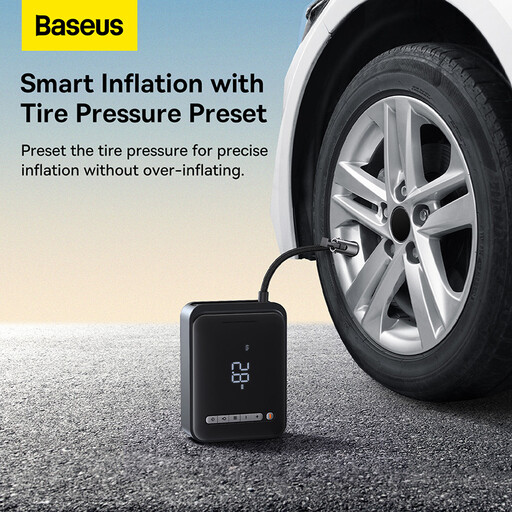
Why This Fits Their Persona: A compact option for drivers who want emergency starting support plus basic tyre inflation without carrying several separate devices.
Its stated specifications separate 500A starting current from 1000A peak current, making comparison clearer. The pump guidance also specifies a recommended working pressure within 120psi.
8000mAh battery, approximately three-hour charging time, 54W inflation pump and dual USB outputs.
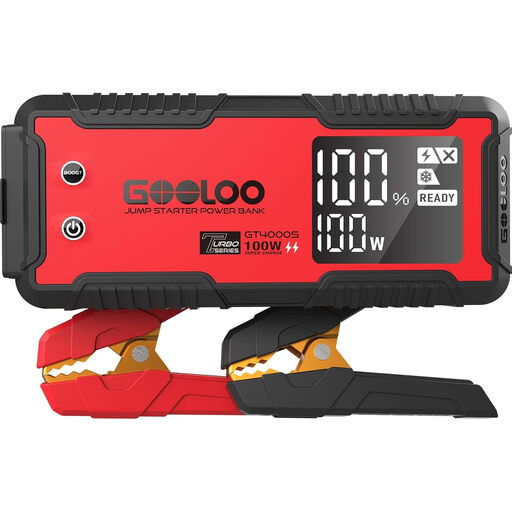
Why This Fits Their Persona: Suitable for motorists who value fast recharging, a larger vehicle compatibility range and additional charging functions for travel.
The listing specifies 12V use, supported engine sizes and a 100W charging system rather than relying only on a peak-current headline.
4000A peak current, stated support up to 12.0L petrol or 10.0L diesel, 100W two-way USB-C charging and a 400-lumen light.
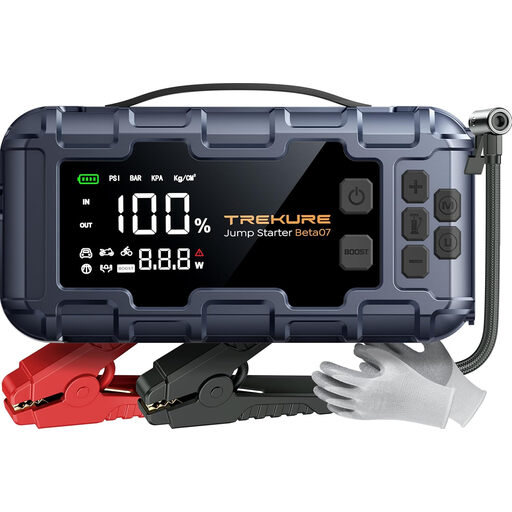
Why This Fits Their Persona: A practical match for outdoor travellers, van owners and drivers who want a jump starter and tyre inflator in one unit.
The specifications state the pump capacity, pressure limit and vehicle range, allowing buyers to assess whether it suits their actual tyre and engine requirements.
6000A peak output, 160PSI air compressor, 45W USB-C charging, 3.3-inch display and 600-lumen LED light.
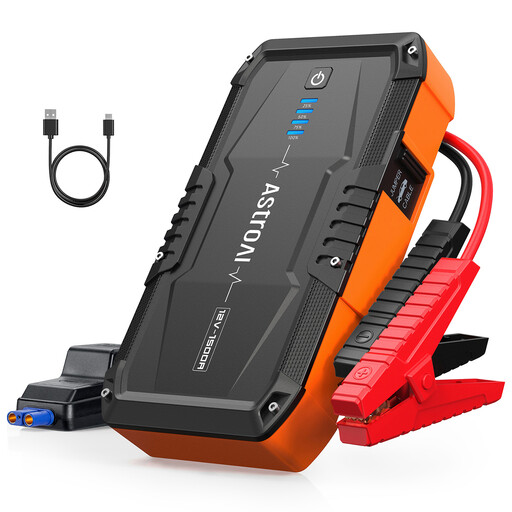
Why This Fits Their Persona: Its compact format suits commuters who need a straightforward roadside backup for a car, SUV, pick-up or lawnmower.
The product information identifies its 12V limitation, engine range and requirement for at least 75% charge before use.
1500A peak current, 37Wh capacity, boost mode for low-voltage batteries and three LED light modes.
We have compiled a complete, real-time list of products that fully satisfy these strict selection criteria and UK safety regulations.
Before using an emergency car starter:
Do not use damaged cables, swollen battery packs or wet equipment. A jump starter is intended as emergency assistance, not a replacement for diagnosing a failing vehicle battery or alternator.
Some models are designed for both, but the supported engine sizes can differ. Check the listed petrol and diesel limits, as a product may support a larger petrol engine than diesel engine.
Follow the product instructions. Many models recommend checking the charge every three to six months. Regular inspection is particularly important if the unit remains in a vehicle through cold weather or extended periods without use.
It can be useful if you regularly travel long distances, camp or drive on rural roads. Compare the compressor’s pressure range, inflation time and cooling requirements. If you only need battery assistance, a smaller car battery jump pack may be easier to store and carry.