
24/7 Customer Support

Free returns

Same-day & Next-day Delivery

Quality Guaranteed

Unlock Your Welcome Offers: FREE Delivery | Up to 80% OFF | Free 30-day JoyPlus trial
Download the APP
Replacing standard halogen lighting can improve the appearance of a car, van or motorcycle, but choosing car LED bulbs is not simply a matter of selecting the highest lumen figure. The wrong fitting may not lock into the housing, may trigger a dashboard warning or may create an unfocused beam that dazzles other road users.
This guide explains the key specifications to check before buying LED headlamp bulbs, LED fog light bulbs, interior lamps or reversing lights. It also highlights suitable options for different UK driving needs.
Listings may quote very high figures such as 20,000 or 160,000 lumens. These numbers can refer to a pair, theoretical maximum output or a particular test condition, so they are not always directly comparable. A useful beam pattern, correct chip positioning and suitable headlamp optics are just as important.
Look for 1:1 halogen replacement bulbs with LED chips positioned close to the original filament location. This can help preserve the intended beam shape, although the result still depends on the vehicle’s reflector or projector design.
A bulb can share the same socket size but still be unsuitable for a particular housing. Check the original bulb marking, vehicle manual and the available space behind the dust cover. Common fittings include H7 LED bulbs, H4 LED bulbs, H11 LED bulbs, 9005 HB3 LED bulbs, 9006 HB4 LED bulbs, HIR2 9012 LED bulbs and H15 LED bulbs.
Some vehicles monitor bulb resistance. Even when a product is described as CANbus error-free, sensitive models may still need an additional decoder or load solution.
LEDs produce less electrical waste than halogen bulbs, but the LED chip and driver still generate heat. Compact bulbs with aluminium housings, heat sinks or cooling fans can manage this more effectively than poorly ventilated designs.
For vehicles used in wet UK conditions, check for an IP67 or IP68 rating. This indicates resistance to dust and water under defined test conditions; it does not mean the bulb can be submerged or installed with a damaged housing seal.
First identify the exact original fitting. A bulb marked H7 cannot automatically replace an H4 or H11. Also confirm whether the bulb is used for dipped beam, main beam, fog light, daytime running light, number plate lighting or interior illumination.
For smaller applications, T10 W5W 194 LED bulbs are commonly used for map, dome, courtesy, parking and number plate lights. W16W T15 reversing light bulbs are designed for compatible reversing-light sockets and should not be confused with T10 fittings.
6000K cool white bulbs produce a crisp white appearance, while 6500K xenon white bulbs generally look cooler and slightly bluer. Colour temperature describes the visual tone, not brightness or beam quality.
For public-road use, confirm that the complete lamp and bulb combination is suitable for your vehicle and complies with applicable UK requirements. Some LED retrofit bulbs may not be approved for every headlamp assembly, even if they fit physically. Check the product documentation, vehicle manual and current requirements, including relevant ECE or UK road-lighting provisions, before installation.
A built-in fan can help remove heat but needs sufficient clearance and may introduce a moving part. Passive aluminium cooling is quieter but may require more surface area. Check that the rear of the bulb will fit beneath the dust cap.
For newer vehicles, CANbus-compatible car LED bulbs can reduce flickering or bulb-out warnings, but “compatible with most vehicles” is not a guarantee for every model. Keep the original bulbs until the replacement has been tested.
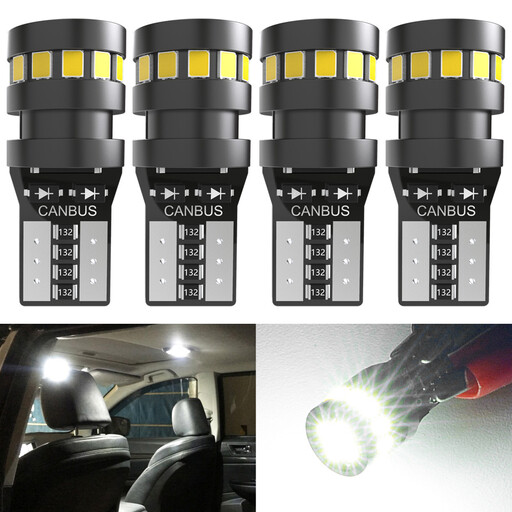
Why This Fits Their Persona: A four-pack gives DIY owners a practical starting point for interior, number plate or parking-light replacements.
The listing identifies several equivalent markings, including W5W, T10, 501 and 194, helping buyers cross-check the original bulb before ordering.
12V, 2.5W per bulb, 6500K colour, aluminium body and CANbus-oriented design.
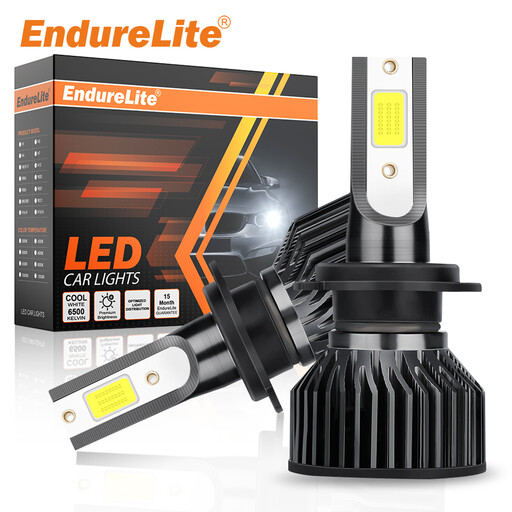
Why This Fits Their Persona: Suitable for drivers seeking a white headlight upgrade with integrated cooling and a direct-fit design.
The product description specifies 1:1 beam positioning, IP68 protection and a built-in fan rather than relying only on a brightness headline.
6000K cool white light, aluminium alloy housing, IP68 rating and plug-and-play installation.
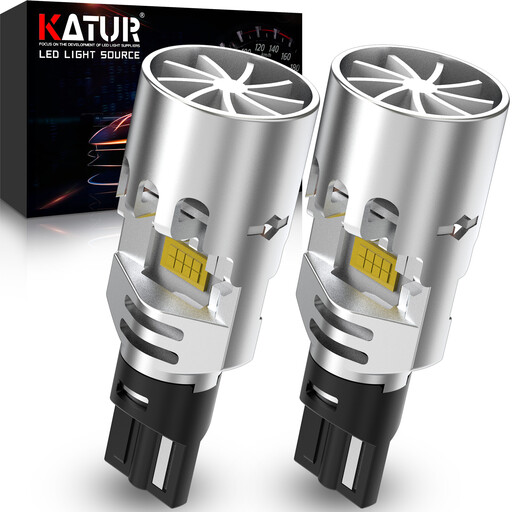
Why This Fits Their Persona: A focused option for drivers who regularly reverse in dark car parks, driveways or poorly lit streets.
It is identified for W16W, T15, 912 and 921 applications, reducing the risk of confusing it with a smaller T10 interior bulb.
12–24V operating range, built-in cooling fan, 6500K white light and CANbus-oriented design.
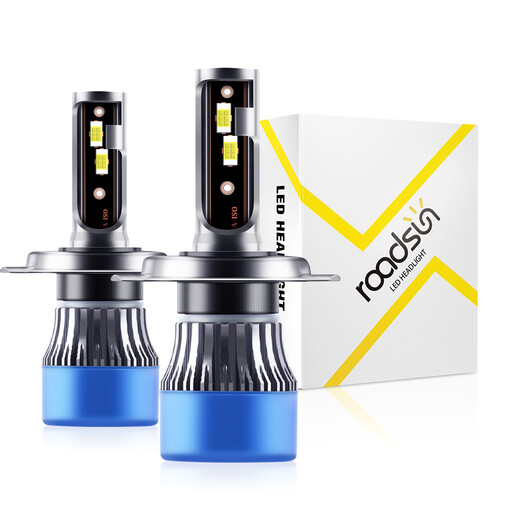
Why This Fits Their Persona: The combined main- and dipped-beam format suits compatible cars, vans, lorries and motorcycles where one H4 bulb performs both functions.
The listing states the H4/9003/HB2 fitting, 360-degree adjustable base and IP67 protection, giving more useful information than brightness alone.
6000K light, integrated cooling fan, plug-and-play connector and smart decoding chip.
Before fitting, switch off the ignition, allow the original bulb to cool and wear suitable gloves. Avoid touching the LED chip or lens. Confirm the sealing ring is seated correctly, then test dipped beam, main beam, indicators or reversing lights as applicable.
After installing headlamp or fog bulbs:
We have compiled a complete, real-time list of products that fully satisfy these strict selection criteria and UK safety regulations.
Legality depends on the bulb, vehicle, headlamp approval and intended road use. Physical fitment alone is not enough. Check the product approval information and current UK requirements before replacing a halogen headlamp bulb.
Many LED replacements are designed to use less electrical power for a similar lighting task, but actual consumption varies by model. Check the stated wattage rather than relying on general claims. CANbus systems may also require additional components.
Product listings may state service-life figures of 50,000 or 60,000 hours. These are manufacturer-provided specifications and depend on heat, vibration, voltage and installation conditions. Good airflow, an intact seal and correct electrical compatibility can help support reliable operation.