
24/7 Customer Support

Free returns

Same-day & Next-day Delivery

Quality Guaranteed

Unlock Your Welcome Offers: FREE Delivery | Up to 80% OFF | Free 30-day JoyPlus trial
Download the APP
Replacing factory halogen bulbs with car LED bulbs can give your vehicle a cooler white appearance, lower electrical consumption and a more modern lighting setup. However, choosing by brightness alone can lead to poor beam control, dashboard warnings or bulbs that do not physically fit.
This guide from the Joybuy Product Recommendation Officer explains what UK motorists should check before buying LED headlight bulbs, interior replacements or number plate lighting.
A listing may describe a bulb as “universal fit”, but that does not mean it suits every vehicle. H1, H7, H8, H9, H11, 9005 HB3, 9006 HB4 and 9012 HIR2 are different fittings with different bases, retaining clips and housing clearances.
Check the old bulb, vehicle handbook or a reputable bulb-fitment database before ordering. The same car model can use different fittings depending on its year, trim and headlamp configuration.
Large lumen numbers can be attractive, but usable road lighting also depends on beam pattern, LED chip position, reflector design and alignment. A bulb that produces a lot of light without controlling its beam may create glare for oncoming drivers or uneven illumination.
For headlights and fog lights, look for a compact design intended to imitate the original filament position. After installation, check the beam against a wall and arrange professional adjustment if necessary.
CANbus error-free LED bulbs are designed to reduce flickering, radio interference and dashboard bulb warnings, but vehicle electronics vary. Some cars may still require a decoder, resistor or coding adjustment, particularly certain Volkswagen, Mercedes-Benz, BMW and similar systems.
The Bullvision H1 listing specifically notes that an additional CANbus decoder may be required for Volkswagen, Mercedes-Benz, BMW or similar vehicles. Always read the compatibility notes rather than relying on a headline claim.
Match the exact designation, including the number and letter combination:
The socket designation is only the starting point. Confirm whether your vehicle uses the bulb for dipped beam, main beam, fog light, reversing light or another position.
Many motorists choose 6000K cool white LED bulbs for a crisp, contemporary appearance. Higher colour temperatures can look bluer, but appearance should not take priority over visibility in rain, mist or dirty conditions.
For headlights, prioritise a 1:1 chip layout, suitable heat management and a controlled beam. Product descriptions for several ENdureLite bulbs state that they use narrow chip spacing and a design intended to replicate the original beam pattern. These are product specifications, not a guarantee that every vehicle will produce the same result.
LEDs produce less waste heat at the light-emitting surface than many halogen bulbs, but the rear of the bulb still needs to dissipate heat. Aluminium housings, cooling fans and waterproof construction can be useful features where the headlamp housing has enough space.
Some listings state operating lives of 50,000 or 60,000 hours. Treat these as manufacturer or seller specifications rather than a promise of real-world service life. Frequent heat cycles, moisture, vibration and vehicle voltage can affect durability.
For interior and number plate applications, compact plug-and-play car bulbs are often simpler. Still, compare the bulb length and polarity, as some LED replacements may need to be turned around if they do not illuminate on the first installation.
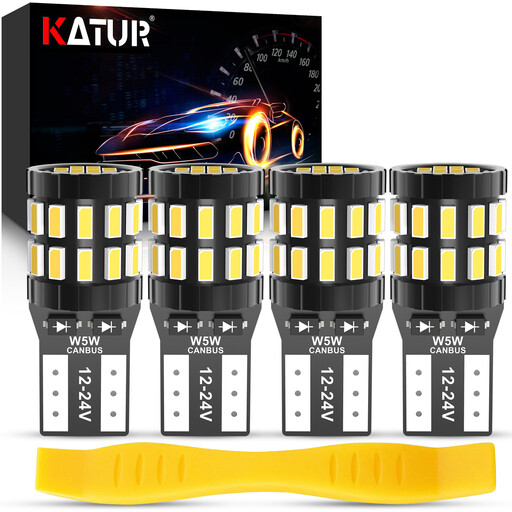
Why This Fits Their Persona: A practical starting point for drivers upgrading dome, map, courtesy, parking or number plate lighting without tackling a headlamp conversion.
The listing identifies multiple T10/W5W/501/168 equivalents and states that no extra decoder is needed for its CANbus design. Confirm your original fitting first.
Four-bulb pack, 12–24V operating range, 6500K white specification and aluminium construction.
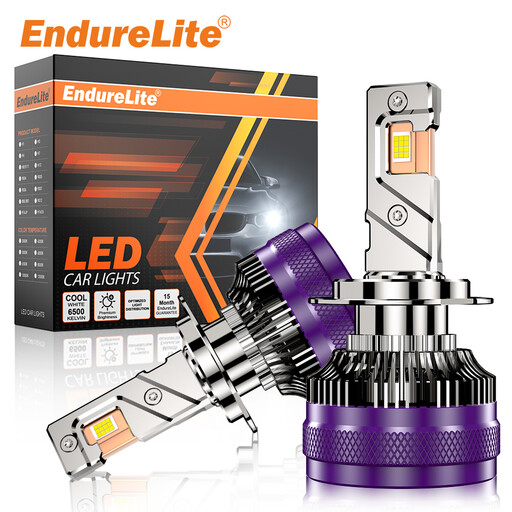
Why This Fits Their Persona: Suits motorists seeking a compact H7 headlight replacement with a cool white finish and integrated cooling.
Its listed mini-size design is intended to match stock bulb dimensions, helping reduce clearance issues. Fitment and beam alignment still need checking on the vehicle.
H7 fitting, 6000K cool white specification, aluminium housing, cooling fan and claimed 50,000-hour operating life.
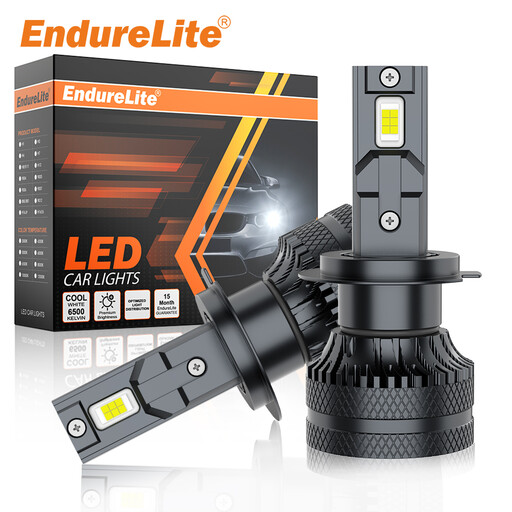
Why This Fits Their Persona: Intended for drivers whose vehicle specifically uses the less-common 9012/HIR2 fitting and who want a straightforward front-light replacement.
The product is clearly labelled 9012/HIR2 rather than being presented as a generic headlight bulb. Its listing also identifies CANbus-ready electronics and IP68 waterproof construction.
Pack of two, 6000K colour specification, built-in fan and stated plug-and-play installation.
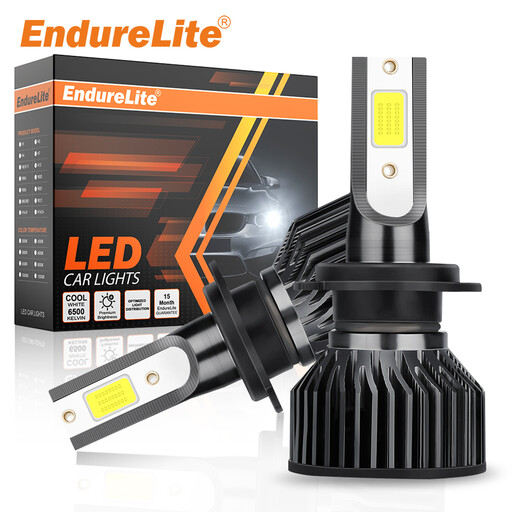
Why This Fits Their Persona: A suitable shortlist option for frequent night-time drivers whose car uses an H8, H9 or H11 fitting for the relevant lamp position.
The listing specifies a cooling fan, waterproof construction and CANbus-ready design, addressing heat, moisture and warning-light concerns.
6000K cool white output specification, two-bulb pack, stated 50,000-hour operating life and plug-and-play format.
Switch off the lights, allow halogen bulbs to cool and wear gloves when handling headlamp components. LED bulbs with fans or aluminium heat sinks may become hot during operation, so allow them to cool before removal.
After fitting, check for:
For further choices, including car interior LED bulbs and number plate LED bulbs, browse the wider non-heat-emitting lighting selection.
We have compiled a complete, real-time list of products that fully satisfy these strict selection criteria and UK safety regulations.
Legality depends on the vehicle, lamp approval, installation and beam performance. Some LED retrofits may not be suitable for road use in every headlamp housing. Check current UK requirements, the vehicle handbook and MOT guidance before using them on public roads.
They may use less power for a comparable application, but the exact saving depends on the bulb’s wattage and the vehicle circuit. Check the listed wattage rather than assuming every LED replacement has the same consumption.
Manufacturers often publish long operating-life figures, such as 50,000 or 60,000 hours. Actual service life can vary with heat, moisture, vibration and installation quality. Good cooling and a correctly sealed housing can help, but no stated lifespan should be treated as a guarantee.