
24/7 Customer Support

Free returns

Same-day & Next-day Delivery

Quality Guaranteed

Unlock Your Welcome Offers: FREE Delivery | Up to 80% OFF | Free 30-day JoyPlus trial
Download the APP
By Joybuy Product Recommendation Officer
Replacing tired halogen or HID lighting with car LED bulbs can improve the appearance of your vehicle and provide a crisp, modern light colour. However, the fitting that looks right in a listing may still be unsuitable for your headlamp housing, dashboard system or intended use.
Before buying LED headlamp bulbs, LED fog light bulbs or car interior LED bulbs, check the original bulb code, available space and vehicle requirements. This guide highlights the main buying pitfalls and compares practical options for different UK motorists.
Large lumen figures and percentage increases are common in automotive lighting listings. They do not automatically guarantee a useful beam on the road. A bulb must position its LED chips correctly inside the reflector or projector. Poor positioning can create dark patches, excessive glare or an unfocused beam.
Look for a stated 1:1 filament-position design, suitable chip spacing and clear installation guidance. After fitting LED replacement bulbs, check the beam height and alignment rather than assuming that a brighter-looking light is correctly aimed.
“Plug-and-play car bulbs” normally means that the bulb fits the original socket without cutting wires. It does not always mean that the dust cover, heat sink or cooling fan will fit inside the headlamp housing.
Fan-cooled bulbs also need sufficient clearance. If the fan is obstructed, heat may build up and affect performance. Turn off the vehicle, allow the original bulb to cool and follow the vehicle handbook during installation.
Canbus error-free LED bulbs are designed to reduce dashboard warnings, flickering or bulb-out messages, but vehicle electrical systems vary. A product described as compatible with most vehicles may still require an additional decoder on a particular model.
Check the original bulb code and your vehicle’s manual first. If a warning appears after installation, consult the product instructions rather than repeatedly switching the lights on and off.
The bulb code is the primary compatibility check. Common examples include:
Do not rely only on a retailer’s vehicle selector. Compare the original bulb marking, handbook and socket shape before ordering.
6000K cool white LED bulbs produce a clean white appearance, while 6500K options may look slightly cooler or bluer. Colour preference should not override beam quality or the requirements of the lamp position.
For interior lighting, white, red, amber and blue T10 bulbs are available for different visual effects. For exterior lamps, confirm that the colour is appropriate for the function and permitted for use on public roads. Indicator, rear, number plate and fog-light requirements can differ from interior lighting.
LED bulbs generate heat even though they use light-emitting diodes. Aluminium housings and cooling fans can help dissipate heat, while an IP-rated housing, such as IP68 where specified, indicates resistance to dust and water under defined test conditions.
Also compare voltage, wattage, pack quantity and claimed operating life. A listed lifespan of 50,000 or 60,000 hours is a product specification, not a guarantee of identical service in every vehicle. Heat, vibration, moisture and installation quality can affect real-world durability.
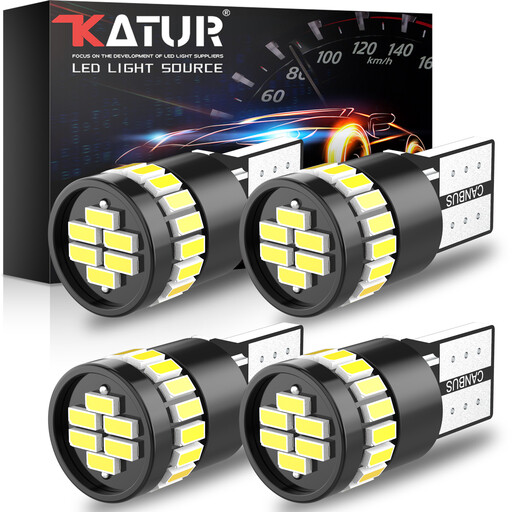
Why This Fits Their Persona: A four-pack of compact T10-style bulbs suits drivers starting with interior, number plate, map or courtesy-light upgrades.
The stated 168, W5W, T10, 194 and 2825 compatibility codes make it easier to compare against the original bulb before ordering.
24 SMD 3014 chips, 6000K white output, 12V operation and a stated Canbus design.
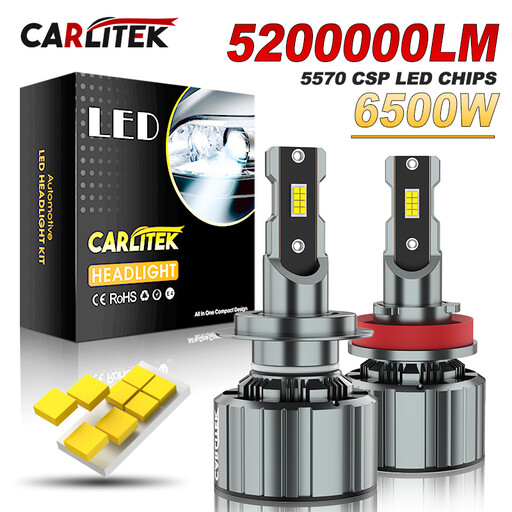
Why This Fits Their Persona: Suitable for motorists seeking a compact headlamp or fog-light upgrade with integrated cooling and a straightforward installation format.
Its stated 1:1 filament-position design addresses the risk of buying a high-output bulb without considering beam placement.
The listing specifies IP68 water resistance, an integrated 10,000 RPM fan, 12V operation and built-in Canbus technology.
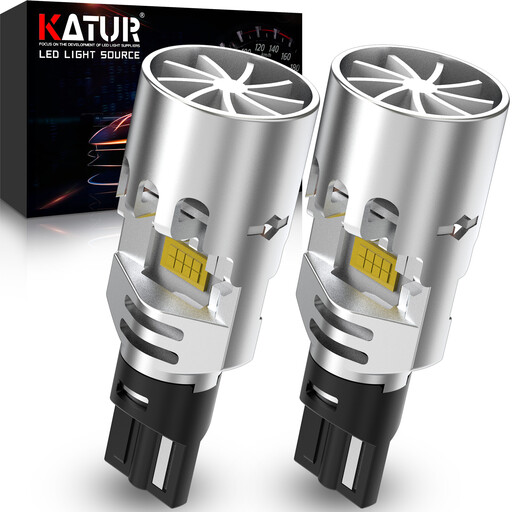
Why This Fits Their Persona: A practical choice for drivers who regularly reverse in dark car parks, on rural driveways or in poorly lit streets.
The product is specifically listed for W16W, T15, 921, 912, 906, 904 and 902 applications, reducing reliance on a generic bulb description.
The two-pack has a stated 6500K white colour, aluminium housing, cooling fan and Canbus-compatible design.
We have compiled a complete, real-time list of products that fully satisfy these strict selection criteria and UK safety regulations.
Before fitting any LED replacement bulbs:
For headlamp conversions, professional fitting may be sensible where access is restricted or a HID ballast, decoder or beam adjustment is involved.
LEDs can use less electrical power for a comparable lighting application, but the actual saving depends on wattage, driving time and the vehicle’s charging system. Purchase price, cooling components and compatibility should also be included in the cost comparison.
“Canbus-compatible” generally means the bulb is designed to reduce common warning or flicker issues; it cannot guarantee compatibility with every vehicle. Check the connector, polarity, bulb seating and vehicle-specific requirements. Some systems may need an additional decoder.
Listings may state operating lives such as 50,000 or 60,000 hours. Treat these as manufacturer specifications rather than a fixed lifespan for every installation. Heat management, moisture, vibration, voltage stability and correct fitting all influence service life.