
24/7 Customer Support

Free returns

Same-day & Next-day Delivery

Quality Guaranteed

Unlock Your Welcome Offers: FREE Delivery | Up to 80% OFF | Free 30-day JoyPlus trial
Download the APP
Upgrading your vehicle's lighting to LED seems like a simple choice. You are promised a brighter, more modern look and a longer lifespan than old halogen bulbs. Yet, many UK drivers find themselves disappointed, with flickering lights, dashboard warning errors or bulbs that fail within months. The market for car LED bulbs is filled with confusing claims and technical jargon that can easily lead to a wasted purchase.
As the Joybuy Product Recommendation Officer, my role is to help you navigate this market. We will look past the marketing hype and focus on the practical details. Before you buy, be aware of these common pitfalls:
To ensure you get a reliable and effective bright car light upgrade, focus on these three non-negotiable factors.
This is the most basic yet most commonly mistaken detail. Bulbs are not one-size-fits-all. Your vehicle’s manual is the definitive source for the correct fitment code. Common codes you will encounter include:
Always verify the code in your owner's manual or by inspecting the existing bulb before purchasing.
If your car was manufactured after the mid-2000s, it almost certainly has a CANBUS system. When choosing an LED replacement, especially for exterior lights, look for models specifically designed to be "CANBUS compatible" or "error-free". These bulbs incorporate circuitry to mimic the power draw of a halogen bulb, satisfying the vehicle's monitoring system. For applications like indicators, even a CANBUS-ready bulb may sometimes require an additional load resistor to prevent "hyper-flashing" (flashing too quickly).
An LED's lifespan is directly tied to how well it dissipates heat. Ignore impressive lifespan claims if the bulb's construction seems poor. Look for these features:
We have selected a few options from our catalogue that align with different driver needs, keeping the above pitfalls and parameters in mind.
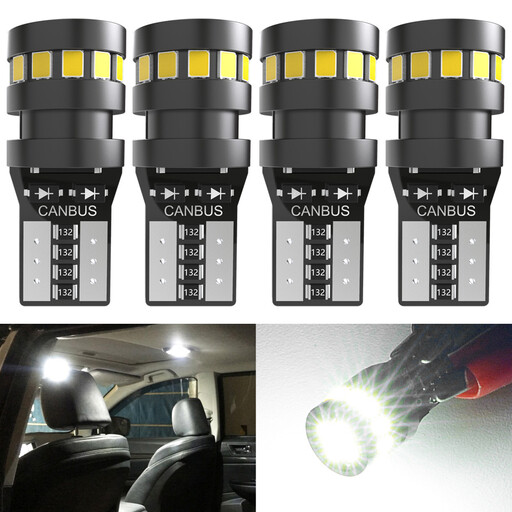
Why This Fits Their Persona: This is for the driver who wants a simple, effective and modernising upgrade for their car's interior map lights, dome lights or number plate bulbs without needing complex modifications.
It directly addresses the CANBUS pitfall with a built-in intelligent IC driver, designed to prevent error messages on the majority of vehicles when replacing standard T10 LED bulb fitments.
Features a full aluminium body for superior heat dissipation compared to basic plastic bulbs, promoting a more stable and longer operational life. The 360-degree lighting angle ensures even illumination.
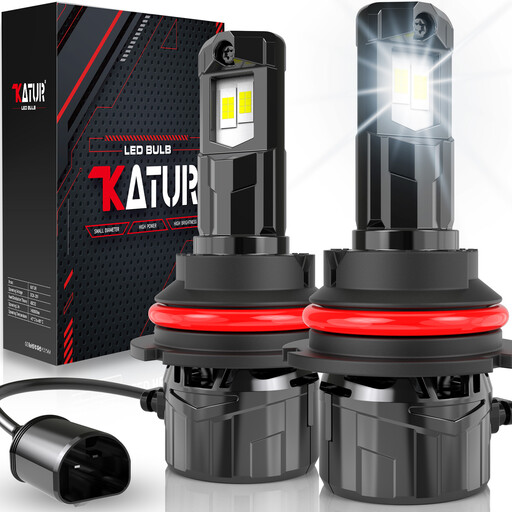
Why This Fits Their Persona: For the enthusiast seeking a significant improvement in nighttime driving visibility. This is a dedicated HB5 LED headlight bulb replacement aimed at delivering a powerful, crisp white light for main and dipped beams.
This bulb counters the lifespan and performance degradation trap with a robust thermal management system, including an aviation aluminium body and a high-speed (16,000 RPM) turbo fan for active cooling.
Its 1:1 mini size design mimics a halogen bulb's dimensions, simplifying installation in headlight housings with limited space. The integrated driver and CANBUS decoding system aim for compatibility with a wide range of vehicles.
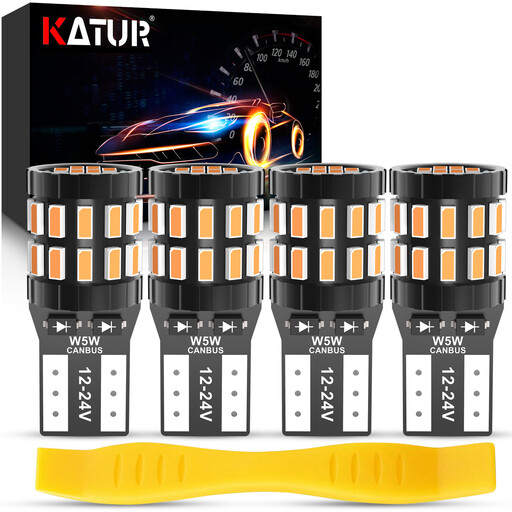
Why This Fits Their Persona: Perfect for the car owner looking to replace dim, orange-peel effect indicator bulbs or side markers with a crisp, instant-on amber light, or for adding a unique colour to their car interior LED lights.
This bulb provides a specific, vibrant colour while still integrating a CANBUS-ready design. This helps prevent the common issues of hyper-flashing or dashboard errors that often occur when swapping to coloured LEDs.
The use of 30 high-power SMD chips arranged for 360-degree output ensures a uniform, vibrant colour without the 'hot spots' common in lower-quality coloured bulbs. The wide 12-24V operating voltage adds to its versatility.
We have compiled a complete, real-time list of products that fully satisfy these strict selection criteria and UK safety regulations.
For car interior LED lights, you are generally free to use any colour. For exterior lights, the law is very strict. Bulbs must emit the legally required colour (e.g., white or yellow for the front, red for the rear and amber for indicators). For headlights, an LED conversion must not alter the beam pattern in a way that causes glare to other road users. If the headlight unit is not designed for an LED bulb, it could be an MOT failure. Always check the latest DVSA guidelines.
It depends on your vehicle. Many modern bulbs, particularly those advertised as W5W CANBUS error free, have resistors built-in. For most interior and number plate applications, this is sufficient. However, some vehicles with highly sensitive monitoring systems may still require an additional, externally wired load resistor to prevent errors or hyper-flashing, especially when replacing indicator bulbs.
The most reliable method is to consult your vehicle's owner's manual, which will list the fitment codes for all user-replaceable bulbs. Alternatively, you can carefully remove the existing bulb you wish to replace. The fitment code (e.g., T10, 501, HB5) is usually printed on its base. Online bulb finder tools can be helpful, but always try to cross-reference with your manual for accuracy.