
24/7 Customer Support

Free returns

Same-day & Next-day Delivery

Quality Guaranteed

Unlock Your Welcome Offers: FREE Delivery | Up to 80% OFF | Free 30-day JoyPlus trial
Download the APP
Replacing tired halogen, HID or interior bulbs can improve the appearance and usability of your vehicle, but choosing car LED bulbs is not simply a case of selecting the highest lumen figure. Socket compatibility, beam pattern, heat management and vehicle electronics all affect whether an upgrade works properly.
UK drivers should also check whether a headlamp conversion is suitable for their vehicle and permitted for road use. A bulb that fits physically may still produce an unsuitable beam pattern or cause an MOT issue. Always follow the vehicle handbook, bulb markings and current UK road-use requirements.
T10, W5W, 501, 194 and 168 can refer to closely related wedge-bulb formats, while H8, H9 and H11 are different headlamp or fog-light fittings. Similar-looking bulbs are not automatically interchangeable.
Before ordering, compare the marking on the original bulb with the listing. If it is not visible, check the vehicle handbook or parts catalogue. This is especially important for H1 LED headlight bulbs, W16W T15 912 921 LED bulbs and D-series replacements.
Product listings may quote very high lumen figures or percentage increases over halogen. These figures can depend on testing conditions and may refer to a pair rather than one bulb. Brightness alone does not confirm useful road illumination.
A correctly positioned LED chip and suitable beam pattern matter more than a headline number. Excessive glare can inconvenience other road users and may indicate that the bulb is unsuitable for the original reflector or projector.
CANbus error-free LED bulbs include electronics intended to reduce flickering, dashboard warnings or bulb-out messages. However, vehicle systems vary considerably. Some sensitive European models may still require a separate decoder or resistor.
Treat “99% compatibility” as a product-listing claim rather than a guarantee for your particular car. Test the bulb after installation and retain the original until you are satisfied that the lighting and dashboard functions operate correctly.
Choose the exact base and intended position:
A plug-and-play car bulb should connect to the existing socket, but available space behind the lamp still needs checking. Fans, heat sinks and external drivers may prevent the original dust cover from fitting.
Listings commonly offer 6000K or 6500K white LED bulbs, producing a cool white appearance. This can look modern, but colour temperature is not the same as illumination quality. For fog lamps, a cooler colour may not suit every driver or weather condition.
For headlamps, check whether the LED emitter position is designed to replicate the original filament or HID light source. A bulb that sits incorrectly can create dark areas or unwanted glare, even when it appears bright when viewed directly.
LEDs use less power than many incandescent bulbs, but they still generate heat around the chips. Aluminium housings, passive heat sinks and cooling fans are common solutions. Fan-cooled bulbs may provide additional heat removal but introduce moving parts and require enough room inside the housing.
Manufacturers may list operating lives of 50,000 or 60,000 hours. These are specification claims, not a promise of service life in every UK driving environment. Moisture, vibration, temperature and installation quality can all affect longevity.
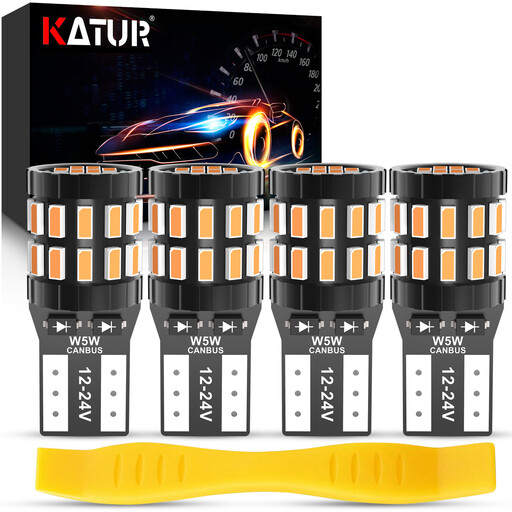
Why This Fits Their Persona: A four-pack suits drivers refreshing several interior, map, door or licence-plate positions without buying individual bulbs.
The listing identifies the T10/W5W/501/168 format and states 12–24V operation with CANbus design, helping buyers check fitment before purchase.
Amber-yellow output, 30 listed 3014 SMD chips per bulb, aluminium construction and plug-and-play installation.
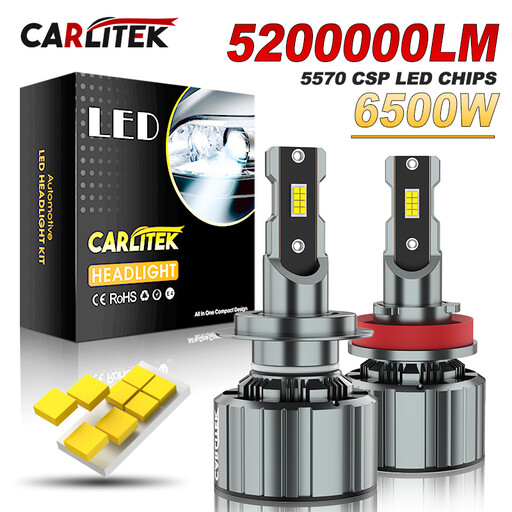
Why This Fits Their Persona: Suitable for drivers seeking a compact headlamp or fog-light replacement with integrated electronics and weather-resistant construction.
Its listing specifies a 1:1 filament-position design and built-in CANbus system, while still advising buyers to verify the original bulb number.
6000K cool-white output, IP68 rating stated in the listing, plug-and-play format and a listed 50,000-hour operating life.
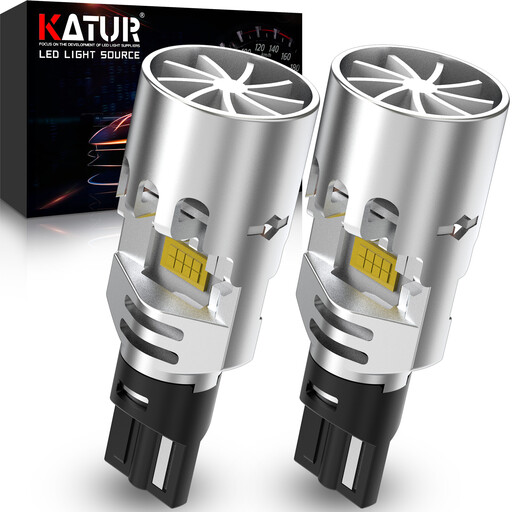
Why This Fits Their Persona: A practical match for frequent drivers who want a clearer, cooler-white reversing-light appearance where the vehicle uses a W16W/T15 socket.
The listing clearly identifies W16W, T15, 912 and 921 applications, plus a CANbus-compatible design, reducing confusion with smaller T10 bulbs.
6500K white output, 12–24V specification, 1:1 replacement format and integrated fan-based cooling.
We have compiled a complete, real-time list of products that fully satisfy these strict selection criteria and UK safety regulations.
Switch off the ignition and allow bulbs to cool before removal. Wear gloves, avoid touching LED chips and make sure seals and dust covers are replaced correctly. After fitting, test the light, polarity, dashboard warnings and beam alignment.
LEDs generally use less electrical power than equivalent incandescent bulbs, which can reduce the load on the vehicle’s electrical system. Actual savings depend on the bulb position, wattage and hours of use. Do not assume lower wattage automatically means a brighter or road-legal headlamp.
They may use less power than comparable incandescent bulbs, particularly for interior, sidelights and number-plate applications. The financial saving is usually modest for occasional-use lamps, so compatibility and reliable operation should guide the purchase.
Listings commonly state 30,000–70,000 hours, but real service life depends on heat, moisture, vibration and electrical conditions. Fanless designs have fewer moving parts, while fan-cooled models may require more space and protection from dust.
No. The socket, housing, electrical system and original light source must all be compatible. Headlamp conversions can also raise beam-pattern and MOT concerns. Check the handbook, original bulb marking and current UK requirements before replacing halogen or HID units.