
24/7 Customer Support

Free returns

Same-day & Next-day Delivery

Quality Guaranteed

Unlock Your Welcome Offers: FREE Delivery | Up to 80% OFF | Free 30-day JoyPlus trial
Download the APP
Driving with standard halogen bulbs can often feel like a compromise, especially on poorly lit British roads or during a downpour. The dim, yellowish light can reduce visibility and make a modern car feel dated. If you are looking for a straightforward way to enhance both safety and style, upgrading your vehicle's lighting with car LED bulbs is a practical solution.
This guide is designed to help you navigate the options available. We will cover the key factors to consider before you buy and present some of our top recommendations to help you make an informed choice, whether you are a seasoned DIY enthusiast or new to vehicle modifications.
Choosing the right bulbs involves more than just picking the brightest option. Here are a few practical points to consider to ensure you get a reliable and effective upgrade.
The first step is to identify the exact type of bulb your car uses. Bulbs are not one-size-fits-all, and different functions require specific fitments. For example, your main headlights might use an H4 LED headlight or HIR2 9012 LED bulb, while smaller lights for the interior, side markers or licence plate often use a T10 LED bulb (also known as W5W LED).
You can find this information in your vehicle’s owner's manual or by checking the markings on the base of the existing bulb. Using the correct fitment is essential for a secure installation and proper performance.
Many modern vehicles use a Controller Area Network (Canbus) system to monitor the car's electrical components, including the lights. Since LED bulbs draw significantly less power than halogens, the Canbus system can mistakenly interpret this as a burnt-out bulb, triggering a dashboard warning light or causing the LEDs to flicker.
To avoid this, look for Canbus error free LED bulbs. These have built-in resistors that mimic the power draw of a halogen bulb, ensuring seamless communication with your car's computer system. This feature is a key part of a successful LED headlight conversion kit.
The performance of automotive LED lighting is typically measured in lumens (brightness) and Kelvin (colour temperature). Most drivers prefer 6000K car bulbs, which produce bright white car lights similar to natural daylight. This crisp, clear illumination improves visibility and reduces eye strain during night driving.
While higher lumens mean a brighter light, it is crucial that the bulb is designed to project a correct beam pattern. A well-designed LED bulb will illuminate the road effectively without creating glare that could dazzle oncoming drivers, a key consideration for road legality in the UK. Many modern options are designed as plug and play LED headlights, which helps ensure the beam pattern is correctly aligned.
Here are a few carefully selected options that offer a balance of performance, reliability and ease of installation.
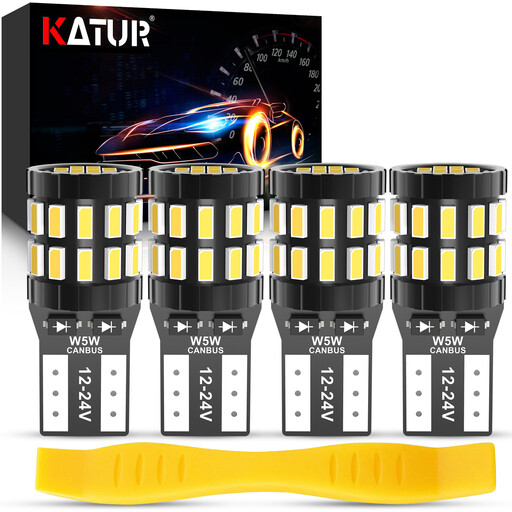
Why It Stands Out: These T10 bulbs are a versatile and simple upgrade for many of your car's smaller lights. Each bulb is equipped with 30 high-power LED chipsets, providing a 360-degree viewing angle that eliminates the dark spots common with lesser-quality bulbs. Their built-in Canbus compatibility makes them a straightforward replacement for most vehicles.
Pros:
Who is it for? Drivers looking for a quick and effective way to modernise their LED interior car lights, dome lights, map lights or car licence plate bulb.

Why It Stands Out: This HIR2 9012 LED kit is notable for its fanless design. By eliminating the cooling fan, it removes a potential point of failure and operates silently. The 1:1 mini halogen design ensures it fits into tight headlight housings without modification, making it a true plug and play LED headlight solution.
Pros:
Who is it for? Owners of vehicles using HIR2/9012 bulbs (common in many Ford, Toyota and GM models) who want a high-performance, silent and easy-to-install headlight upgrade.
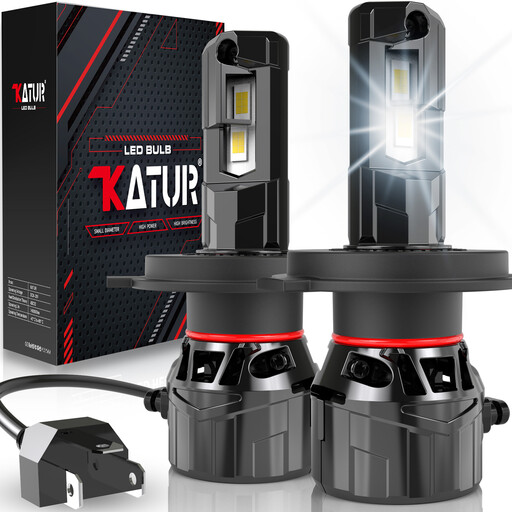
Why It Stands Out: For vehicles equipped with H4 bulbs that combine high and low beams, this kit offers a substantial upgrade in brightness and longevity. It features a powerful 16,000 RPM turbo fan and a copper tube core to manage heat effectively, ensuring consistent performance. The 1:1 halogen size simplifies installation, removing the need for modifications.
Pros:
Who is it for? Car owners whose vehicles use H4/9003/HB2 bulbs for their high and low beams and are seeking a maximum-performance LED headlight conversion kit.
Upgrading your main bulbs is a great start, but automotive LED lighting offers many other ways to customise your vehicle. From ambient interior strips to stylish puddle lights, the possibilities are extensive.
For those interested in adding a unique and functional touch, explore our curated selection of LED car door lights to further enhance your vehicle's appearance.
The legality of aftermarket LED headlight bulbs in the UK depends on whether they are E-marked and produce a beam pattern that complies with MOT standards (i.e., it does not cause glare or dazzle to other road users). For other applications like interior or licence plate lights, regulations are generally less strict. It is always advisable to check the latest DVSA guidelines and ensure your headlights are correctly aligned after installation.
Not always. Many modern LED bulbs are advertised as Canbus error free, with built-in components to prevent dashboard warnings. However, some highly sensitive vehicle computer systems may still detect the lower power draw and require an additional external decoder or resistor. It is often a case of trying the bulb first to see if your vehicle requires one.
For most DIYers, the process is straightforward. The majority of modern kits are designed as plug and play LED headlights, with a 1:1 design that fits directly into the factory socket without any cutting or splicing of wires. The most common steps involve removing the dust cover, twisting out the old bulb, inserting the new LED bulb and securing it. Always consult your vehicle's manual for specific instructions.