
24/7 Customer Support

Free returns

Same-day & Next-day Delivery

Quality Guaranteed

Unlock Your Welcome Offers: FREE Delivery | Up to 80% OFF | Free 30-day JoyPlus trial
Download the APP
Replacing tired halogen or HID lighting can make a car feel more modern, but choosing car LED headlight bulbs is not simply a matter of selecting the highest lumen figure. The wrong base, beam pattern or electrical compatibility can leave you with flickering, dashboard warnings or an unsuitable light pattern.
This guide explains the practical checks to make before buying, including H7 LED headlight bulbs, H11 LED bulbs, H4 LED bulbs, HID replacements and smaller T10 W5W 194 LED bulbs.
Product listings often use large percentage or lumen claims. These figures can be useful for comparing specifications within a range, but they do not automatically describe the usable light on the road. Reflector and projector housings, chip position and beam alignment all affect the result.
A poorly positioned LED source may create dark patches or excessive glare, even if the packaging states a high output. Look for a 1:1 bulb design, closely positioned LED chips and an adjustable collar where appropriate.
Bulb codes are not interchangeable. An H7 fitting is different from H11, while H8, H9 and H11 LED bulbs may share related applications but still require confirmation against the original bulb. Other common formats include:
Check the original bulb, handbook or vehicle parts catalogue before ordering. Vehicle registration look-up tools can also be helpful, but the original bulb code remains an important physical check.
Canbus error-free LED bulbs include electronics intended to reduce warning messages, flickering or radio interference. However, vehicle electrical systems vary, and a bulb advertised as compatible with most vehicles may still need a decoder or resistor on a sensitive model.
If the dashboard displays a bulb warning after installation, do not ignore it. Check the product instructions and use only a compatible decoder supplied or recommended for that bulb.
Confirm the exact code first, then measure the available space behind the dust cover. Fan-cooled bulbs can require more room than standard halogen bulbs. Fanless designs may be useful where the rear of the housing is compact, but they still need adequate heat dissipation.
This is particularly relevant for H7 LED headlight bulbs, H1 and HIR2 9012 applications, where the retaining clip and rear cover can vary between vehicle models.
A bright white LED headlight commonly uses a colour temperature around 6000K or 6500K. This produces a cool white appearance, but colour temperature alone does not determine beam quality. A correctly aligned source is more important than choosing the bluest-looking light.
After a car bulb replacement, check the beam on a level surface and adjust the headlamp aim if necessary. Avoid using a product if it creates obvious glare for oncoming drivers. UK road-use requirements can differ according to the vehicle, lamp assembly and bulb approval, so check current guidance and the product’s certification before fitting LEDs to public-road headlamps.
LEDs produce heat at the rear of the chip, so examine the cooling method:
For fog lamps, LED fog light bulbs should be checked for housing compatibility and beam control rather than brightness alone. Interior lamps have different requirements and generally use smaller formats such as T10 or W5W.
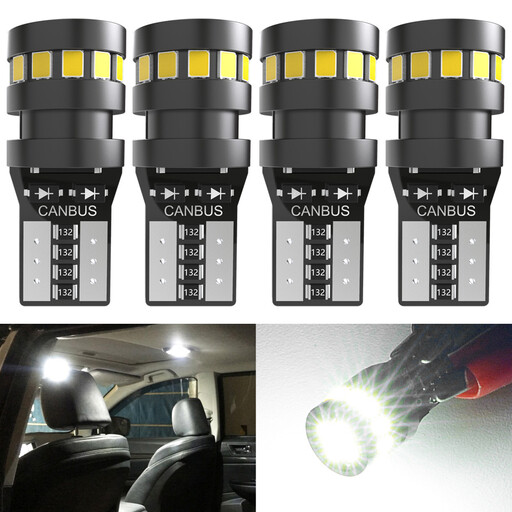
Why This Fits Their Persona: A practical starting point for drivers upgrading interior, number plate, map, dome or courtesy lighting without changing the main headlamps.
The listing identifies T10, W5W, 194, 168 and 501 equivalents, helping buyers check the code instead of relying on a generic “universal” description.
12V, 6500K xenon white output, aluminium body and a pack of four. The listing also specifies built-in Canbus circuitry.

Why This Fits Their Persona: Suits owners seeking a direct H7 replacement with a compact format for compatible cars, SUVs and light commercial vehicles.
Its 1:1 mini-size design addresses clearance concerns, while the listing identifies a built-in CANbus system rather than promising universal electrical performance.
Pair format, 6500K colour temperature, high-speed fan cooling and plug-and-play installation are listed features.
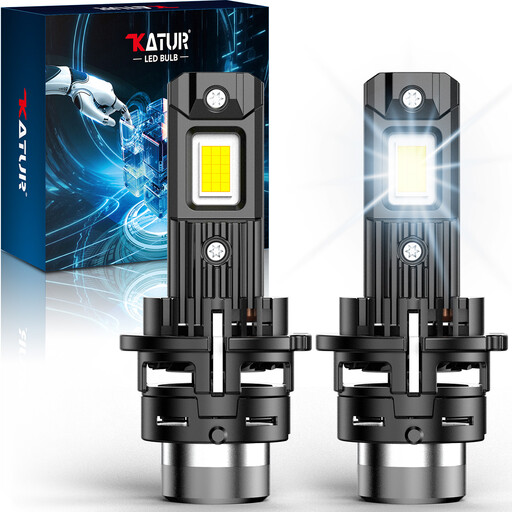
Why This Fits Their Persona: Designed for drivers replacing D4S HID bulbs who want an immediate-start LED format for regular night-time or motorway use.
The listing clearly states that it is for HID assemblies only, preventing the common mistake of fitting a D4S replacement to a halogen housing.
The product listing specifies a 1:1 design, aluminium cooling construction, built-in fan and Canbus circuitry.
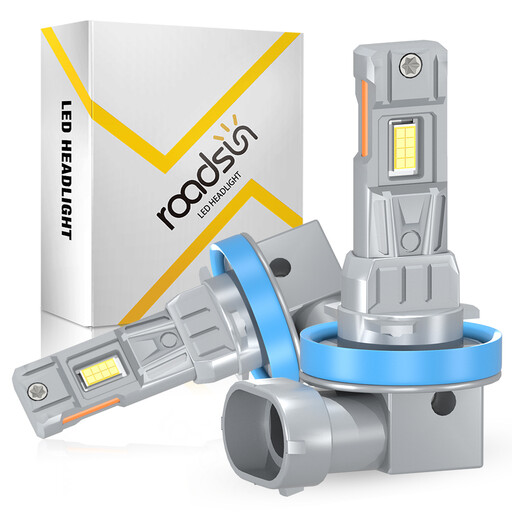
Why This Fits Their Persona: A flexible option for compatible cars, trucks and SUVs using H8, H9 or H11 sockets for headlights or fog lights.
The product identifies three compatible bulb codes and a 1:1 replacement format, reducing the risk of buying solely from a vehicle category description.
The listing specifies IP67 protection, aluminium alloy housing, fan cooling and a stated operating range from -40°C to +80°C.
Switch off the ignition and allow existing bulbs to cool before starting. Wear gloves, avoid touching the LED chip and retain the original bulbs in the vehicle. Confirm that the connector is secure, the dust cover can close properly and both high and low beam functions operate correctly.
LEDs generally use less power than equivalent halogen products, but actual consumption depends on the bulb’s wattage and vehicle circuit. A longer stated operating life can reduce replacement frequency, yet heat, vibration, moisture and installation quality still affect real-world service life.
Road legality depends on the bulb, vehicle, headlamp assembly and applicable approval requirements. Not every LED retrofit is suitable for public-road use. Check the manufacturer’s compliance information, current UK requirements and correct beam aim before fitting.
Not always. Some plug-and-play car bulbs include Canbus electronics, but sensitive vehicles may still show a warning or flicker. If this happens, consult the fitting instructions for a compatible decoder rather than adding an unsuitable resistor.
These colour temperatures produce a cool white appearance, but they are not automatically suitable for every housing or road-use situation. Prioritise the correct bulb code, beam pattern, clearance and compliance information over colour alone.