
24/7 Customer Support

Free returns

Same-day & Next-day Delivery

Quality Guaranteed

Unlock Your Welcome Offers: FREE Delivery | Up to 80% OFF | Free 30-day JoyPlus trial
Download the APP
Replacing tired halogen lamps with car LED headlight bulbs can give a cleaner light colour, quicker illumination and a modern appearance. However, a large lumen figure or “plug-and-play” label does not guarantee a suitable road-lighting upgrade.
The most important checks are bulb compatibility, beam control, electrical compatibility and installation quality. This guide explains the buying pitfalls to avoid, then matches several options to different UK driving needs.
A vehicle may use different bulbs for dipped beam, main beam, fog lights or daytime running lights. Even closely related trims can have different sockets or factory headlamp systems.
For example, H4 9003 HB2 bulbs combine high and low beam in one unit, while H7 LED bulbs are generally single-function bulbs. 9005 HB3 LED bulbs, 9006 HB4 LED bulbs and H8 H9 H11 LED bulbs also use different bases and electrical arrangements.
Check the original bulb marking, owner’s manual and headlamp housing before ordering. Do not rely on a generic vehicle compatibility tool alone.
Listings may quote figures such as “300% brighter” or extremely high lumen numbers. These are product-listing claims, not a guarantee of useful illumination on a UK road. Beam shape, reflector design, lens condition, alignment and colour temperature all affect what the driver sees.
A poorly positioned LED chip can create dark patches or glare even when the lamp appears bright. Look for a 1:1 filament-position design, adjustable mounting collar or projector-compatible construction, then check the beam after installation.
CANbus error-free bulbs are designed to reduce flickering, bulb warnings and radio interference, but vehicle electronics vary. A built-in decoder may work on one car and still require an external resistor or decoder on another, particularly on vehicles with sensitive monitoring systems.
After fitting, test dipped beam, main beam, indicators and dashboard warnings. If a warning remains, seek guidance from a qualified auto electrician rather than adding components without checking heat and wiring requirements.
Confirm whether your vehicle needs:
Some listings describe “high and low beam LED bulbs”, but the phrase may refer to a two-function H4 bulb or a pair used in separate high- and low-beam positions. Read the model code carefully.
A 6000K cool white headlight bulb produces a noticeably whiter appearance than a standard warm halogen lamp. Colour preference is subjective, but colour temperature does not by itself determine beam quality.
The LED chip should sit in a position that resembles the original halogen filament. Check that the bulb can be rotated or adjusted where necessary. Once fitted, use a level surface and inspect the cutoff. Headlights must not dazzle oncoming drivers, and beam alignment should be checked after any replacement.
LEDs convert energy into heat as well as light. Aluminium housings and integrated fans can help manage operating temperature, but the fan needs clearance and may not fit behind every dust cap.
Water resistance is commonly shown as IP67 or IP68. This indicates resistance under specified test conditions; it does not remove the need to fit sealing rings correctly. Also confirm that the driver and cooling assembly do not obstruct the original housing.
In the UK, aftermarket lighting must remain suitable for road use and pass the relevant inspection requirements. Check current rules, headlamp approval and MOT guidance for your vehicle before fitting.
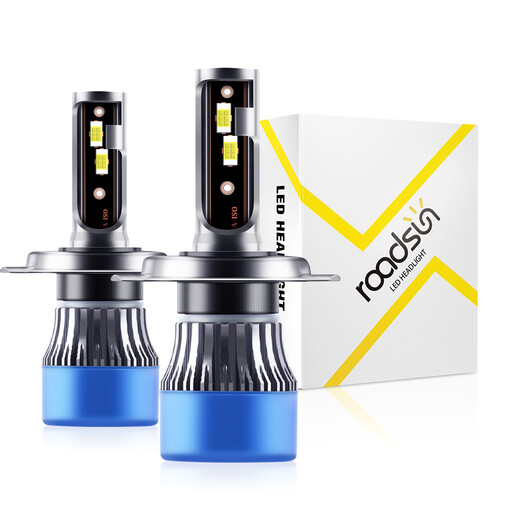
Why This Fits Their Persona: A straightforward option for drivers replacing combined high and low beam halogen bulbs in compatible cars, SUVs, vans or motorcycles.
The H4/9003/HB2 socket is clearly specified, helping prevent a costly mismatch. The listing also identifies possible decoder needs on some sensitive vehicles.
Integrated high/low beam function, 6000K light colour, cooling fan, IP67 protection and a 360-degree adjustable base.
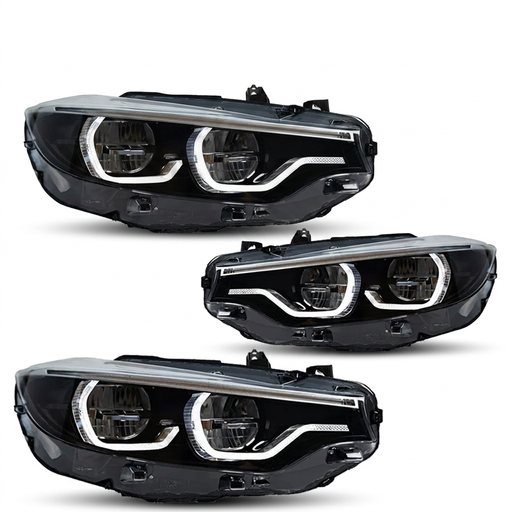
Why This Fits Their Persona: Suitable for owners seeking an integrated front-end lighting replacement with projector lighting, DRLs and dynamic indicators rather than individual bulbs.
The listing identifies compatible BMW chassis and connector details. Buyers should still confirm the exact pin configuration and trim before ordering.
Two-piece LED assemblies with projector lighting, DRL and dynamic turn-signal functions. Professional fitting is recommended.
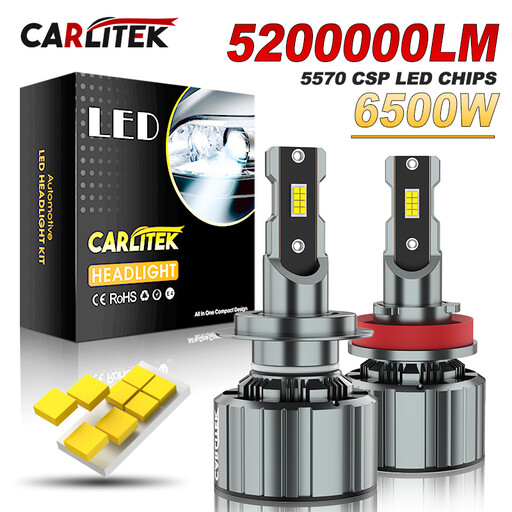
Why This Fits Their Persona: A practical match for frequent night drivers who need compatible H8, H9 or H11 replacements with integrated cooling and weather sealing.
The socket family, 12V operating specification and IP68 rating are stated. Buyers should verify dust-cap clearance for the fan housing.
6000K cool white output, built-in CANbus technology, aluminium housing, fan cooling and a stated 50,000-hour operating life.
We have compiled a complete, real-time list of products that fully satisfy these strict selection criteria and UK safety regulations.
Before fitting, switch off the vehicle and allow the original bulb to cool. Wear gloves, avoid touching the LED chip or lens, and ensure the sealing ring is correctly seated.
A plug-and-play design may reduce wiring work, but it does not guarantee a five-minute installation on every vehicle. Check:
LEDs can use less energy than equivalent halogen lamps, but the saving is usually modest compared with the purchase price. Cooling fans may also produce a small amount of operating noise and should remain unobstructed.
Legality depends on the bulb, headlamp housing, vehicle and applicable approval requirements. A bulb that fits physically may still produce an unsuitable beam or fail inspection requirements. Check current UK road-traffic and MOT guidance, and have the beam alignment checked after installation.
Many product listings state operating lives of 50,000 hours, but actual service life depends on heat, vibration, moisture, electrical conditions and fan performance. Treat the figure as a stated specification rather than a guaranteed ownership period.
Not always. Some vehicles work with built-in CANbus bulbs, while others display an error or flicker. If the vehicle is sensitive, an external decoder may be needed. Confirm compatibility before purchase and avoid installing resistors where heat dissipation has not been properly considered.