
24/7 Customer Support

Free returns

Same-day & Next-day Delivery

Quality Guaranteed

Unlock Your Welcome Offers: FREE Delivery | Up to 80% OFF | Free 30-day JoyPlus trial
Download the APP
Replacing tired headlamps can make night driving more comfortable, but choosing car LED headlight bulbs is not simply a matter of selecting the highest lumen figure. Fitment, beam control, heat management and vehicle electronics all affect whether an upgrade performs properly on UK roads.
Marketing descriptions can also make similar products appear very different. Before ordering, check these common buying traps and use the guide below to narrow down a suitable option.
H1 LED headlight bulbs are designed for vehicles using an H1 fitting, while HID systems commonly use D-series bulbs. D1S, D1R, D2S, D2R, D3S, D3R, D4S and D4R are not interchangeable simply because they look similar.
The letter is important:
Confirm the existing bulb marking, vehicle handbook or manufacturer fitment information before purchasing. A “universal fit” description does not remove the need to check the socket, dust-cover clearance and headlamp housing.
High-brightness car bulbs may advertise figures such as 18,000LM, 20,000LM or 30,000LM per pair. These figures are useful for comparing listed output, but they do not guarantee a suitable beam on your particular vehicle.
Poorly positioned LED chips can create dark patches, scattered light or glare for oncoming drivers. Look for a 1:1 replacement headlight bulb design, narrow chip spacing and a stated focus on beam pattern. After installation, check the cut-off and have the headlamp aim adjusted if necessary.
A cooler colour temperature also does not automatically mean better visibility. 6000K cool white LED bulbs provide a crisp white appearance, while 6500K options may look slightly cooler. The correct choice depends on your preference and the existing headlamp optics.
Modern vehicles can monitor bulb current and may display a warning, flicker or switch the lamp off when a replacement draws power differently from the original. CANbus-ready LED bulbs can reduce the risk of these problems, but no compatibility statement should be treated as a guarantee for every vehicle.
Some sensitive models, including certain European cars, may require an additional decoder. Check the product notes carefully, particularly if your vehicle has bulb monitoring, adaptive lighting or limited space behind the headlamp.
First establish whether you are replacing a halogen bulb or an HID lamp. H1 LED bulbs are intended for H1 applications. D1S LED bulbs, D1R LED bulbs, D2S LED bulbs, D2R LED bulbs, D3S LED bulbs, D3R LED bulbs, D4S LED bulbs and D4R LED bulbs are intended as HID replacement LED bulbs, subject to vehicle compatibility.
A D-series LED replacement is not suitable for a headlamp designed only for halogen or an integrated factory LED unit. The housing must be designed for the relevant bulb type.
A 1:1 body can make installation easier because the replacement follows the approximate dimensions of the original bulb. Plug and play LED headlight bulbs may connect without an external ballast or wiring modification, but clearance still needs checking.
The LED emitter position matters as much as the lamp’s headline output. Look for a design that aims to replicate the original filament or arc position. This helps the existing reflector or projector distribute light more predictably.
LEDs convert electrical energy into heat as well as light. A metal housing, heat sink or LED bulbs with cooling fan can help move heat away from the chips. The listed products below use aluminium housings and integrated fans, with operating-life figures supplied by their respective manufacturers or sellers.
IP ratings describe resistance to dust and water under specified test conditions; they do not mean a bulb can be submerged or that a damaged dust cap is harmless. Replace the cap securely after fitting and keep moisture out of the housing.
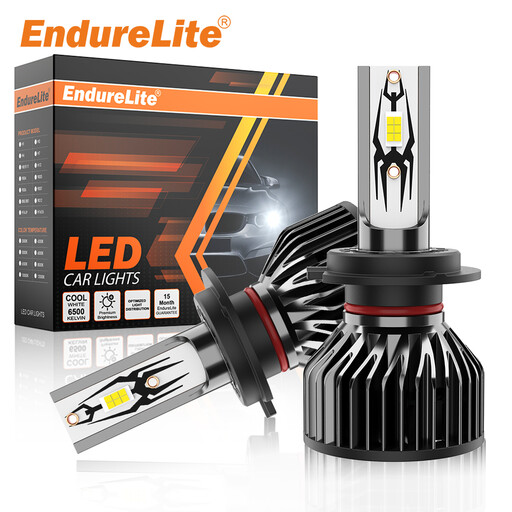
Why This Fits Their Persona: A straightforward option for drivers replacing compatible H1 halogen bulbs and seeking a white light without complicated wiring.
The listing specifies H1 fitment, 6000K colour, a 1:1-style design, plug-and-play installation and CANbus readiness rather than relying only on a brightness figure.
20,000LM listed output per pair, 6000K white light, integrated cooling system and a two-bulb pack.
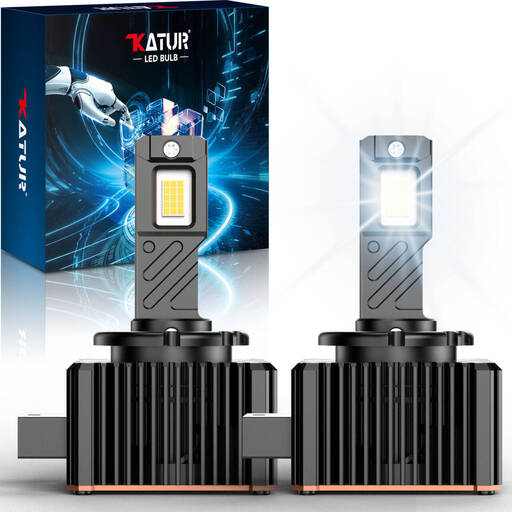
Why This Fits Their Persona: Suits owners of HID-equipped vehicles who want a D1S or D1R replacement with a compact installation format and active cooling.
The product information clearly limits use to HID headlamp assemblies and identifies 1:1 design, CANbus functionality and a built-in fan.
D1S/D1R compatibility, 6500K white light, 30,000LM listed output per pair and a listed 60,000-hour operating life.
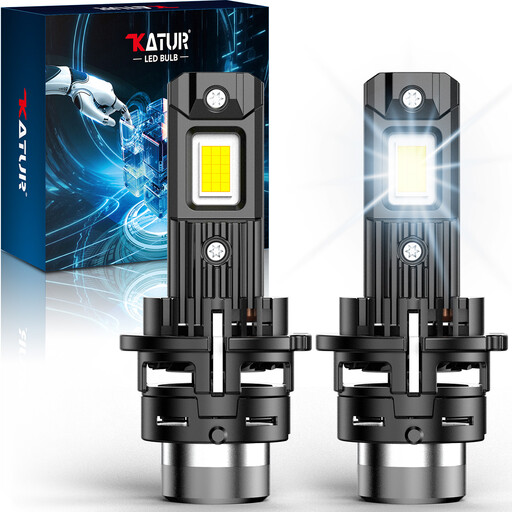
Why This Fits Their Persona: A practical match for frequent night drivers using a D4S HID housing, including commuters and drivers regularly travelling on unlit roads.
It identifies D4S HID-only application, 1:1 construction, CANbus compatibility and a 16,000RPM cooling fan, helping buyers assess more than brightness alone.
D4S fitment, 6500K white light, listed 30,000LM output per pair and fan-assisted aluminium cooling.
We have compiled a complete, real-time list of products that fully satisfy these strict selection criteria and UK safety regulations.
Before fitting, switch off the headlights, allow the original bulb to cool and wear protective gloves. Avoid touching the LED chip or optical surface. Make sure the bulb is fully seated and the dust cover is replaced correctly.
After installation:
A replacement bulb does not automatically make a vehicle compliant for road use. Check the relevant vehicle requirements and ensure the complete headlamp arrangement is suitable for the bulb type.
LEDs can have different power requirements and may offer a longer listed operating life, but actual running cost depends on wattage, driving hours, vehicle electronics and replacement price. Compare the stated electrical specifications rather than assuming every LED bulb uses less energy.
No. D-series bulbs are intended for HID assemblies, whereas halogen housings use fittings such as H1. Confirm the original bulb marking and headlamp system before ordering. A plug-and-play connector does not make an incompatible bulb safe or suitable.
Many listings quote operating lives of 50,000 or 60,000 hours, but real-world life depends on heat, vibration, voltage, moisture and installation quality. Effective cooling, a sealed housing and correct electrical compatibility can all help support reliable operation.