
24/7 Customer Support

Free returns

Same-day & Next-day Delivery

Quality Guaranteed

Unlock Your Welcome Offers: FREE Delivery | Up to 80% OFF | Free 30-day JoyPlus trial
Download the APP
Replacing a vehicle’s lighting can seem straightforward until a new bulb fails to fit, triggers a dashboard warning or produces an unfocused beam. For UK drivers, choosing car LED headlight bulbs involves more than selecting the brightest advertised figure. Socket type, headlamp design, heat management and road-use suitability all matter.
This guide explains the common buying traps, the specifications worth checking and a selection of bulbs matched to different driving needs.
Listings may promote very high lumen figures or claims such as “500% brighter”. These figures can describe a pair of bulbs, theoretical chip output or a comparison with an ageing halogen bulb. They do not automatically show how much usable light reaches the road.
A properly positioned LED emitter and a compatible reflector or projector are more important than headline numbers. A bulb that creates scattered light can reduce useful visibility and dazzle other road users, even if its stated output is high.
The phrase plug-and-play LED bulbs generally means that no additional wiring or external driver is required. It does not guarantee that the bulb will fit every headlamp housing. Some vehicles have limited rear clearance, retaining clips, dust covers or polarity-sensitive connectors.
Check the original bulb marking first. Common halogen fittings include H1 LED bulbs, H4 LED bulbs, H7 LED bulbs, H11 LED bulbs, HB3 9005 LED bulbs, HB4 9006 LED bulbs and HIR2 9012 LED bulbs. These are not interchangeable simply because they look similar.
CANbus error-free LED bulbs are designed to reduce flickering, warning messages and compatibility issues in vehicles that monitor bulb current. However, “99% compatible” or “98% compatible” remains a product-level claim, not a guarantee for every UK car.
Particularly sensitive vehicles may still require a separate decoder or load solution. Keep the packaging and confirm the return policy before fitting both bulbs permanently.
Use the owner’s handbook, vehicle manufacturer data or the marking on the removed bulb to identify the correct fitting. A 9005 bulb is also known as HB3, while a 9006 is commonly referred to as HB4. H8, H9 and H11 fittings can share physical similarities but have different applications and electrical specifications.
HID-equipped vehicles need extra care. D1S LED bulbs, D2S LED bulbs, D3S LED bulbs and D4S LED bulbs are intended for headlamp assemblies originally designed around those HID fittings. A D2S replacement should not be treated as a direct alternative for a halogen H7 assembly.
Many replacement products use 6500K white LED bulbs, producing a cool white appearance. This can look sharper than warm halogen lighting, but colour temperature alone does not determine road illumination. Prioritise a clean beam pattern, correct bulb orientation and secure seating in the holder.
After installation, check the beam height and alignment. If the beam is visibly scattered or too high, remove the bulb and reassess compatibility rather than continuing to drive.
LED chips convert electrical energy into light and heat. Aluminium housings, heat sinks and built-in fans are common ways to manage operating temperature. Fan-cooled designs may offer useful heat removal, but confirm that the fan and bulb body fit behind the original dust cover.
A claimed lifespan of 50,000 or 60,000 hours is a manufacturer or listing estimate, not a guaranteed service period in every vehicle. Real-world life can be influenced by operating temperature, vibration, voltage and installation quality.
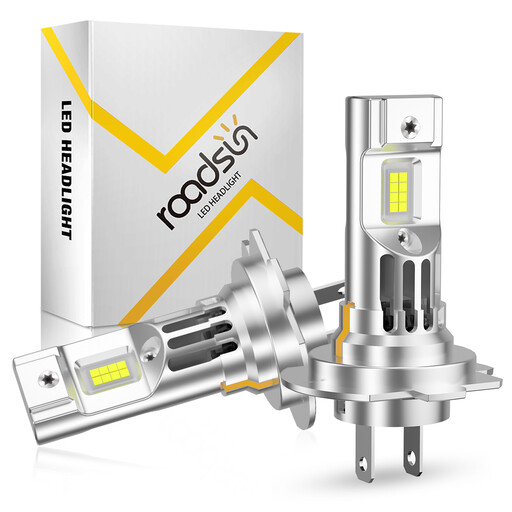
Why This Fits Their Persona: A practical option for DIY drivers whose vehicle already uses H7 bulbs for headlights or fog lights and who want a direct replacement without an external driver.
Its listing specifies H7 fitment, a 1:1 design and no adapter requirement, while also advising buyers to confirm the original socket and headlamp type.
6500K white light, built-in high-speed fan, aluminium housing and stated lifespan of over 50,000 hours.

Why This Fits Their Persona: Suits motorists seeking a compact H7 replacement with integrated cooling and compatibility features for regular commuting or longer journeys.
The 1:1 mini design and integrated driver address common clearance and wiring concerns. The listing notes that some sensitive vehicles may still need a decoder.
6500K colour temperature, fan cooling, aviation aluminium housing and stated CANbus compatibility for most vehicles.
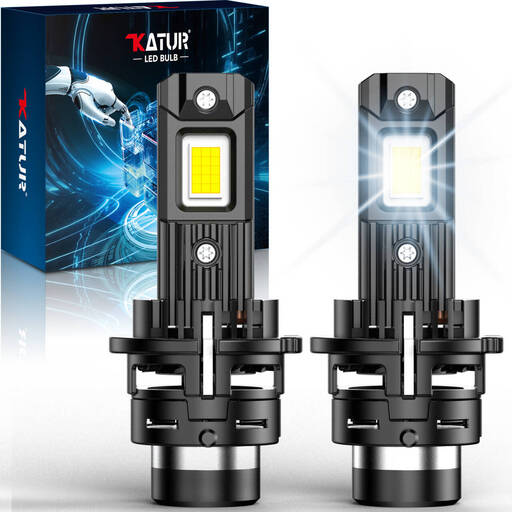
Why This Fits Their Persona: Designed for drivers replacing D2S HID bulbs who regularly use their headlights at night and need to match an existing HID-specific assembly.
The listing clearly states that it is a replacement for HID assemblies only, helping avoid fitting a D2S bulb to an incompatible halogen housing.
6500K white output, built-in fan, aluminium construction, 0.01-second listed start-up and stated 99% CANbus compatibility.
We have compiled a complete, real-time list of products that fully satisfy these strict selection criteria and UK safety regulations.
For different lighting positions, the correct code remains essential:
Switch off the ignition, allow the lamp to cool and avoid touching the LED or halogen glass with bare fingers. Keep seals correctly positioned so moisture cannot enter the housing. Test both sides and inspect the beam pattern against a wall before driving at night.
For public-road use, check the bulb’s approval status and your vehicle’s requirements under relevant UK lighting rules. A bulb fitting physically does not automatically mean that the conversion is suitable for every headlamp assembly. If the light scatters, causes glare or fails an inspection, revert to a compliant alternative and have the alignment checked.
They can use less electrical power for a comparable lighting application, but actual consumption varies by product. Check the stated wattage rather than relying only on brightness claims. Purchase price, installation and any required CANbus decoder also affect the overall cost.
Listings commonly state lifespans between 50,000 and 60,000 hours for fan-cooled products. These are stated design estimates, not guaranteed time periods. Heat, vibration, water ingress, voltage fluctuations and restricted airflow can shorten service life.
Not always. Many CANbus error-free LED bulbs include an integrated driver intended to reduce warning messages and flicker. Some vehicles remain sensitive, however, so check the specific product notes and your vehicle’s electrical system before buying.