
24/7 Customer Support

Free returns

Same-day & Next-day Delivery

Quality Guaranteed

Unlock Your Welcome Offers: FREE Delivery | Up to 80% OFF | Free 30-day JoyPlus trial
Download the APP
Replacing tired halogen or HID lighting with car LED headlight bulbs can make night-time driving feel clearer and reduce the frequency of bulb changes. However, a high lumen figure or “plug-and-play” label does not automatically mean the bulb will suit your vehicle, headlamp housing or UK road use.
The main buying mistakes are usually caused by three issues:
A careful check of the original bulb code, housing clearance and road-use requirements is more valuable than relying on a large performance claim.
Start with the marking on the original bulb, the vehicle handbook or a reliable parts catalogue. Common halogen replacement codes include:
For vehicles originally fitted with HID xenon lighting, D1S, D2S, D3S and D4S LED bulbs are designed for different systems. A D2S LED replacement, for example, is intended for a headlamp assembly using a D2S HID bulb, not a halogen housing.
Interior and auxiliary lighting use different formats. T10 W5W LED bulbs may fit number plate, map, dome or parking-light positions, while G9 LED capsule bulbs are generally household lighting products rather than car headlight replacements.
Claims such as 13,000 lm or 30,000 lm should be treated as listed specifications rather than a guarantee of usable road illumination. Practical performance depends on:
A 1:1 bulb design aims to position the light source similarly to the original bulb. This may help preserve the intended beam shape, but it cannot guarantee identical results in every headlamp.
Colour temperature also affects appearance. 6000K white headlight bulbs usually produce a cool white look, while 6500K xenon white bulbs appear slightly cooler. A whiter colour is not automatically more useful in rain or fog, where excessive blue content can create more apparent glare.
LEDs produce heat around the chip and driver, so heat management matters. Common systems include:
CANbus-ready or CANbus error-free LED bulbs contain circuitry intended to work with vehicle monitoring systems. Nevertheless, some cars may still need a decoder, resistor or coding adjustment. Check for flickering, warning messages and correct operation before refitting the dust cover.
A bulb can be physically compatible without being suitable for every public-road application. Before fitting, check whether the complete bulb and headlamp combination meets the requirements applying to your vehicle, including relevant UK lighting regulations and approval markings. If the beam pattern is poor or the lamp dazzles oncoming drivers, the vehicle may not be suitable for that retrofit.
For installation:
If access is restricted or the headlamp requires wiring changes, a qualified automotive technician should carry out the work.
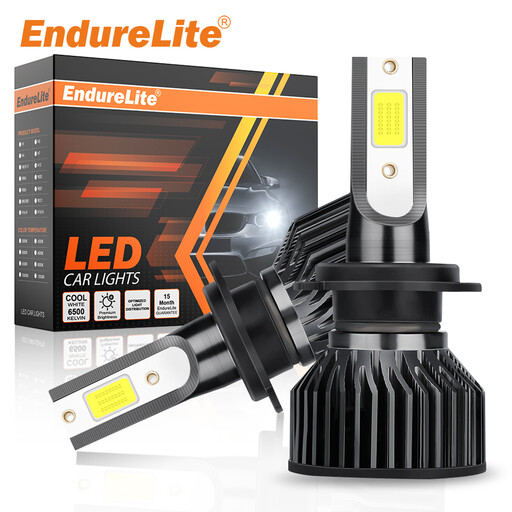
Why This Fits Their Persona: A practical option for drivers whose vehicle uses one of the listed H7, H4, H11, H1 or 9005 formats and who want a two-bulb replacement with a 6000K colour temperature.
Its stated 1:1 design and built-in CANbus-ready driver address common fitment and warning concerns, although vehicle-specific checking remains necessary.
Pack of two; aluminium housing, IP68 rating, built-in fan and stated 50,000-hour operating life.
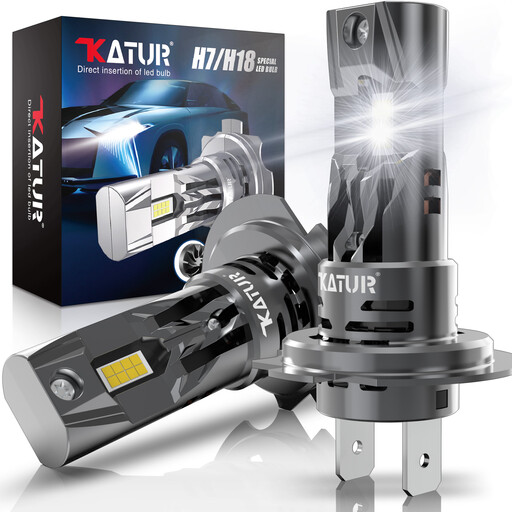
Why This Fits Their Persona: Suits commuters and night-time drivers seeking a compact H7 replacement with a cool white output and active cooling for regular use.
The listed 1:1 mini form is intended to reduce clearance problems, while the external driver and CANbus-ready design address common installation concerns.
6000K white output; 16,000 RPM fan; IP65 protection; two-bulb pack.
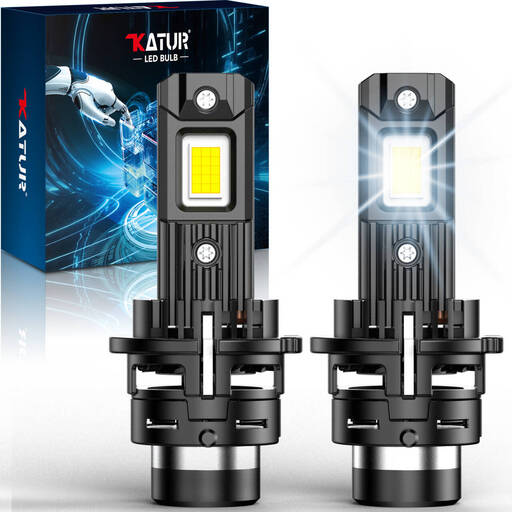
Why This Fits Their Persona: Intended for drivers replacing D2S HID bulbs who regularly travel on unlit roads and need a direct-format replacement.
The listing clearly states that it is for HID assemblies only, helping prevent the common mistake of fitting a D2S product into a halogen headlamp.
6500K white colour; built-in 16,000 RPM fan; 1:1 plug-and-play format; stated 60,000-hour lifespan.
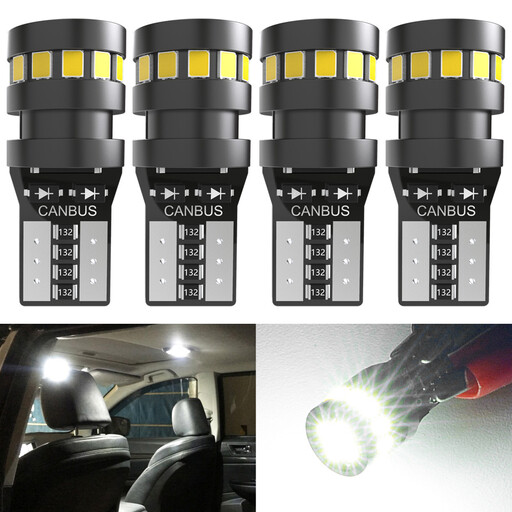
Why This Fits Their Persona: Suitable for owners refreshing map, dome, courtesy, parking or licence plate lighting rather than replacing a main headlamp.
The T10, W5W, 501, 194 and 168 references make cross-checking easier, while the CANbus design targets warning-light issues.
6500K white light; 300 lm per bulb; 12V operation; four-bulb pack.
We have compiled a complete, real-time list of products that fully satisfy these strict selection criteria and UK safety regulations.
Legality depends on the bulb, vehicle, headlamp assembly and applicable approval requirements. A plug-and-play connection does not by itself confirm road compliance. Check the product documentation, vehicle handbook and current UK requirements, then verify that the beam does not dazzle other road users.
LEDs can provide a stated light output at a lower wattage than some halogen bulbs, but actual consumption varies by product. Check the listed wattage and vehicle voltage rather than assuming every LED replacement has the same running cost.
Listings commonly state lifespans between 50,000 and 60,000 hours, but this is a product specification, not a guaranteed service period in every vehicle. Heat, vibration, moisture, installation quality and driving conditions can affect real-world durability.