
24/7 Customer Support

Free returns

Same-day & Next-day Delivery

Quality Guaranteed

Unlock Your Welcome Offers: FREE Delivery | Up to 80% OFF | Free 30-day JoyPlus trial
Download the APP
Upgrading your car's headlights from standard halogens to modern LEDs can feel like a night-and-day difference. The promise of brighter, clearer light not only gives your vehicle a contemporary look but can also significantly improve your visibility on dark country lanes and motorways. However, the market for car LED headlight bulbs is filled with confusing specifications and marketing claims that can easily lead to a poor purchase.
As the Joybuy Product Recommendation Officer, my role is to help you navigate this landscape. We'll look at the common pitfalls that catch out UK drivers and focus on the essential factors that ensure you get a safe, effective and long-lasting upgrade.
A quick search reveals countless options, many with bold claims. Before you add anything to your basket, be aware of these frequent issues that can turn a simple upgrade into a frustrating and costly mistake.
To ensure your new bulbs perform as expected, focus on these three non-negotiable parameters.
Based on these practical criteria, here are a few options from our catalogue, matched to different driver needs.
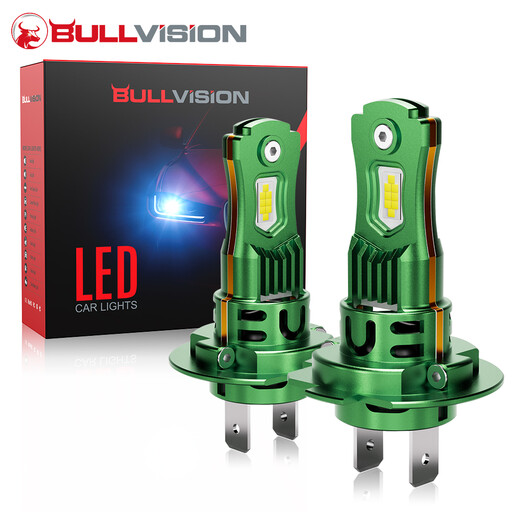
Why This Fits Their Persona: This driver wants a noticeable and reliable improvement over stock halogen bulbs for their daily commute without overspending. Ease of installation is a top priority.
Its 1:1 mini size design directly mimics the original halogen bulb, helping to ensure a correct beam pattern and avoid dazzling other drivers. The plug-and-play setup simplifies installation.
Features a built-in fan and aluminium housing for effective cooling. The integrated CANbus-ready driver is designed for compatibility with a wide range of vehicles.
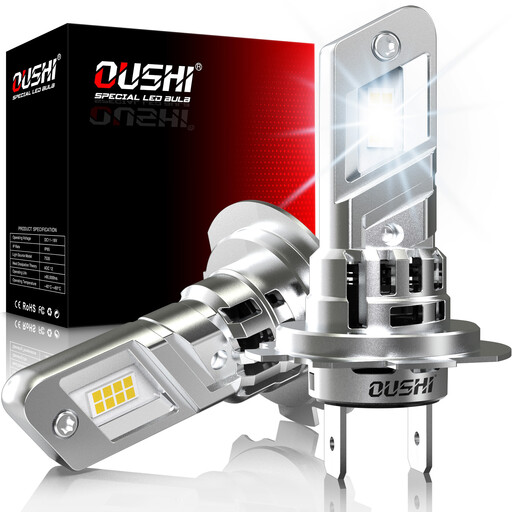
Why This Fits Their Persona: This user drives a modern, possibly European, car and seeks a significant upgrade in brightness and performance. They value longevity and are willing to invest in a product with advanced features.
It directly tackles the CANbus pitfall by incorporating an updated system designed for high compatibility with European vehicles. The high-speed turbo fan addresses the cooling flaw, aiming for a long operational life.
Offers a very high lumen output for maximum road illumination, paired with a 6500K xenon white colour. The 1:1 mini size ensures a direct fit without needing extra adapters.
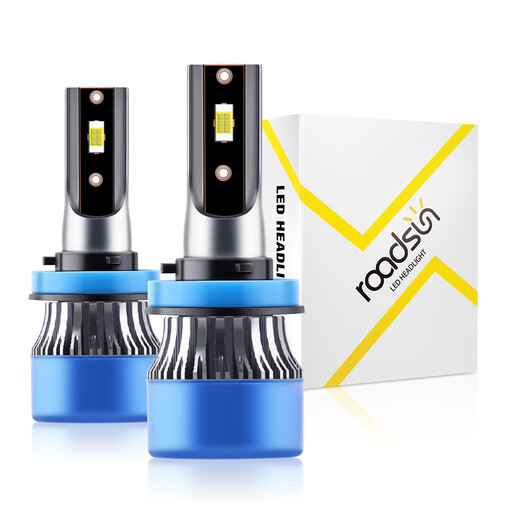
Why This Fits Their Persona: This individual is specifically looking for a powerful **H11 fog light** upgrade to improve visibility in adverse weather like fog, heavy rain and snow. Universal fitment and durability are key.
The 1:1 size design ensures it fits correctly into the fog light housing, maintaining the low, wide beam pattern required for fog lights and preventing upward glare that would be counterproductive in fog.
Universally compatible with H11, H9 and H8 sockets. It is built with an aluminium alloy housing for durability and heat dissipation, designed to function reliably in a wide temperature range.
We have compiled a complete, real-time list of products that fully satisfy these strict selection criteria and UK safety regulations.
This is a common and important question. For a car to pass its MOT, the headlight beam pattern must be correct, it must not cause dazzle to other road users and the colour must be white or yellow. While many aftermarket LED bulbs are not E-marked for road use, the critical factor is the performance of the entire headlight unit after the bulb is installed. A high-quality LED bulb installed in a suitable headlight housing can produce a compliant and safe beam pattern. It is always advisable to check the beam pattern against a wall after installation and adjust if necessary.
If your car was manufactured in the last 10-15 years, especially if it's a European brand, there is a high chance you will need CANbus-compatible bulbs. Many LED bulbs now come with a "CANbus-ready" or "error-free" driver built-in, which works for the majority of vehicles. However, some particularly sensitive systems may still require an additional external CANbus decoder to prevent flickering or dashboard error messages.
For most vehicles, a plug and play headlight upgrade is a straightforward DIY job that takes only a few minutes per side. It typically involves opening the bonnet, removing the headlight dust cover, unclipping and removing the old halogen bulb and then inserting and securing the new LED bulb before reconnecting the plug. However, on some car models, accessing the back of the headlight housing can be tight and may require moving other components. Always consult your vehicle's handbook first.