
24/7 Customer Support

Free returns

Same-day & Next-day Delivery

Quality Guaranteed

Unlock Your Welcome Offers: FREE Delivery | Up to 80% OFF | Free 30-day JoyPlus trial
Download the APP
Replacing tired halogen or HID lighting can improve the appearance and perceived clarity of your vehicle’s lighting. However, buying car LED headlight bulbs is not simply a matter of choosing the highest lumen figure. Compatibility, beam control, heat management and UK road-use requirements all matter.
This guide explains the main buying traps, the specifications worth checking and our top recommendations for different driving needs.
Product listings may describe bulbs as “500%” or “800%” brighter than the original unit. These figures are manufacturer-provided comparisons and should not be treated as a guarantee of usable road illumination. A bulb can produce a large amount of light but still create a poor beam pattern if its LED chips do not sit in the same position as the original filament or discharge arc.
For safer results, check whether the product has a 1:1 design, whether it is intended for a reflector or projector housing and whether the beam should be adjusted after installation.
“Plug and play” usually means the electrical connection is designed to match the original socket. It does not guarantee that the bulb will fit behind the dust cover or work correctly with every headlamp housing.
For example, H1 LED bulbs, H4 LED bulbs, H7 LED bulbs and H11 LED bulbs use different bases. Other common formats include HB3 9005 LED bulbs, HB4 9006 LED bulbs and HIR2 9012 LED bulbs. HID replacements such as D1S, D2S, D3S and D4S LED bulbs are intended for assemblies originally using the corresponding HID format, not standard halogen housings.
A CANbus error-free LED bulb has an integrated driver intended to reduce dashboard warnings, flickering or radio interference. Compatibility percentages in product descriptions are still indicative rather than universal. Some European vehicles monitor bulb resistance closely and may require an additional decoder, resistor or coding adjustment.
Check your owner’s manual, the marking on the existing bulb and your vehicle’s lighting system before ordering.
Start with the original socket designation. The same vehicle model can use different bulbs depending on trim level, production specification and whether it has halogen, HID or factory LED headlights.
Common examples include:
The bulb type is more important than a universal-fit claim.
Many current LED products use 6500K white LED bulbs, producing a cool white appearance. This can look sharper than a warm halogen lamp, but colour temperature alone does not determine beam quality or visibility in rain and fog. A very cool white output may also create more perceived glare from wet roads.
Choose colour based on your headlamp design and driving conditions rather than appearance alone. Fog-light applications should be checked particularly carefully, as the light must remain useful without unnecessarily dazzling other road users.
LED chips convert electrical power into light and heat. Look for practical heat-management details such as an aluminium body, heat sink, copper elements or an integrated fan. Fan-cooled bulbs can support higher output, but the fan must fit inside the housing and may produce a small operating noise.
Confirm:
Claims such as “50,000 hours” or “60,000 hours” are stated product specifications, not a promise of service life in every UK vehicle or operating condition.
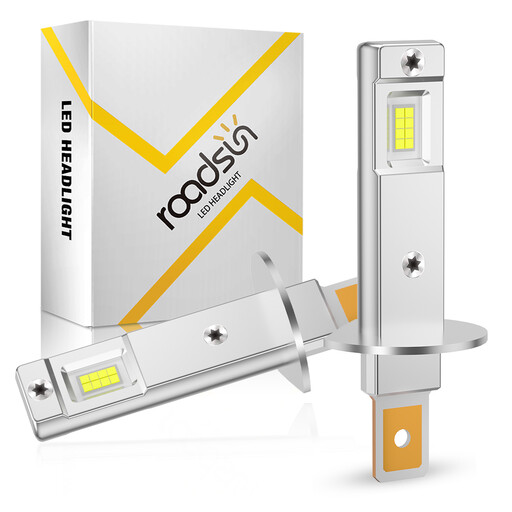
Why This Fits Their Persona: A practical starting point for UK drivers whose vehicle uses H1 halogen bulbs for headlamps or fog lights and who want a compact DIY replacement.
Its listed 1:1 mini size and direct H1 connection address the common problem of buying a bulb that needs extensive modification.
The listing specifies 6500K white output, aluminium housing, fan cooling and plug-and-play installation.
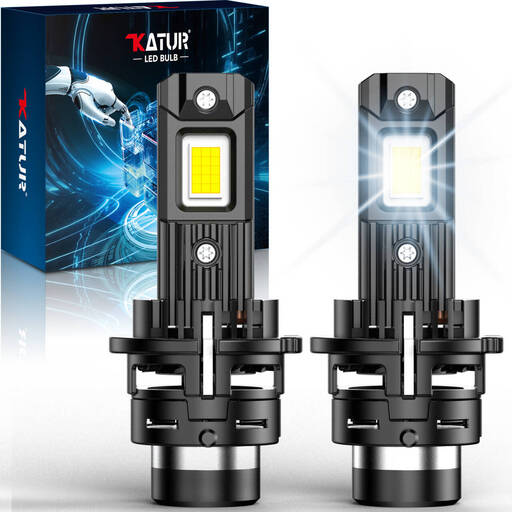
Why This Fits Their Persona: Designed for owners replacing original D2S HID bulbs who want a white appearance and an integrated conversion design.
The description clearly states that it is only a replacement for HID assemblies, helping avoid an incorrect halogen-to-D2S purchase.
The listing includes 6500K output, a built-in fan, aluminium construction and a 1:1 plug-and-play format.
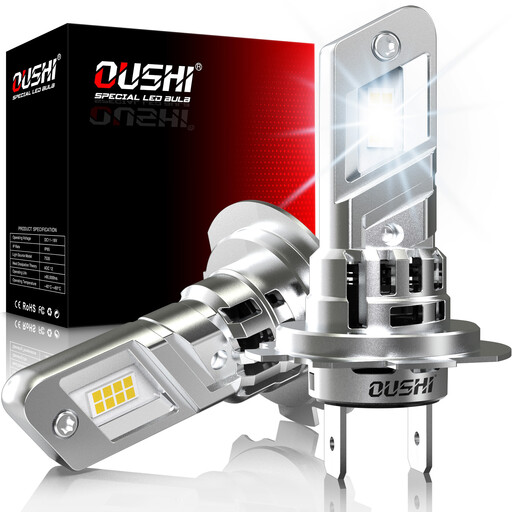
Why This Fits Their Persona: Suitable for frequent commuters and DIY vehicle owners with H7 headlamp or fog-light sockets who prioritise cooling and direct installation.
The specification identifies the H7 fitment, 1:1 size and direct connection, while warning that sensitive vehicles may still need a decoder.
It lists a built-in turbo fan, aluminium housing, 6500K output and a stated 60,000-hour design life.
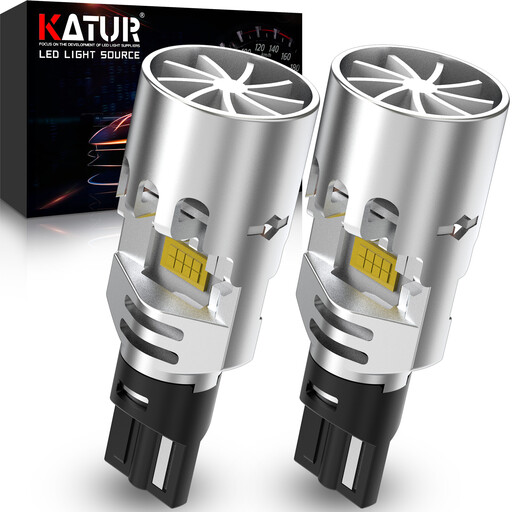
Why This Fits Their Persona: A focused option for drivers upgrading T15, W16W, 912 or 921 reverse lights rather than headlamps.
Its listed applications make clear that it is a reverse-light bulb, helping prevent the common mistake of using a lighting product in the wrong position.
The product lists 12–24V operation, a cooling fan, 6500K white light and CANbus compatibility.
Before using replacement lighting on public roads, check the vehicle’s approval requirements and current UK regulations. Some LED retrofit bulbs may be suitable for off-road or private use but not approved for every headlamp type. After installation, confirm that the beam is correctly aimed and does not dazzle oncoming traffic.
We have compiled a complete, real-time list of products that fully satisfy these strict selection criteria and UK safety regulations.
Legality depends on the bulb, vehicle, headlamp housing and applicable approval requirements. A direct replacement is not automatically road-legal simply because it fits the socket. Check the product information, your vehicle documentation and current DVSA or GOV.UK guidance before fitting LEDs for public-road use.
Many listings state design lifespans between 50,000 and 60,000 hours, but actual service life depends on heat, vibration, voltage, moisture, fan condition and usage. Treat these figures as stated specifications rather than guaranteed operating periods.
LEDs may use less power than some halogen replacements, but the saving for a typical car is usually modest. The more practical benefit may be reduced replacement frequency. Always compare the bulb’s wattage, cooling design and compatibility before choosing solely on energy consumption.