
24/7 Customer Support

Free returns

Same-day & Next-day Delivery

Quality Guaranteed

Unlock Your Welcome Offers: FREE Delivery | Up to 80% OFF | Free 30-day JoyPlus trial
Download the APP
Car LED lighting upgrades can modernise an older vehicle, replace a failed lamp or add RGB car interior ambient lighting. However, choosing a suitable product involves more than comparing lumen figures or selecting the brightest-looking listing. Bulb fitment, beam control, vehicle electronics and UK road-use requirements all matter.
As the Joybuy Product Recommendation Officer, my focus is filtering out vague marketing language so you can compare practical features before spending money.
A bulb marked H7, H4, HB3 9005 or D4S is not automatically suitable for every vehicle. The same car model may use different headlight systems across trims and production specifications. Check the original bulb marking, owner’s manual and socket shape before ordering.
Some LED headlight bulbs also need extra clearance behind the lamp. A fan-equipped bulb may not fit beneath the factory dust cover, even when the base matches.
Large lumen numbers do not necessarily mean a useful beam. Poorly positioned LED chips can create dark areas, glare or scattered light. The reflector or projector housing was designed around a particular light source, so alignment is important.
After installation, check the beam pattern on a flat surface and have the headlamps aligned if necessary. Excessive glare can be unsafe and may create problems during an MOT inspection.
CANbus error-free car bulbs can reduce warning messages, flickering and bulb-check problems, but no decoder works with every vehicle. BMW and other cars with sensitive lighting control modules may still require coding, a resistor or a dedicated decoder.
For replacement assemblies, the issue can be more involved. Wiring harnesses, control modules, adaptive functions and coding may all need checking before purchase.
Confirm the exact bulb code before comparing products:
Use the original bulb as the reference rather than relying solely on an online vehicle selector.
A 6000K–6500K white appearance is common in LED listings, but colour temperature does not establish brightness or legal suitability. Look for a 1:1 bulb design, clearly positioned chips and a suitable heat-management system.
Fanless H7 LED bulbs can be easier to fit in restricted housings and avoid fan noise. Fan-cooled products may offer more active heat removal but need enough space and should be kept clear of moisture and dust.
Water-resistance ratings such as IP65 or IP68 describe protection against water and dust under specified conditions. They do not remove the need for correct sealing after installation.
“Plug-and-play” usually means the product connects to the existing socket, not that every installation is risk-free. Before fitting:
For BMW LED headlights, BMW sequential tail lights and Porsche Cayenne LED headlights, verify connector type, left-hand-drive or right-hand-drive compatibility and whether coding is required. Check current UK requirements through GOV.UK guidance and your MOT tester before using aftermarket exterior lighting on public roads.
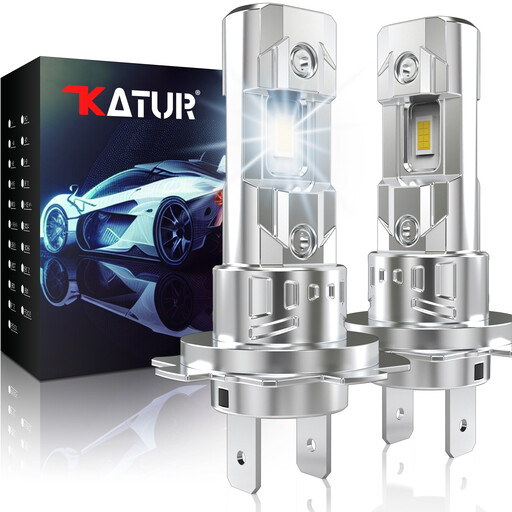
Why This Fits Their Persona: A compact pair of H7 LED bulbs suits drivers making a straightforward halogen-to-LED change where the vehicle’s existing socket and housing are compatible.
Its fanless mini format avoids adding a rear fan module, although housing clearance and beam alignment still need checking.
H7 format, 6000K white output, fanless construction and a pack of two.
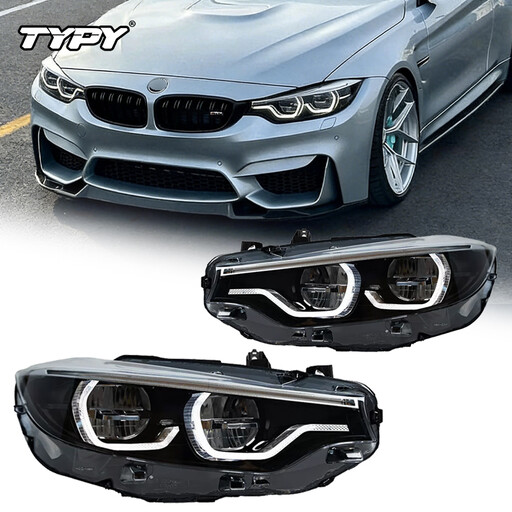
Why This Fits Their Persona: Suitable for BMW owners seeking a complete front-light refresh rather than replacing individual bulbs.
The listing identifies compatible BMW chassis and a 9-pin option for specified vehicles, helping buyers compare connector details before ordering.
Pair of LED assemblies with DRL, turn-signal functions and clear lenses; professional installation is recommended.
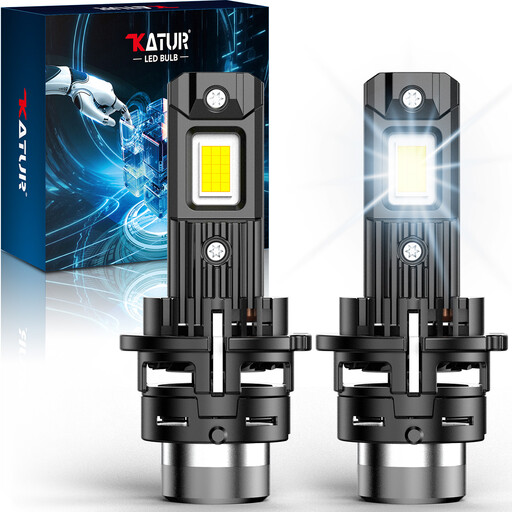
Why This Fits Their Persona: Intended for drivers whose existing headlight assembly uses D4S HID bulbs and who have confirmed the projector system before purchase.
The listing states that it is a replacement for compatible HID assemblies only, not halogen or factory LED housings.
1:1 design, integrated driver, 6500K colour and built-in fan cooling.
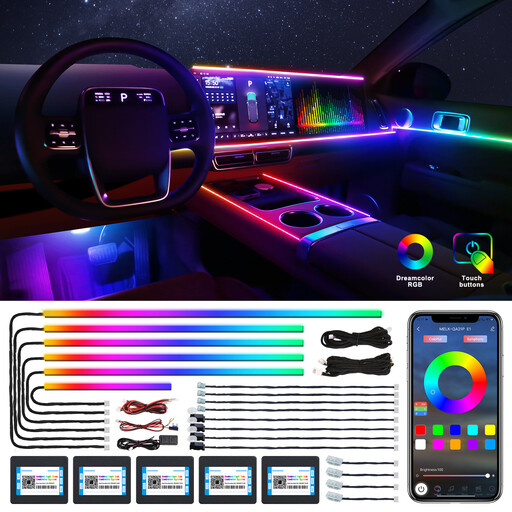
Why This Fits Their Persona: A flexible option for drivers who want dashboard, door-handle, storage-box and footwell lighting rather than an exterior brightness upgrade.
The kit specifies 12V operation, Bluetooth app control and included controllers, so the power source and control method are clear before installation.
RGB colour selection, sound-active modes, dual-zone control and acrylic strips designed for even light distribution.
We have compiled a complete, real-time list of products that fully satisfy these strict selection criteria and UK safety regulations.
For smaller lighting jobs, T10 W5W LED bulbs can refresh interior, number plate or parking lamps. Check the physical length and polarity before fitting. A product described as CANbus-compatible may still need testing on your vehicle.
Drivers replacing damaged rear lamps can compare complete LED tail light assemblies, such as sequential designs for compatible BMW platforms. Confirm whether the original car has adaptive rear lights, whether the wiring harness transfers and whether coding through tools such as BimmerCode or E-Sys is required.
For Porsche owners, a complete LED matrix-style assembly may involve alignment and vehicle-specific harness checks even when described as plug-and-play. Professional fitting is sensible where headlamp levelling, coding or bumper removal is involved.
Legality depends on the vehicle, lamp approval, beam pattern and how the retrofit is used. An LED bulb that physically fits is not automatically compliant for every headlamp housing. Check current UK requirements and ask an MOT tester or qualified auto electrician to assess the installation.
LEDs can use less electrical power than some halogen bulbs for a comparable application, but the actual consumption depends on the product and vehicle circuit. Cooling fans, drivers and CANbus components also affect the total load. Check the stated wattage rather than assuming every LED upgrade saves energy.
Listings may state operating-life figures such as 50,000 or 60,000 hours, but real service life depends on heat, vibration, moisture, voltage stability and installation quality. Keeping seals intact, ensuring adequate clearance and choosing the correct bulb for the housing can help avoid premature failure.