
24/7 Customer Support

Free returns

Same-day & Next-day Delivery

Quality Guaranteed

Unlock Your Welcome Offers: FREE Delivery | Up to 80% OFF | Free 30-day JoyPlus trial
Download the APP
The standard lighting inside most cars does its job, but it rarely inspires. A dim, yellowish glow can make a cabin feel dated and uninviting. For many UK drivers, personalising a vehicle is about more than just exterior modifications; it's about creating an interior space that reflects your style. Upgrading to car LED lights is one of the most effective ways to transform your vehicle's atmosphere, improve visibility and add a touch of modern sophistication.
Whether you're aiming for a subtle, premium glow or a dynamic, colour-changing light show, the market is filled with options. This guide is designed to help you navigate the choices, understand the key features to look for and find the right lighting solution for your car.
Before diving into specific products, it helps to understand what to look for. Choosing the right car lighting kit depends on your goals, your vehicle and your comfort level with installation.
The term "car LED lights" covers a wide range of products, each serving a different purpose.
How you interact with your new lights is a key consideration. Basic kits may come with a simple infrared or radio frequency (RF) remote. More advanced systems offer Bluetooth connectivity, allowing you to control colours, brightness and dynamic modes through a smartphone app. Look for features like music sync, where the lights pulse to the beat of your music, and customisable scenes for a truly personalised experience.
Consider the installation process. Replacement bulbs are the easiest, requiring no special tools. Interior car lights in strip form often plug into your car's 12V socket (the cigarette lighter) or can be hardwired into the fuse box for a cleaner, more permanent setup. A car starlight headliner is the most involved, requiring you to remove the headliner to thread the individual fibre optic strands through. Always check that the kit is compatible with your vehicle's 12V system.
After reviewing the market for function, features and user feedback, we've selected a few standout options that cater to different needs and customisation goals.

Why It Stands Out: This kit takes the popular starlight effect to the next level. Its unique split design uses a central controller to power four separate light engines. This allows for more even light distribution across the headliner and, most impressively, the ability to display up to four different colours simultaneously. With 1000 fibre optic strands, it creates a dense and dazzling star field.
Pros:
Who is it for? This is for the car enthusiast who wants to make a significant, premium statement. If you're aiming for that luxury "Rolls-Royce" ceiling and are prepared for a rewarding DIY project, this fibre optic car lights kit delivers a spectacular result.

Why It Stands Out: This kit moves beyond basic LED strips by using acrylic tubes that diffuse the light, creating a smooth, uniform line of colour without visible hotspots. The RGB Smart IC technology enables "Dreamcolor" chasing effects, where multiple colours can flow along the strip at once. It's a complete car ambient lighting solution in one box.
Pros:
Who is it for? This is ideal for drivers who want to add modern, dynamic ambient lighting throughout their cabin. It offers a professional-looking finish and a wealth of customisation options, making it a fantastic upgrade for daily drivers and modified cars alike.
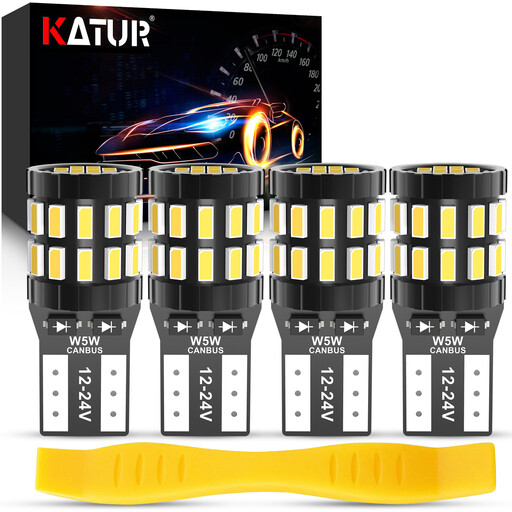
Why It Stands Out: Sometimes, the best upgrade is a simple one. These bulbs are a direct, high-performance replacement for the dim, yellow halogen bulbs found in most cars. Their key feature is the CANbus error-free design, which prevents dashboard warning lights in modern vehicles. The 6000K Xenon White colour provides a crisp, bright light that instantly modernises a car's interior.
Pros:
Who is it for? This is for any car owner looking for a quick, affordable and functional lighting improvement. If you simply want brighter, cleaner-looking map lights, dome lights, or number plate lights without any complex wiring, these bulbs are an excellent choice.
The world of car accessories and lighting is vast. If the products above aren't quite what you're looking for, or if you want to explore different styles and fitments, there are many more solutions available.
From single-colour strips to alternative bulb types, you can find the perfect match for your vehicle. Explore our full range of vehicle interior lighting to see more.
1. Are car LED lights legal in the UK? For interior car lights, the rules are generally relaxed. As long as the light is not excessively bright to the point of distracting you or other drivers and doesn't flash in red or blue colours that could imitate an emergency vehicle, you are usually fine. For exterior lights (like headlights or indicators), regulations are extremely strict regarding colour, brightness and beam pattern. Always check the latest MOT guidelines before modifying exterior lighting.
2. How do you install interior car LED lights? Installation varies by type. Replacement bulbs like the t10 led bulb are a simple swap. LED strips often come with a 12V plug for the cigarette lighter or can be hardwired to your car's fuse box for a hidden installation. A car starlight headliner kit is the most complex, requiring removal of the headliner panel to insert the fibre optic strands. Most kits come with instructions and the necessary tools.
3. What is CANbus and why do I need an error-free LED bulb? CANbus (Controller Area Network bus) is a system used in most modern cars that allows different electronic parts to communicate. It also monitors for faults, like a burnt-out bulb. Because LEDs use much less power than halogen bulbs, the CANbus system can mistakenly think the bulb is faulty and trigger a warning light on your dashboard. A w5w led canbus or "error-free" bulb has a built-in resistor that mimics the power draw of a halogen bulb, satisfying the system and preventing false warnings.