
24/7 Customer Support

Free returns

Same-day & Next-day Delivery

Quality Guaranteed

Unlock Your Welcome Offers: FREE Delivery | Up to 80% OFF | Free 30-day JoyPlus trial
Download the APP
Upgrading to car LED lights seems like a straightforward way to improve your vehicle's visibility and style. Yet, many UK drivers find themselves tangled in a web of compatibility issues, misleading brightness claims and products that simply don't last. As a Joybuy Product Recommendation Officer, my role is to help you navigate the market and find lighting solutions that deliver on their promises without the headache.
Before you add anything to your basket, let's illuminate the three most common pitfalls that catch buyers out and how to sidestep them.
To ensure your car light upgrade kit is a success, focus on these non-negotiable specifications. Getting these right will save you time, money and the frustration of a failed installation.
Your car's manufacturer specifies the exact bulb fitment for your headlights, fog lights and interior lights. This is not a suggestion; it's a requirement. Common types include the H7 LED bulb, H4 LED bulb (which often handles both high and low beam) and H11 LED bulb (frequently used for fog lights).
Once you've confirmed the fitment type, compare the dimensions of the LED bulb to your original halogen bulb.
The requirements for car interior LED lights are very different from exterior bulbs. For the cabin, you're likely looking for car ambient lighting or RGB car lights to enhance the atmosphere. Here, the key factors are:
We've matched a few options from our catalogue to different types of UK drivers, focusing on how they address the common pitfalls.
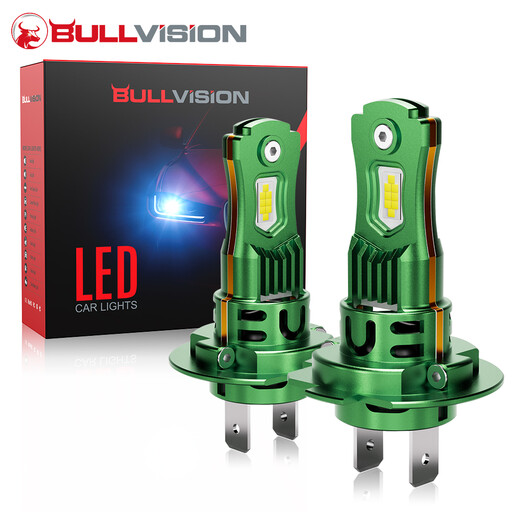
Why This Fits Their Persona: This user wants a noticeable improvement over dim halogen bulbs without a hefty price tag or complex installation. They value a simple, direct replacement for a weekend DIY project on their family car or daily commuter.
Its 1:1 mini design directly counters the "plug and play" pitfall, ensuring it fits into standard H7 housings without needing modifications or leaving the dust cover off.
The main benefit is simplicity. No external driver or adapter is required for most vehicles, making it a genuine direct swap. The beam pattern is designed to mimic stock bulbs, reducing glare.
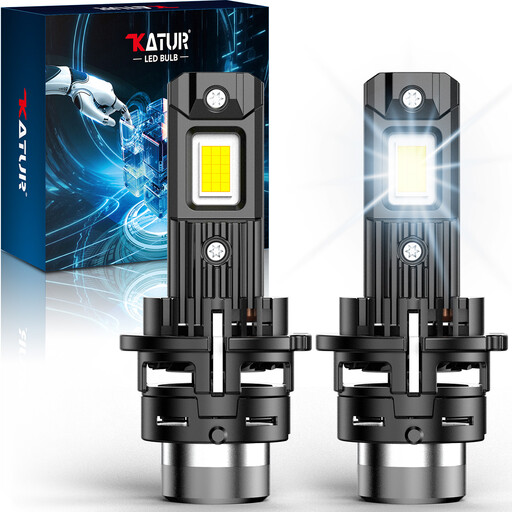
Why This Fits Their Persona: This driver prioritises maximum safe illumination for night-time driving on unlit B-roads. They are upgrading from factory HID bulbs and want instant-on performance, high brightness and long-term reliability.
It sidesteps the "lumen trap" by being a specific D4S replacement for factory HID systems. This ensures it works with the car's existing projector housing to create a sharp, well-defined beam cut-off, preventing dazzle.
The 0.01-second start-up time eliminates the warm-up period common with HID bulbs. Its robust cooling system, featuring a copper tube and 16,000RPM fan, is designed for a long operational life.
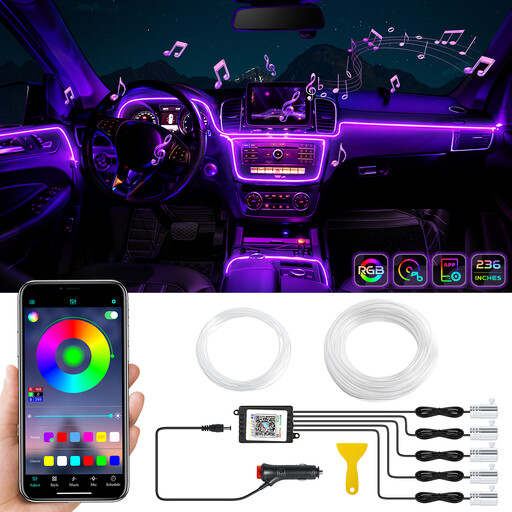
Why This Fits Their Persona: This user is all about personalisation. They want to create a unique cabin atmosphere with dynamic RGB car lights and are comfortable with app-based controls. The goal is aesthetics and creating a custom vibe for their ride.
It avoids the trap of incomplete kits by providing a generous 6-metre fibre optic line, a pry tool for installation and clear app connection steps. This makes the DIY process of creating car ambient lighting much more manageable.
The app control offers deep customisation with 16 million colours and preset modes. The built-in microphone allows the lights to sync with music, creating a dynamic and immersive in-car experience.
We have compiled a complete, real-time list of products that fully satisfy these strict selection criteria and UK safety regulations.
In the UK, the primary concern for an MOT test regarding headlights is the beam pattern. Aftermarket LED bulbs are only legal for road use if they produce a beam pattern that is compliant, meaning it has a clear cut-off and does not cause glare or dazzle to other road users. Many high-quality LED headlight bulbs are designed to replicate the original halogen beam pattern precisely. After installation, it is always advisable to check the alignment and pattern against a wall or garage door to ensure it is correct.
"CANbus error free" means the LED bulb has an integrated circuit or resistor that draws enough power to satisfy your car's bulb-monitoring system. This prevents the car's computer from mistakenly reporting a "bulb out" warning on your dashboard. However, some vehicles, particularly from premium European brands, have exceptionally sensitive systems. In these cases, even a "CANbus ready" bulb might still trigger an error, requiring an additional CANbus decoder to be wired in.
Most modern car interior LED lights kits are designed for user-friendly DIY installation. They typically draw power from the car's 12V socket (cigarette lighter) or a USB port, eliminating the need for complex wiring into the car's fuse box. The main task involves routing the fibre optic strips or LED bars along the dashboard, door panels or footwells and tucking the wires away for a clean finish. Kits often include a small plastic pry tool to help with this process.