
24/7 Customer Support

Free returns

Same-day & Next-day Delivery

Quality Guaranteed

Unlock Your Welcome Offers: FREE Delivery | Up to 80% OFF | Free 30-day JoyPlus trial
Download the APP
Upgrading to car LED lights is one of the most popular modifications for UK drivers, promising everything from improved night-time visibility to a complete aesthetic overhaul of your vehicle's interior. However, the market is flooded with options, and it's easy to make a purchase you'll later regret. Many products are plagued by overhyped claims and hidden flaws that can lead to wasted money, MOT failures or even safety hazards.
As the Joybuy Product Recommendation Officer, my role is to help you navigate this complex market. We'll look past the flashy marketing and focus on the practical details that determine whether a lighting kit is a worthwhile investment or a future headache. Let's illuminate the common pitfalls and what to look for instead.
To ensure you get a reliable and effective product, focus on these core parameters before you buy.
This is the most critical first step. Your vehicle's owner's manual is the definitive source for identifying the correct bulb fitment. Common types include the H4 LED bulb (which often handles both high and low beams in a single unit) and the H11 car lights fitting, frequently used for fog lights or separate low beams.
Beyond the physical fit, check for CANbus compatibility. If you drive a car made in the last 10-15 years, opting for a kit explicitly described as "CANbus ready" or "error-free" will save you considerable trouble with dashboard warnings and flickering.
For any exterior light, especially headlights, the beam pattern is a matter of road safety and legality. Look for products that specify a "1:1 halogen filament design" or a "focused beam pattern." This indicates the LED chips are positioned to mimic a traditional bulb, directing light onto the road where you need it, not into the eyes of other drivers.
The colour temperature, measured in Kelvin (K), determines the colour of the light. Most aftermarket LEDs are around 6000K, which produces a crisp, cool white light that is effective at illuminating road markings and signs at night.
For customisation, car interior ambient lighting offers a huge range of possibilities. Key features to consider include:
Based on these practical criteria, here are a few options tailored to different types of UK drivers.
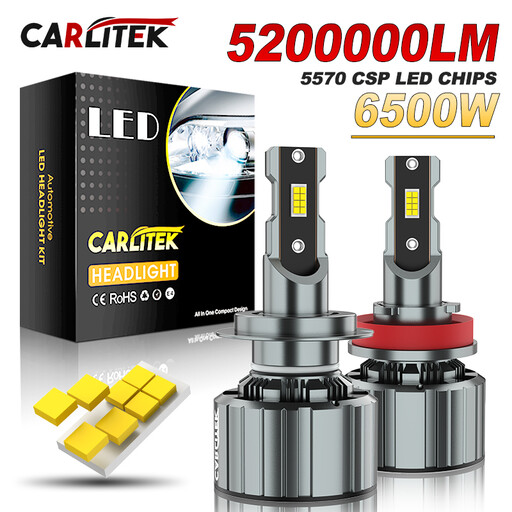
Why This Fits Their Persona: This user wants a straightforward, reliable upgrade for better night-time visibility on daily drives and motorway journeys. They value safety and ease of installation over complex features.
It directly addresses the beam pattern issue with a 1:1 halogen filament design, ensuring a focused beam that won't dazzle others. The built-in CANbus technology also tackles the "plug-and-play" myth by preventing error codes on most vehicles.
Features a compact, all-in-one design for simple installation without extra drivers or wiring. The active fan cooling system helps maintain performance and longevity.
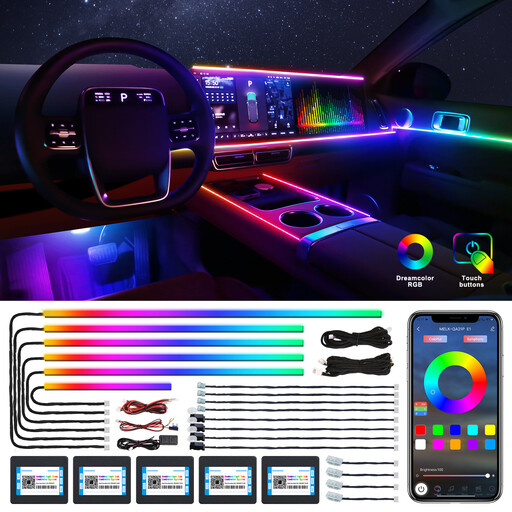
Why This Fits Their Persona: This enthusiast wants to completely personalise their car's cabin. They enjoy DIY projects and want advanced features like dynamic colour chasing, music synchronisation and multi-zone control via a smartphone app.
Unlike basic, single-colour strips, this comprehensive 18-in-1 kit provides everything for a full interior fit-out, including footwell, door handle and storage box lights. The RGB Smart IC technology delivers the advanced dynamic effects that cheaper kits cannot replicate.
Offers dual-zone control via the app, allowing different colours and modes for the main dash strips and other cabin lights simultaneously. The acrylic light strips provide a uniform, diffused glow for a more premium look.
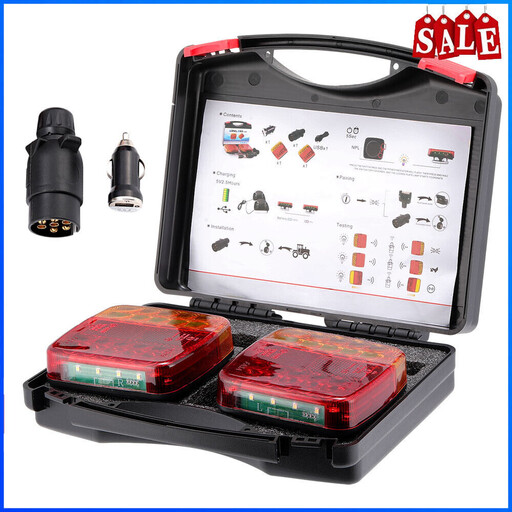
Why This Fits Their Persona: This user frequently tows trailers, caravans or horseboxes and is tired of dealing with faulty wiring and corroded connectors. They need a reliable, convenient and road-legal lighting solution that can be swapped between vehicles in seconds.
It completely eliminates the primary failure point of trailer lights: the wiring. By using a wireless transmitter and magnetic, rechargeable units, it bypasses the need for physical connections that can break or corrode, offering a far more robust solution.
This is a complete set of wireless trailer lights that is E11 marked for road use in the UK. The strong magnetic base and IP65 waterproof rating make it suitable for agricultural and commercial use in all weather conditions.
We have compiled a complete, real-time list of products that fully satisfy these strict selection criteria and UK safety regulations.
The rules depend on the type of light. For interior lights like car interior ambient lighting, you have a lot of freedom, provided the lights are not bright enough to distract you or other drivers, and do not flash in red, blue or green colours that could imitate an emergency vehicle. For exterior lights, specifically replacing halogen headlight bulbs with LEDs, the law is stricter. To be road legal and pass an MOT, the LED bulb must be E-marked, fit into the headlamp unit without modification and produce a correct, non-dazzling beam pattern. Always choose products designed to replicate the original halogen beam.
It depends on your vehicle. The Controller Area Network (CANbus) is a system used in most cars built after 2005 to allow different electronic parts to communicate. It monitors the electrical system, and because LEDs use much less power than halogens, the system can mistakenly think a bulb has failed, triggering a dashboard warning. If you have a modern car from a brand like VW, Audi, BMW or Mercedes, it is highly advisable to choose CANbus error free bulbs to prevent these issues.
Installing a starlight headliner kit is a more advanced DIY project compared to changing a bulb. The process involves removing the vehicle's headliner, carefully poking hundreds of small holes for the fibre optic strands, securing the strands with adhesive and wiring the light engine to a 12V power source. While many kits come with all the necessary tools, it requires patience and a methodical approach. For those not confident in vehicle trim removal, professional installation may be a better option.