
24/7 Customer Support

Free returns

Same-day & Next-day Delivery

Quality Guaranteed

Unlock Your Welcome Offers: FREE Delivery | Up to 80% OFF | Free 30-day JoyPlus trial
Download the APP
Upgrading your vehicle's lighting can transform your night-time driving experience, improving both safety and style. However, the market for aftermarket car lighting is filled with confusing claims and technical jargon. Many UK drivers invest in new bulbs only to be met with dashboard error messages, a difficult installation or a beam pattern that dazzles oncoming traffic.
As the Joybuy Product Recommendation Officer, my role is to help you navigate these choices. This guide cuts through the clutter, focussing on the practical details you need to know to make a smart purchase, whether you're looking for brighter car headlight bulbs or stylish car interior lights.
Before you buy, be aware of these common traps that can lead to frustration and wasted money:
To ensure your automotive lighting upgrade is successful, focus on these three critical factors.
Every bulb has a specific fitment code (e.g., H7, H4, H11) that must match your vehicle's requirements. You can find this in your owner's manual or by checking the existing bulb. Beyond the code, pay close attention to the bulb's physical size. For a true plug-and-play experience, look for bulbs with a "1:1 design," meaning they mimic the dimensions of the original halogen bulb. This ensures they will fit within the housing and allow you to replace the dust cover correctly, protecting the unit from moisture and dirt.
If your car was manufactured after 2005, it almost certainly has a CANBUS system. When choosing LED headlights UK drivers should prioritise bulbs with a high-quality, built-in intelligent IC driver. These are specifically designed to communicate correctly with your car's computer, preventing flicker and dashboard error warnings. For highly sensitive systems, be prepared that an additional external decoder might still be necessary, but starting with a well-engineered bulb minimises this risk.
The longevity of an LED car bulb is directly tied to its ability to dissipate heat. There are two main types of cooling systems:
A robust cooling system is what allows a bulb to reach its claimed lifespan of 50,000 hours or more, far outlasting a standard halogen.
Instead of a generic list, we've matched specific lighting solutions to different types of UK drivers and their needs.
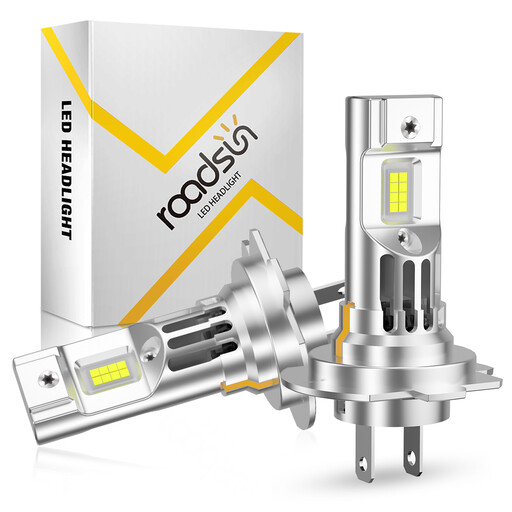
Why This Fits Their Persona: This user wants a noticeable improvement over dim factory halogens without the hassle or expense of a complex installation. They value a straightforward, effective upgrade for their daily driver.
It directly counters the "Plug and Play Deception." The design requires no additional adapters or external drivers, making it a genuine 10-minute replacement for an original H7 bulb.
Provides a significant boost in visibility with a 6500K cool white light. The built-in fan ensures stable performance and longevity without a bulky external housing.
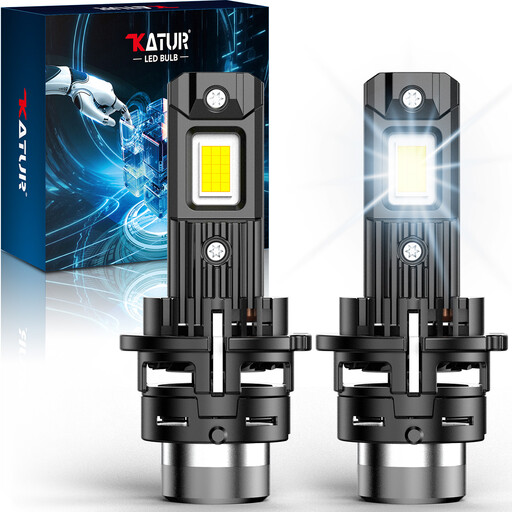
Why This Fits Their Persona: This driver owns a vehicle with factory-fitted HID headlights and seeks a modern, high-output LED replacement. They prioritise instant-on brightness and a crisp, white light over the warm-up time and colour of older HIDs.
This is a specific HID-to-LED replacement, not a universal bulb. This ensures it connects directly to the existing HID ballast wiring without modification, avoiding compatibility issues. The built-in CANBUS driver is designed for these systems.
Offers a substantial increase in light output and a 0.01-second start-up time, eliminating the warm-up delay common with HID bulbs. The dual copper tube and fan cooling system manages heat effectively.
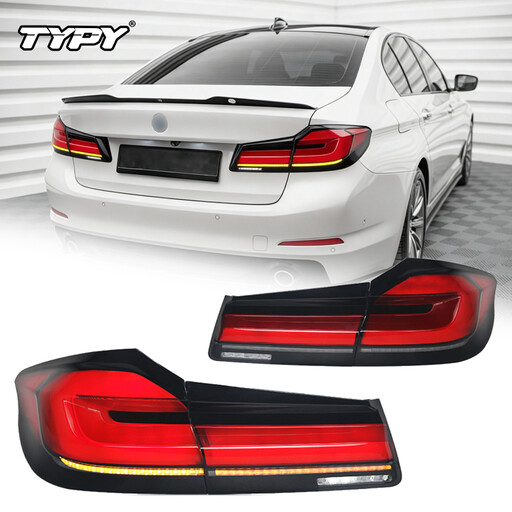
Why This Fits Their Persona: This BMW owner wants to update their vehicle's appearance with modern, dynamic **car tail lights**. They are looking for a complete assembly that provides an OEM+ look and integrates seamlessly with the car's design.
By replacing the entire tail light assembly, it bypasses all the fitment and beam pattern issues of individual bulbs. It's designed specifically for the G30/F90 chassis, ensuring a perfect fit and correct function.
Delivers a high-end aesthetic with sequential turn signals. As a complete unit, it provides a reliable, weather-sealed solution that looks like a factory option, potentially requiring some simple coding for full functionality.
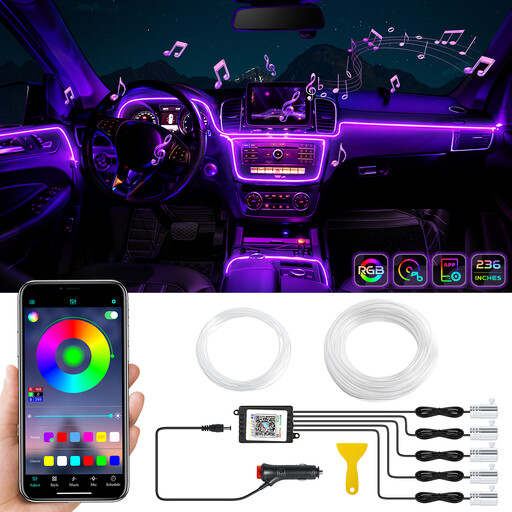
Why This Fits Their Persona: This user wants to add a personal, modern touch to their car's cabin with **car ambient lighting**. They value app control, a wide range of colours and dynamic modes like music synchronisation.
Unlike cheap, dim kits, this system uses a long fibre optic tube paired with multiple LED sources for more even illumination. The dedicated app control avoids the buggy, unreliable software common in lower-quality kits.
Offers extensive customisation with 16 million colours and sound-active modes via a wireless app. The 5-in-1 kit provides enough fibre optic cable to outfit the dashboard and doors for a complete look.
We have compiled a complete, real-time list of products that fully satisfy these strict selection criteria and UK safety regulations.
This is a critical point for UK drivers. According to current DVSA guidelines for the MOT test, headlight bulbs must be a like-for-like replacement. This means retrofitting an LED bulb into a headlamp unit designed for a halogen bulb is technically an MOT failure. However, this rule is primarily aimed at ensuring correct beam patterns. High-quality LED bulbs that accurately replicate the halogen beam pattern may pass, but it is at the discretion of the tester. The fully legal route is to replace the entire headlight assembly with an E-marked, type-approved LED unit.
If your car is a post-2005 model from a European brand (like Audi, BMW, Volkswagen or Peugeot), the answer is very likely yes. To avoid the "bulb out" warning on your dashboard, you should choose CANBUS LED bulbs that have the decoding function built-in. Even then, some highly sensitive vehicle systems may still require an additional external decoder to function without errors.
While manufacturers often claim lifespans of 50,000 hours or more, the real-world longevity depends almost entirely on heat management. A bulb with an effective cooling system (either a fan or a large, well-designed heat sink) will last significantly longer than one that runs hot. A realistic expectation is several years of daily use, which is a substantial improvement over the 500-1,000 hours of a typical halogen bulb.