
24/7 Customer Support

Free returns

Same-day & Next-day Delivery

Quality Guaranteed

Unlock Your Welcome Offers: FREE Delivery | Up to 80% OFF | Free 30-day JoyPlus trial
Download the APP
A car polisher can help apply wax, improve gloss and work on light paint imperfections, but choosing the wrong machine may create more problems than it solves. UK vehicle owners often compare power figures and speed ranges without checking how the tool moves, which pads it accepts or how long it can run safely.
Before buying a car polishing machine, watch out for three common traps:
The right choice depends on the size of the vehicle, the finish required and whether you are working on broad panels or confined areas.
A random orbital car polisher moves the pad in an eccentric pattern. This distributes movement across a wider area and can reduce the chance of concentrated heat when the machine is kept moving. It is suitable for waxing, finishing and gradual paint correction.
A rotary polisher uses direct rotation. It can be useful for experienced users handling localised defects, oxidation or bodywork preparation, but it requires careful speed and pressure control. Some mini car polisher models allow you to switch between rotary and DA modes, offering more flexibility for detail work.
Speed should match the task rather than simply being as high as possible. Lower settings are typically more suitable for spreading wax or sealant, while moderate settings can support polishing and buffing. Higher settings may be used for more intensive correction, but always follow the compound and pad manufacturer’s guidance.
Look for variable speed control, a soft start and a stable power supply. The BATOCA five-inch machine, for example, provides six speed settings from 2,500 to 5,500 rpm. Its stated ranges identify lower speeds for waxing and polishing, with higher settings intended for oxidation and paint damage work.
For a cordless car polisher, also compare battery capacity, charging time and whether a second battery is included. Runtime can vary significantly with pressure, pad type and speed.
A larger pad can cover broad bonnet and roof panels more quickly, whereas smaller pads are better for bumpers, mirror housings, wheels and tight contours. Check the backing plate diameter before purchasing replacement accessories.
Polishing pads are not interchangeable in performance. Firmer foam or wool-style pads may provide more cutting, while softer foam pads are generally used for finishing and gloss. Use separate pads for compound, polish and wax to reduce cross-contamination. Clean pads after use and replace any that are damaged, hardened or heavily saturated.
For sanding, glass or plastic work, verify that the machine and accessory are specifically suitable. A car detailing polisher should not be treated as automatically safe for every surface.
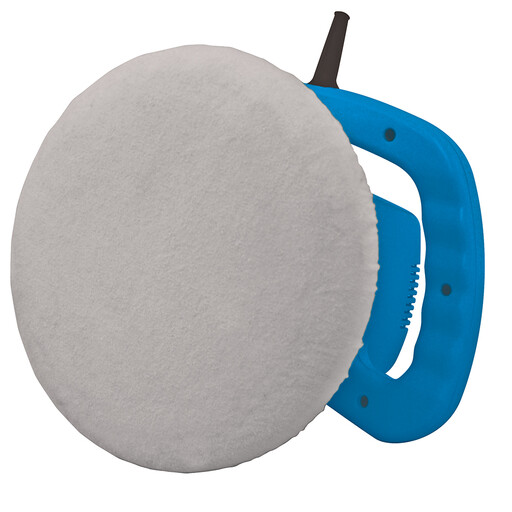
Why This Fits Their Persona: Its 240 mm pad and dual-handle layout suit owners who want to cover larger panels during occasional weekend detailing.
The orbital movement is designed for more even pad travel than a fixed rotary action. It also includes synthetic and wool-style bonnets for different finishing stages.
Large 240 mm pad; ergonomic dual-handle design; supplied with two bonnet types.
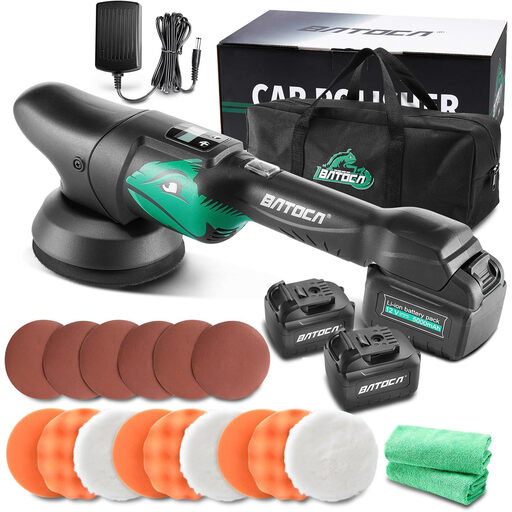
Why This Fits Their Persona: The cordless format and dual 5 Ah batteries suit regular detailing sessions where cable management would be inconvenient.
The LCD display shows speed and battery information, while two batteries can be exchanged instead of stopping for every recharge.
125 mm pad size; two 5 Ah batteries; six speed settings from 2,000 to 4,500 rpm.
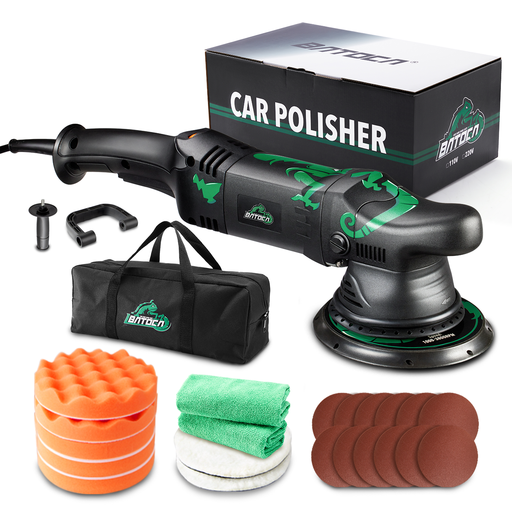
Why This Fits Their Persona: A mains-powered machine is practical for longer sessions in a garage or detailing bay where continuous power is available.
Its six electronic speed settings provide more adjustment than a single-speed buffer machine, and the 5-inch format balances panel coverage with control.
1100 W stated motor rating; 2,500–5,500 rpm range; removable side and D-shaped handles.
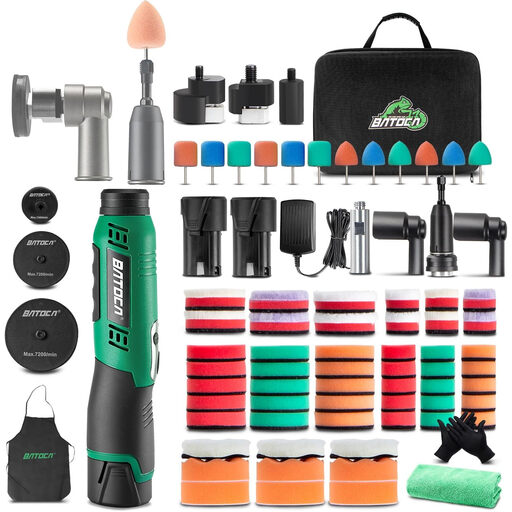
Why This Fits Their Persona: Its compact design is suited to motorcycles, wheel rims, mirror housings, door jambs and other areas that larger machines struggle to reach.
It combines DA and rotary modes with 25 mm, 50 mm and 75 mm backing plates, avoiding the limitation of using one large pad for every task.
Two 12 V batteries; switchable DA and RO operation; separate speed ranges for the main and mini polishing systems.
Before starting, wash and dry the vehicle, remove loose contamination and mask unpainted plastic trim. Work indoors or in shade where possible, particularly during warmer weather. Use eye protection and suitable respiratory protection when product instructions require it.
Apply a small amount of compound to the pad, place the pad flat against the panel and begin at a low speed. Work in overlapping sections while keeping the car polishing machine moving. Do not concentrate on one point, press heavily or polish sharp edges for extended periods. Test an inconspicuous area first, especially on older, repainted or soft paint.
If you need replacement accessories, check the dimensions and attachment system carefully. A separate polishing sponge pad set may provide several foam densities, but confirm compatibility with your backing plate and drill or polisher before use.
We have compiled a complete, real-time list of products that fully satisfy these strict selection criteria and UK safety regulations.
A dual action polisher is often easier to control than a fixed rotary machine because its movement is distributed across an orbit. However, it can still damage paint if used with excessive pressure, an unsuitable compound or prolonged contact in one area. Practise on a small, inconspicuous section first.
The electricity cost of charging depends on the battery capacity, local tariff and charging frequency. In practical terms, the larger ongoing costs are usually replacement batteries, pads and compounds. A kit with two batteries may reduce interruptions, but check the stated charging time and battery availability before purchase.
Service life depends on workload, storage, ventilation and maintenance. Keep pads clean, do not block cooling vents, remove batteries before storage and inspect cables, backing plates and switches regularly. A machine with replaceable carbon brushes may offer a different maintenance route from a brushless model, so compare the manufacturer’s parts and care information before ordering.