
24/7 Customer Support

Free returns

Same-day & Next-day Delivery

Quality Guaranteed

Unlock Your Welcome Offers: FREE Delivery | Up to 80% OFF | Free 30-day JoyPlus trial
Download the APP
Faded paint, swirl marks and light scratches can make a well-maintained car look tired. The right car polishing products can improve the appearance of paintwork, but choosing unsuitable compounds or using a machine incorrectly may create more visible marks.
This guide explains the practical differences between a car polisher, liquid compounds and paint restorers, helping UK motorists select products according to their vehicle, available time and level of detailing experience.
Polishing can reduce the appearance of light surface marks, oxidation, paint transfer and swirls. However, a scratch that has penetrated through the clear coat and into the colour layer or metal may require professional scratch repair or paintwork. Run a clean fingernail across the mark: if it catches noticeably, do not assume that more abrasive rubbing will solve it.
A high RPM figure can look attractive on a product page, but speed alone does not determine the finish. Excessive heat, pressure or repeated passes over one area may affect the clear coat. A variable-speed car polishing machine with soft start and sensible control is generally easier to manage than a single-speed tool.
A backing plate and pad must match the machine. Check the pad diameter, attachment method and intended surface before buying. A 125 mm pad is useful for larger panels, while a mini car polisher with a smaller backing plate can reach mirror housings, bumpers, wheels and narrow body sections.
An orbital polisher, also called a random orbital machine, combines rotation with an eccentric movement. This can provide a more forgiving approach for DIY users because the pad does not follow one fixed rotation point. It is suitable for general paint correction, swirl remover applications and finishing work.
A rotary polisher spins around a fixed central axis. It can offer focused correction but demands more careful control to avoid heat build-up or uneven results. Some detailing kits combine rotary and orbital functions, which may be useful for users working on both larger panels and precise areas.
Look for a clear speed range rather than relying on a headline RPM figure. Lower settings are generally more suitable for spreading compound and beginning work, while higher settings may be used selectively according to the product instructions and paint condition.
Features such as soft start, speed memory, an LCD speed display and several speed levels can make operation more predictable. Keep the pad moving, use light pressure and work in small sections.
For a cordless car polisher, battery capacity affects how long you can work between charges. Two interchangeable batteries may be more practical than one large battery if you are polishing an entire vehicle. Also check charge time, included pads and whether replacement batteries are available.
Before using any compound, wash and dry the vehicle thoroughly. Remove loose grit and use a clean microfibre cloth. Always test a small, inconspicuous area first, particularly on older, repainted or delicate finishes.
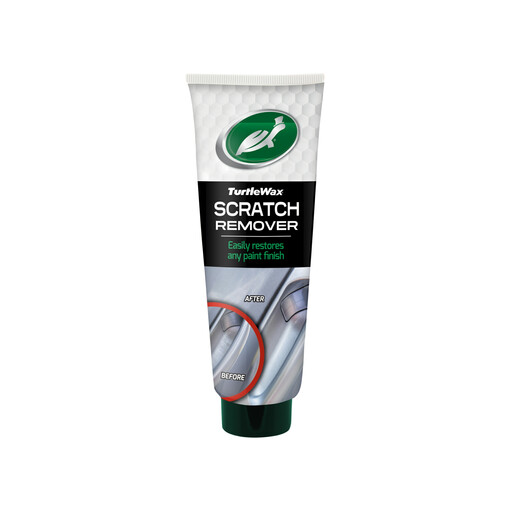
Why This Fits Their Persona: A compact hand-applied option for motorists dealing with minor scuffs, light swirls or paint transfer without purchasing a machine.
It avoids paying for unnecessary machine power when the affected area is small and the marks are superficial. Always follow the label and test first.
100 ml format; designed for minor scratches, swirls, scuffs and paint transfer; suitable for clear-coat and metallic paintwork according to the product description.
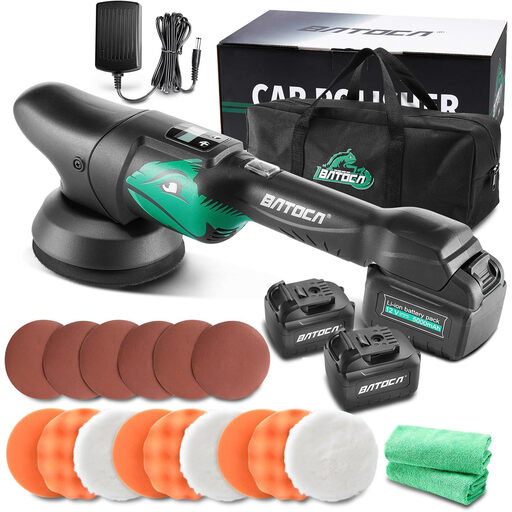
Why This Fits Their Persona: Suits users who want cordless convenience for full-panel polishing at home, on a driveway or in a garage without managing a mains cable.
The LCD display shows speed and battery information, while six settings and soft start provide more control than a fixed-speed buffer.
8 mm eccentric orbit; 125 mm pad size; 2 × 5 Ah batteries; stated speed range of 2,000–4,500 RPM; approximately 60 minutes’ runtime per battery.
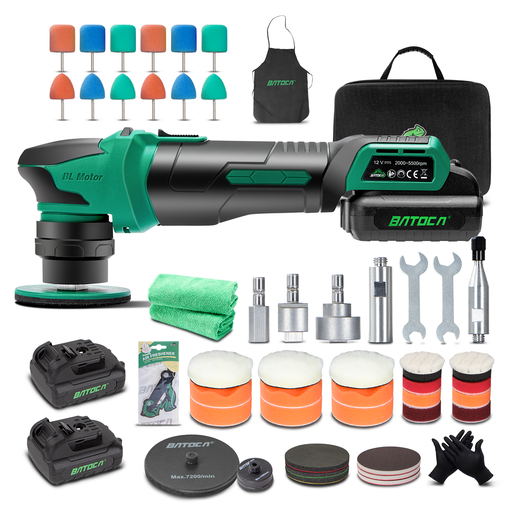
Why This Fits Their Persona: Designed for detail-focused users working around bumpers, mirrors, wheels, trim and other confined areas where a full-size machine may be awkward.
The 25 mm and 75 mm back plates provide alternatives to using an oversized pad in tight spaces. Its dual rotary and random orbital systems support different detailing tasks.
Brushless motor; 2 × 12 V 2.5 Ah batteries; four speed settings from 2,000–5,500 RPM; extension rod and mini pads included.
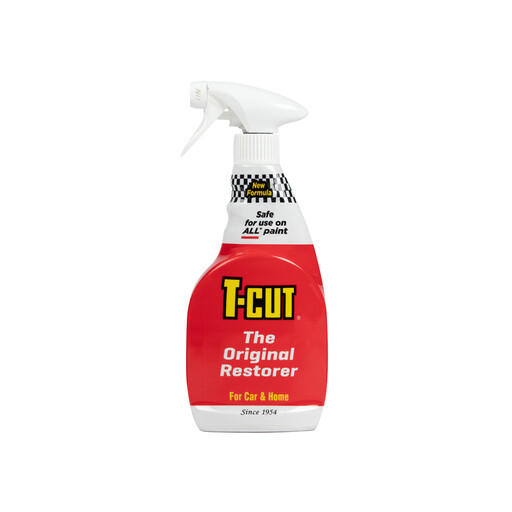
Why This Fits Their Persona: A practical choice for larger areas affected by oxidation, ingrained road grime, tar spots or baked-on insects.
It is a dedicated paint restorer rather than a general household cleaner, and the silicone-free formulation is specified for painted surfaces.
500 ml bottle; intended to address oxidation, scratches, tar spots, road grime and insects; suitable for various painted surfaces including caravans, bikes and boats.
We have compiled a complete, real-time list of products that fully satisfy these strict selection criteria and UK safety regulations.
Wear suitable eye protection and follow the manufacturer’s handling instructions. Do not use a machine in wet conditions unless its documentation specifically permits this.
Usually, no. Car polish and a swirl remover are intended for surface-level imperfections, light oxidation and some paint transfer. Deep scratches that catch a fingernail may need colour-matched repair or professional refinishing.
It can be useful for driveway users and detailers who value freedom from a mains cable. Compare battery capacity, charging time, replacement battery availability and the machine’s weight. Two batteries can reduce waiting during larger jobs, although actual runtime depends on speed, pressure and workload.
A liquid compound or scratch remover can be stored according to its label, with the cap securely closed and the product kept away from extreme temperatures. A polishing machine’s usable life depends on battery care, cleaning, storage and workload. Keep pads clean, remove the battery when storing a cordless tool and inspect accessories before each use.