
24/7 Customer Support

Free returns

Same-day & Next-day Delivery

Quality Guaranteed

Unlock Your Welcome Offers: FREE Delivery | Up to 80% OFF | Free 30-day JoyPlus trial
Download the APP
Choosing car repair tools is rarely as simple as selecting the largest set or the lowest price. A useful kit should match your vehicle, the fasteners you work on and the space available in your garage. Whether you maintain a car on the driveway, service a motorcycle or adjust bicycle components, the right automotive tools can reduce damaged fasteners, wasted time and unnecessary replacement costs.
A 100-piece kit may look appealing, but it can contain duplicate bits while missing the sizes used by your vehicle. Before buying, check whether you need metric or imperial sizes, the required drive size and any specialist attachments such as a spark plug socket or brake line spanner.
A cordless ratchet wrench is useful for removing and running down nuts quickly, but it is not automatically a substitute for a torque wrench. Power tools can make it easy to overtighten components. For wheel fasteners, engine parts and other manufacturer-specified fixings, use the torque value stated in the vehicle’s service information and finish with a suitable torque wrench.
A tool may fit the fastener but still be unsuitable for the working area. Short handles can lack leverage, while bulky heads may not reach recessed fittings. Oil filter removal presents another issue: aggressive teeth can damage a filter housing or crush a thin filter. For smooth or delicate surfaces, a rubber band wrench may be more appropriate.
Common drive sizes include 1/4-inch, 3/8-inch and 1/2-inch. A 1/4-inch drive suits smaller fasteners and bicycle or motorcycle components. A 3/8-inch ratchet wrench is a practical general-purpose choice for many car repairs. A 1/2-inch drive is more suitable for larger fasteners where higher torque may be required.
Check that sockets, extensions and adapters match the drive. Also confirm whether the set includes metric sizes, as these are widely used on vehicles sold in the UK.
A torque wrench should cover the range required for your job without operating constantly at either extreme. A 2–26 N·m bicycle torque wrench is designed for low-torque fittings, whereas a 6.8–135 N·m or 17–340 N·m digital torque wrench covers substantially higher settings.
A stated accuracy figure, such as ±2% or ±3%, is useful only when the wrench is correctly stored and maintained. Do not use a torque wrench as a breaker bar or striking tool. Mechanical models should generally be returned to their lowest setting after use, while digital models need dry storage and battery care.
Chrome vanadium steel is common in combination spanner sets and flare nut spanners because it offers a hard, corrosion-resistant construction when properly finished. A polished surface is also easier to wipe clean after contact with oil and grease.
For restricted spaces, look for a 90-tooth ratchet, slim head, swivel joint or offset spanner. These features can reduce the swing required to move a fastener, but they do not remove the need to select the correct socket or apply force safely.
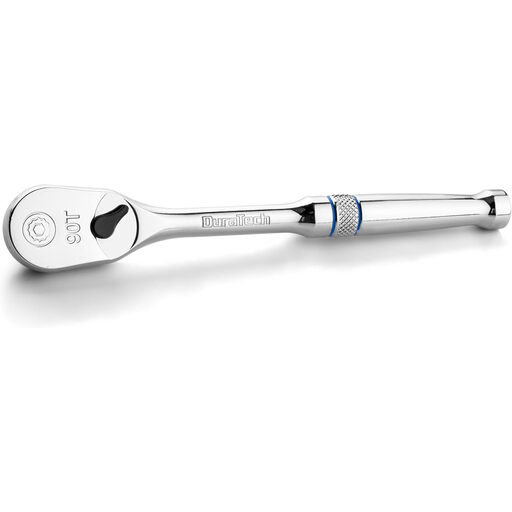
Why This Fits Their Persona: A straightforward starting point for driveway maintenance, light-duty vehicle work and general home repairs without carrying a bulky powered tool.
The 3/8-inch drive is compatible with commonly available sockets, while the enclosed head is designed to resist dirt entering the mechanism.
90 teeth require a 4-degree movement; the reversible direction switch supports tightening and loosening.
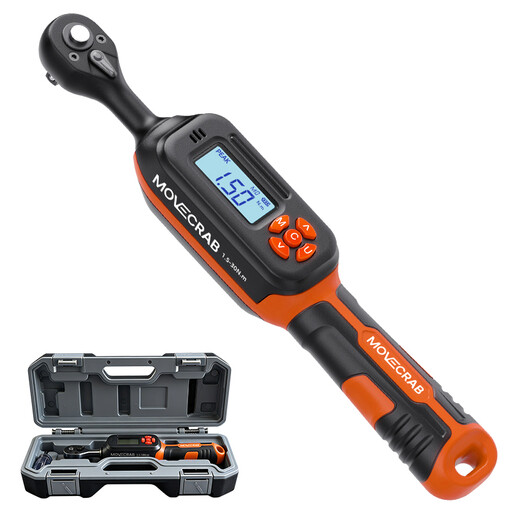
Why This Fits Their Persona: Suitable for users who want visible torque readings for bicycle, motorcycle and lower-torque automotive work.
Its stated range and ±2% accuracy help buyers compare a precision tool by measurable specifications rather than vague marketing language.
Displays N·m, ft·lb, in·lb and kgf·cm; vibration, sound and LED alerts indicate the selected torque value.
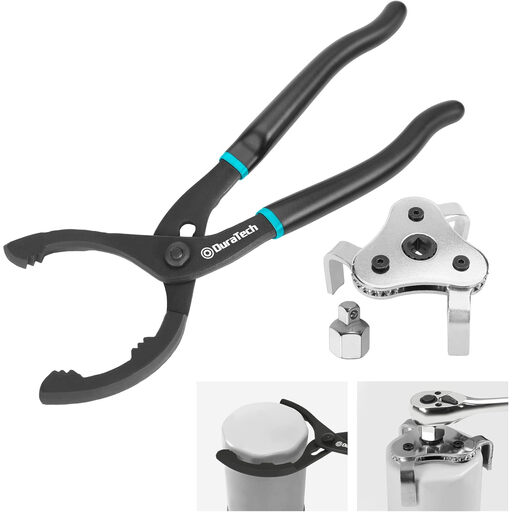
Why This Fits Their Persona: A practical match for frequent servicing, mixed vehicle ownership or workshop users who regularly remove oil filters.
It provides both plier and three-jaw designs, reducing reliance on one removal method when filter size or access varies.
The three-jaw tool covers 63–103 mm filters; adapters support 3/8-inch and 1/2-inch drives.
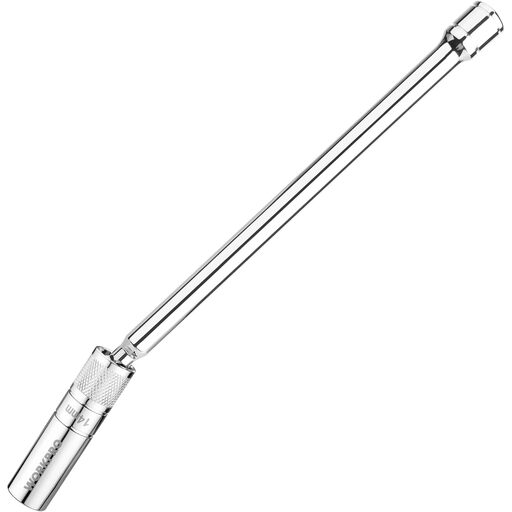
Why This Fits Their Persona: Designed for owners working on recessed spark plugs in cars or motorcycles where ordinary sockets may not provide sufficient reach.
The 14 mm size, 300 mm reach and 1 mm thin-wall construction are clearly stated, so compatibility can be checked before purchase.
Heat-treated chrome vanadium steel; magnetic core and 360-degree swivel head assist controlled access.
A combination spanner set covers everyday nuts and bolts, while a dedicated brake line spanner is shaped to grip more of a flare nut than a standard open-ended spanner. For users working on bicycles or motorcycles, a bicycle torque wrench with hex and Torx bits can be more useful than a general car kit.
For repeated maintenance, a cordless ratchet wrench can save hand movement in confined areas. Compare battery capacity, maximum torque, speed, included sockets and charging time. Keep final tightening to a hand-operated torque wrench where the vehicle manufacturer specifies a setting.
We have compiled a complete, real-time list of products that fully satisfy these strict selection criteria and UK safety regulations.
Start with a 3/8-inch ratchet, compatible metric sockets, screwdrivers, pliers, a combination spanner set and a torque wrench suited to your most common jobs. Add specialist tools such as an oil filter wrench or spark plug socket only after checking your vehicle’s requirements.
It can be useful when you need clear readings, multiple measurement units or audible, visual and vibration alerts. Compare its torque range with your vehicle specifications, protect it from moisture and avoid exceeding the stated maximum.
Wipe off oil and debris, dry metal tools before storage and keep them in a pouch, case or drawer. Store torque wrenches according to the manufacturer’s instructions, remove or maintain batteries as directed, and inspect rubber bands, sockets and ratchet mechanisms for wear before use.