
24/7 Customer Support

Free returns

Same-day & Next-day Delivery

Quality Guaranteed

Unlock Your Welcome Offers: FREE Delivery | Up to 80% OFF | Free 30-day JoyPlus trial
Download the APP
Buying car repair tools can look straightforward until you compare socket sizes, drive types, materials and specialist accessories. A large case may appear useful, while a compact ratchet wrench may seem convenient for every task. In practice, the wrong tool can waste time, damage fasteners or remain unused in a crowded garage.
This guide explains the specifications worth checking before you buy, then matches practical options to different users, from occasional DIYers to vehicle owners carrying tools for roadside repairs.
A 450-piece mechanics tool set may sound more useful than a 108-piece set, but the total often includes duplicate bits, adapters and small accessories. Check whether the case contains the sizes and drive types you actually need.
For routine car maintenance, useful essentials may include:
Descriptions such as “chrome finish” do not explain the whole construction. Look for details including chrome vanadium steel, heat treatment and whether the surface is polished, plated or matte. These features can affect resistance to wear, corrosion and cleaning chemicals.
Even corrosion-resistant tools should be wiped dry after use and stored away from damp conditions. UK garages, sheds and vehicle boots can experience condensation, particularly during colder months.
A regular ratchet or spanner is suitable for many removal and installation jobs, but it does not indicate how much torque is being applied. Components such as bicycle stems, engine parts and some vehicle fasteners may require a specified torque setting.
A torque wrench helps you apply a pre-set value, but it must be used correctly. Check the vehicle or component manufacturer’s instructions, select the correct unit and stop when the wrench signals that the setting has been reached. Do not use a torque wrench as a general breaker bar unless its instructions specifically permit this.
Drive size determines which sockets fit the tool. A 3/8-inch ratchet wrench is a flexible choice for many general automotive hand tools, while a 1/2-inch drive offers a more substantial connection for larger sockets. A 1/4-inch drive is useful for smaller fasteners and narrow access points.
To work around obstructions, check for:
For example, a 90-tooth ratchet requires only a 4-degree movement between engagements, which can be practical in restricted areas. This does not replace the need to position the socket correctly and apply controlled force.
Heat-treated chrome vanadium steel is widely used in sockets, spanners and pliers because it combines hardness with resistance to regular workshop wear. S2 steel is commonly used for screwdriver and bit components.
The correct size remains essential. A loose socket or spanner can round the fastener, especially if the bolt is corroded or difficult to reach. Flare nut spanners are designed for brake lines and similar tubing connections, where a conventional open-ended spanner may provide less contact.
A case or storage roll is more than a convenience. Clearly stamped sizes help you identify tools quickly, while shaped compartments reduce the chance of missing pieces. For a combination spanner set, check the actual range rather than assuming it includes both metric and imperial sizes.
A combination spanner set with open and bi-hexagonal ends can cover general mechanical tasks, while water pump pliers and band wrenches address rounded, smooth or irregular objects that sockets cannot grip.
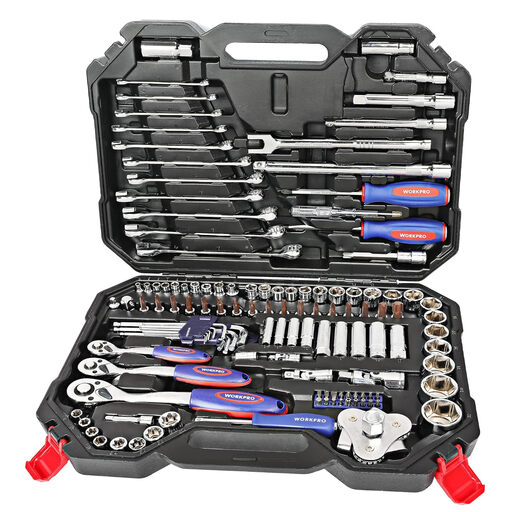
Why This Fits Their Persona: A practical starting point for vehicle owners who also need tools for home maintenance and occasional DIY tasks.
Its 123 pieces provide a broader selection without moving immediately to a very large case with potentially unnecessary duplicates.
Includes 1/2-inch, 1/4-inch and 3/8-inch drive tools, spanners, bits and hex keys in a blow-moulded case.
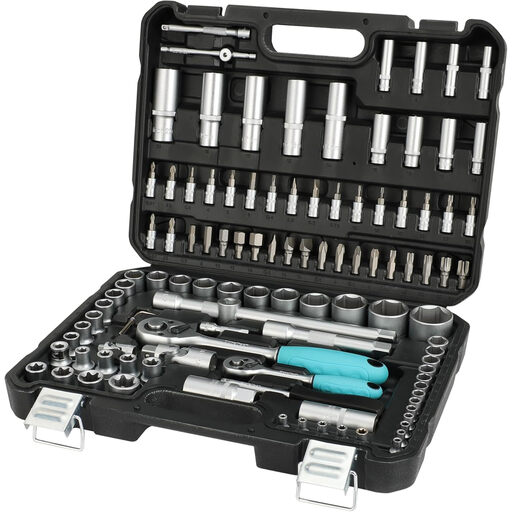
Why This Fits Their Persona: Suitable for users who want an organised, multi-drive mechanics tool set for regular garage and car maintenance work.
The listing identifies heat-treated Cr-V sockets, S2 bits and the included accessories, making the contents easier to assess than a piece-count-only purchase.
Offers 72-tooth 1/2-inch and 1/4-inch ratchets, extension bars, universal joints and marked storage positions.
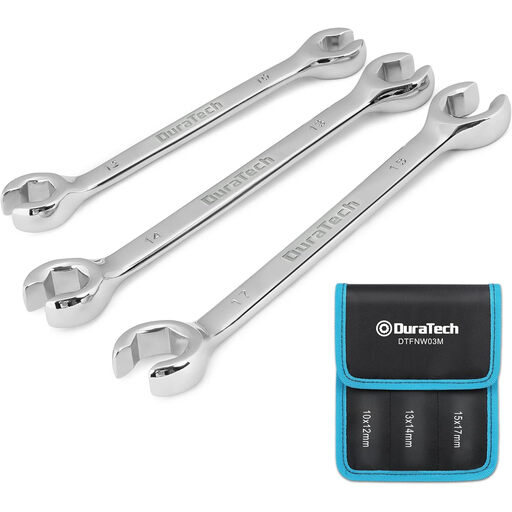
Why This Fits Their Persona: A focused option for mechanics, vehicle owners and tradespeople working on brake-line connections or tubing fittings.
The flare design is intended for line nuts, rather than forcing a standard open-ended spanner onto a specialised connection.
Includes 10x12 mm, 13x14 mm and 15x17 mm sizes, with a 15-degree offset and storage pouch.
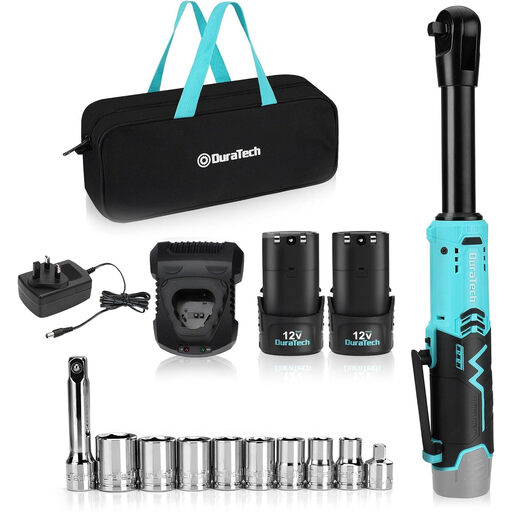
Why This Fits Their Persona: Useful for repeated fastening tasks in a garage or for users who need cordless access around tight engine-bay spaces.
Its 3/8-inch drive, slim head and extended design address access and speed separately, rather than relying on a bulky tool for every job.
Provides 60 N.m torque, 180 RPM, LED lighting, two 2,000 mAh batteries and eight sockets.
A general tool kit will not cover every job. Consider adding a spark plug socket if your vehicle requires a compatible 14 mm fitting. The WORKPRO version has a 300 mm reach, magnetic retention, a 360-degree swivel head and a 3/8-inch drive. Confirm plug dimensions before ordering.
For plumbing, oil filters and smooth fittings, water pump pliers or a rubber band wrench can provide a different type of grip. The WORKPRO 2 Pack Water Pump Pliers offers 180 mm and 250 mm sizes, while the ValueMax band wrench set is designed for objects from 100 mm to 150 mm in diameter. Inspect rubber bands for cuts and do not exceed the stated torque limits.
Cyclists may prefer a compact bicycle repair tools kit with controlled torque. The WORKPRO 1/4-inch torque wrench covers 2–26 N.m and includes hex, Torx, extension and adapter accessories. Store it at its minimum setting when not in use, as directed by the product information.
We have compiled a complete, real-time list of products that fully satisfy these strict selection criteria and UK safety regulations.
Start with a practical socket set covering common drive sizes, a reversible ratchet wrench, combination spanners, screwdrivers, pliers and hex keys. Add extensions and a torque wrench if your planned work involves manufacturer-specified tightening values.
No. They can speed up removal and installation, particularly in confined areas, but they are not a replacement for a correctly sized manual tool or a calibrated torque wrench. Use the cordless ratchet within its stated torque range and finish critical fasteners according to the vehicle manufacturer’s instructions.
Wipe grease and moisture from tools after use, inspect ratchet mechanisms and plier jaws for damage, and keep sets in their supplied case or roll. Store torque wrenches at the manufacturer’s recommended setting, and replace tools showing cracks, deformation or significant wear.