
24/7 Customer Support

Free returns

Same-day & Next-day Delivery

Quality Guaranteed

Unlock Your Welcome Offers: FREE Delivery | Up to 80% OFF | Free 30-day JoyPlus trial
Download the APP
Adding a custom starlight headliner to your vehicle can transform its interior, creating an atmosphere of luxury and calm reminiscent of high-end executive cars. However, the market for DIY kits is filled with options that can be confusing. Many shoppers end up with a disappointing result due to misleading marketing and hidden design flaws.
As a Joybuy Product Recommendation Officer, my role is to help you navigate these choices. This guide will break down the essential features to look for and highlight the common pitfalls to avoid, ensuring you invest in a kit that delivers that stunning car roof starry sky light effect you're looking for.
Before you add any kit to your basket, be aware of these common issues that can lead to buyer's remorse:
To ensure you get a high-quality result, focus on these three technical specifications. They are the non-negotiable elements that separate a premium installation from a subpar one.
The fibres themselves are the most critical component. Pay close attention to:
The light engine generates the light that travels through the fibres. The key technology to look for is RGBW. This means the engine has dedicated Red, Green and Blue LEDs, plus a separate, fourth White LED. This guarantees you can have vibrant colours when you want them and a pure, brilliant white for that classic starlight look.
Many modern kits also feature sound activated headliner lights. A built-in microphone on the light engine allows the lights to change colour, pulse or flash in time with your music, which is a great feature for those wanting a more dynamic atmosphere.
How you interact with your fibre optic star ceiling lights is crucial for day-to-day enjoyment. Most kits offer control via a handheld RF (Radio Frequency) remote, a smartphone app via Bluetooth, or both. App control generally provides a wider range of colours (up to 16 million) and more customisable modes. Also, confirm the kit comes with the correct power adapter for your needs—a 12V plug for car use and a mains adapter if you're planning a DIY starlight headliner project at home.
Based on these criteria, we've matched a few options to different user needs.
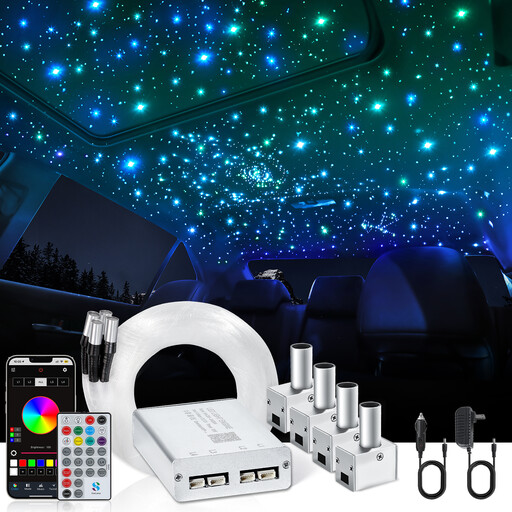
Why This Fits Their Persona: This user is ready for a full headliner project and wants a dense, feature-rich result. They plan to spend a weekend on the installation and want maximum control over the final look.
With 1000 fibre strands, it directly solves the "sparse sky" problem. Its RGBW light engine provides a true pure white mode, avoiding the "fake white" trap entirely.
The 4-port split engine allows for zoned lighting, meaning different sections of the roof can have different colours or modes simultaneously—a highly advanced customisation feature.
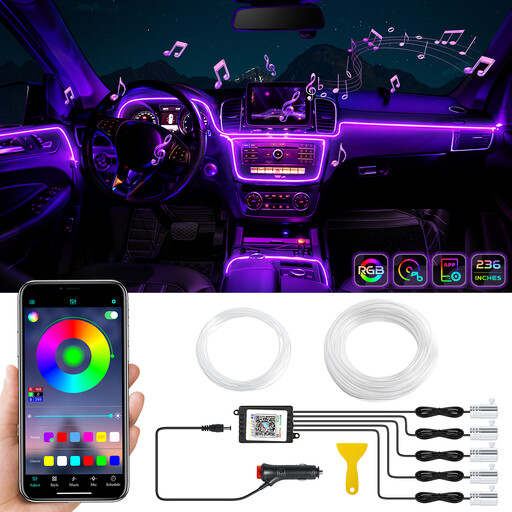
Why This Fits Their Persona: This user loves the idea of custom lighting but finds removing the headliner intimidating. They want a simpler, less permanent way to add a colourful glow to their car's interior.
This is an ambient strip light, not a star kit. It offers a different effect, sidestepping the "sparse star" pitfall by providing a continuous line of light for dashboards and door panels.
Installation is much simpler. The fibre optic tube is inserted into existing panel gaps using a pry tool, with no drilling required. It's a great entry point into vehicle lighting modification.
Why This Fits Their Persona: This user wants to create an immersive star ceiling in a bedroom, games room, or home cinema. They need a kit that is versatile enough for home installation and powerful enough for a larger area.
This kit includes both a car plug and a UK mains power adapter, so there's no need to source a separate transformer. The high fibre count is ideal for the larger surface area of a room ceiling.
The sound-activated music mode is perfectly suited for a home cinema or listening room, creating a dynamic visual experience that syncs with films and music.
We have compiled a complete, real-time list of products that fully satisfy these strict selection criteria and UK safety regulations.
1. How long does it take to install a DIY starlight headliner? For a first-time installer, a full DIY starlight headliner project can take anywhere from 5 to 10 hours. The process involves removing the car's headliner, carefully poking hundreds of holes, threading the fibres, securing them with adhesive and reinstalling everything. It is a labour-intensive but rewarding project.
2. Do fibre optic star ceiling lights burn out? The fibre optic strands themselves do not burn out as they only transmit light; they don't generate it. The light source is the LED engine. Modern LED engines have a very long lifespan, often rated for 30,000 to 50,000 hours of use, so you can expect it to last for many years without issue.
3. Are RGBW star lights difficult to control? Not at all. Most kits are designed for user-friendliness. The included RF remote typically has straightforward buttons for power, colour selection, mode changes and brightness. The companion smartphone apps offer a more visual interface, often with a colour wheel and sliders, making it very intuitive to find the exact shade and effect you desire.