
24/7 Customer Support

Free returns

Same-day & Next-day Delivery

Quality Guaranteed

Unlock Your Welcome Offers: FREE Delivery | Up to 80% OFF | Free 30-day JoyPlus trial
Download the APP
Buying car toys for kids can seem straightforward until you compare battery types, age ratings, track compatibility and build quality. A small toy car may suit a younger child, while a remote-control vehicle or construction set can offer more engaging play for older children. For gift buyers, the main challenge is separating useful features from packaging claims that add cost without improving play value.
This guide explains the main buying pitfalls, the specifications worth checking and a selection of products matched to different users, from first-time racers to F1 fans and collectors.
Some remote control cars for kids are designed for smooth indoor floors or flat outdoor surfaces, but may struggle on thick carpet, gravel or wet grass. A high-speed model can also be difficult to control in a small living room. Check the stated surface suitability and turning functions before choosing a vehicle based on speed alone.
A detailed die-cast model may have opening doors, a pull-back mechanism or realistic trim, but it may also be recommended for ages 14 and above. Small components and delicate detailing are not suitable substitutes for a robust play vehicle. Always check the age guidance, choking warnings and whether the item is designed for play, display or both.
Battery-powered toys can require rechargeable cells, replacement batteries or USB charging. Construction sets and track systems may avoid battery costs but often need additional cars, track pieces or compatible accessories for expansion. Before buying, confirm what is included in the box and whether the product requires separate purchases.
Look for the manufacturer’s recommended age, small-parts warnings and clear product information. Toys sold in the UK should display the relevant CE or UKCA marking where applicable, with responsible manufacturer or importer details available. A safety mark should not replace checking the individual product’s instructions and warnings.
For younger children, avoid products with loose small parts. The Hot Wheels Track Creator set, for example, is listed for children aged 3 and above but carries a small-parts warning and recommends direct adult supervision.
For an RC vehicle, check whether it uses disposable batteries or a rechargeable battery, how it charges and how long a play session is expected to last. The 4WD GTR RC drift car lists a rechargeable lithium battery, USB charging and approximately 20–40 minutes of play per charge. This is useful information for indoor play, but charging time and battery care should still be considered.
Construction models such as LEGO Speed Champions cars require no batteries. They may suit children who prefer building and imaginative play rather than repeated electronic driving.
Measure the available play area before buying a large track or stunt car. Flexible track pieces are useful where space changes from day to day, while a compact model may be easier to store on a shelf. For outdoor use, check wheel size, ground clearance and the recommended surface. Features such as 4WD, shock absorption and all-terrain wheels can improve handling, but they do not make every vehicle suitable for steep, wet or uneven ground.
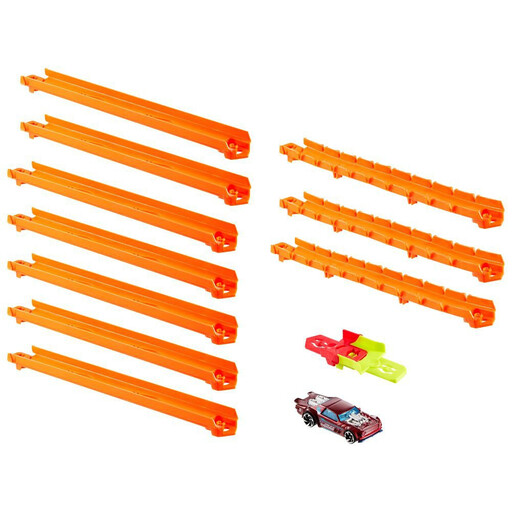
Why This Fits Their Persona: A practical starting point for younger children who enjoy building, testing and changing layouts without needing batteries. The set includes 10 feet of track and one 1:64-scale die-cast car.
The contents are clearly specified, so buyers can see that the starter pack includes track and a car rather than assuming accessories are included.
Seven 12-inch straight pieces, three flexible pieces and two adapters for compatibility with legacy e-track.
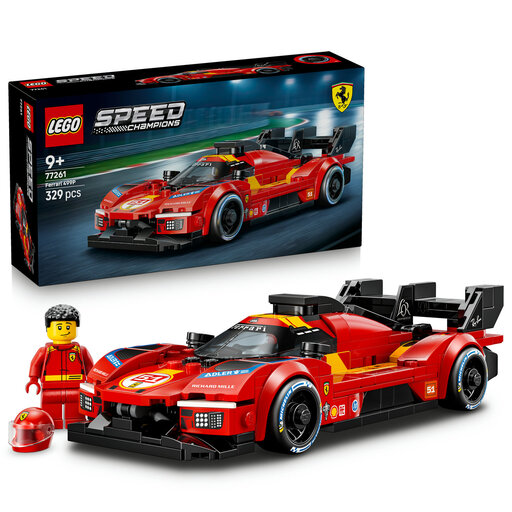
Why This Fits Their Persona: A suitable choice for F1 and motorsport fans aged 9 and above who value a structured build, recognisable vehicle details and a model that can be displayed after play.
The age guidance and 329-piece count make the expected building commitment clearer than a simple ready-made model.
Includes a driver minifigure, movable build features and a model measuring over 18 cm long when assembled.
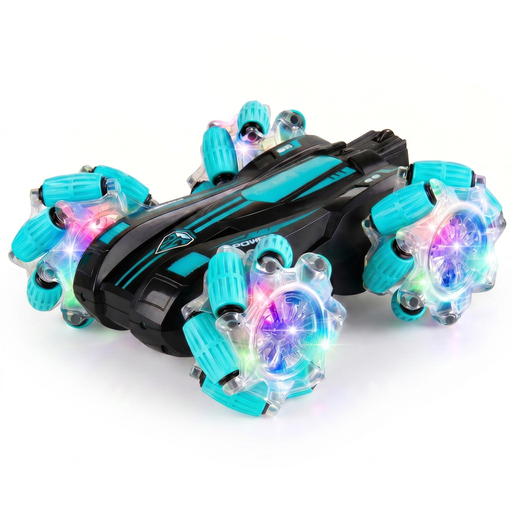
Why This Fits Their Persona: Designed for children who want more than straight-line racing, with sideways movement, flips and spins for indoor or outdoor play on suitable surfaces.
Its functions are specific rather than relying only on a speed claim: the vehicle is listed with double-sided driving, lateral drifting and 360° rotation.
4WD drive, shock-resistant body, Mecanum wheels and LED-lit wheels for visible play in low-light conditions.
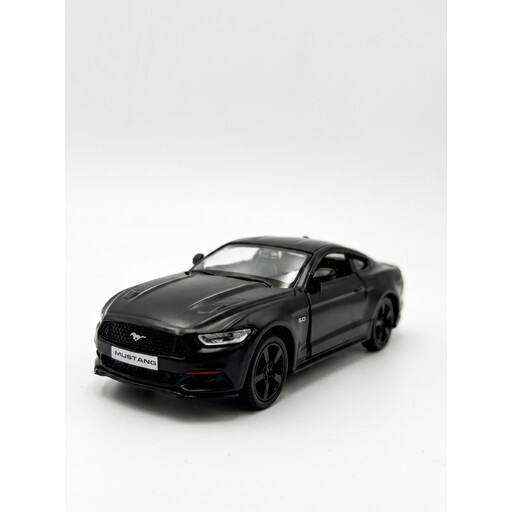
Why This Fits Their Persona: A display-led gift for older teenagers, adult car enthusiasts and buyers looking for a compact collectible car model rather than an electronic toy.
The recommended age of 14+ clearly separates it from pre-school car toys, helping prevent an unsuitable gift purchase.
Metal construction, opening doors and pull-back action combine display detail with limited hands-on play.
We have compiled a complete, real-time list of products that fully satisfy these strict selection criteria and UK safety regulations.
Running costs depend mainly on the battery system. Rechargeable RC cars avoid repeated disposable battery purchases, although the battery may eventually need replacing. USB charging is convenient, but users should follow the supplied charging instructions and avoid leaving batteries charging unattended.
Choose products with a clearly stated age range, large components and accessible controls. Track sets can be suitable from age 3 when used with supervision, while detailed construction kits and die-cast models are often intended for older children or adults. Always follow the product warning rather than choosing by appearance alone.
Store track pieces and cars away from damp areas, clean wheels after outdoor play and avoid using indoor RC vehicles on unsuitable surfaces. Keep rechargeable batteries charged according to the instructions, remove disposable batteries during long-term storage and retain the packaging or manual for safety information.