
24/7 Customer Support

Free returns

Same-day & Next-day Delivery

Quality Guaranteed

Unlock Your Welcome Offers: FREE Delivery | Up to 80% OFF | Free 30-day JoyPlus trial
Download the APP
A car tyre pressure monitoring system can make it easier to spot pressure changes during commuting, motorway trips or towing. However, not every wireless TPMS or portable inflator suits every vehicle. A system designed for a family hatchback may not cover the pressure range or transmission distance required by a caravan, trailer or motorhome.
The most useful approach is to match the equipment to your vehicle, tyre pressure and travelling routine rather than choosing based on a large PSI figure or a list of extra features.
A high maximum pressure does not automatically mean faster or more suitable inflation. Passenger cars, SUVs, caravans and trailers have different requirements. Always compare the product’s operating range with the pressure shown on your vehicle’s tyre placard, usually found on the driver’s door pillar, fuel flap or in the handbook.
A 12V tyre compressor or cordless tyre inflator should also state whether it is intended for cars, SUVs, light trucks, bicycles or higher-pressure trailer tyres. Do not assume that a pump suitable for a car is appropriate for a heavy commercial vehicle.
A cordless pump is convenient, but its battery needs charging and its running time may be limited. A wired car air compressor connected to a 12V socket can be practical for roadside top-ups, although the engine may need to run to avoid excessive battery drain.
Check whether the product gives a duty-cycle instruction. Some compact compressors require cooling breaks, particularly when inflating several tyres. A claimed fast-inflation time may relate to a particular tyre size and starting pressure, so it should not be treated as a universal result.
A wireless TPMS relies on communication between external sensors and the display. Long vehicles, metal-bodied motorhomes and trailers may need a repeater. Check the stated vehicle length and whether the kit includes one.
External sensors also require regular attention. Their batteries eventually need replacing, and screw-on sensors must be fitted securely without damaging the valve stem. They are a monitoring aid, not a substitute for checking tread, valve condition and recommended cold inflation pressure.
Look for a digital tyre pressure monitor that displays the units you use, such as PSI or BAR. For cars and SUVs, a range covering up to approximately 116 PSI may be sufficient, while an RV tyre pressure monitoring system or trailer TPMS may need a higher range.
The GUTA system listed below offers a stated range up to 188 PSI, while several Tymate systems list ranges up to 87 or 116 PSI depending on the model. Confirm the precise specification before ordering, especially for caravans, horse trailers or light trucks.
A tyre pressure and temperature monitor can show more information than pressure alone. Useful alarm categories may include rapid air loss, low pressure, high pressure, high temperature and low sensor battery.
Alarm thresholds should be adjustable or automatically calibrated in a clear way. Calibration must be carried out when the tyres are correctly inflated and cold. A displayed reading should prompt you to stop safely and investigate; it should not encourage continued driving when a tyre appears damaged.
External screw-on sensors are generally straightforward to fit, but check whether metal valve stems are recommended for your application. For long trailers or RVs, a repeater can help maintain the signal.
For an inflator, compare:
An automatic inflator is convenient for topping up to a selected pressure, but you should still confirm the final reading with a suitable gauge when practical.
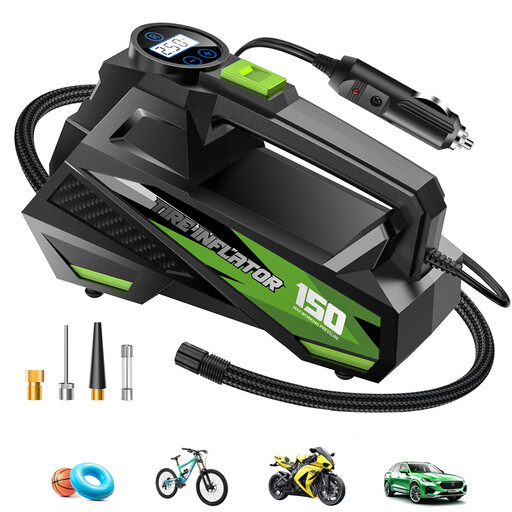
Why This Fits Their Persona: A straightforward choice for UK drivers wanting a compact emergency pump for a car, motorbike or bicycle without paying for a separate monitoring system.
Its wired design makes the power source clear, avoiding uncertainty about battery capacity. Use the extended cable and allow cooling breaks as instructed.
12V wired power, extended power cord and compatibility with cars, motorbikes and bicycles.
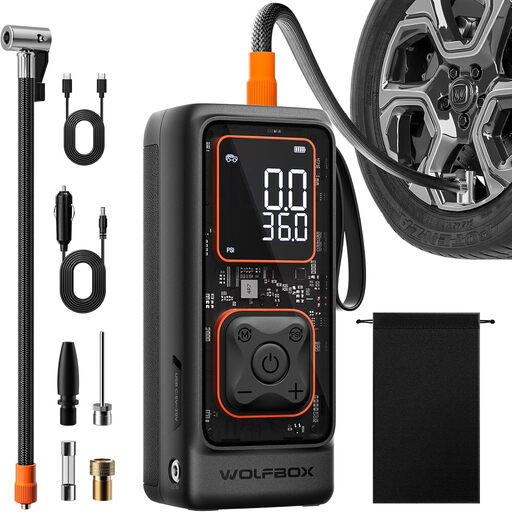
Why This Fits Their Persona: Suitable for drivers who prefer cordless convenience, a digital display and automatic stopping for routine pressure top-ups.
The stated vehicle limit is up to 150 PSI, while the instructions specify charging before cordless use and checking the manufacturer’s recommended tyre pressure.
Cordless operation, digital pressure gauge, automatic shut-off and LED torch.
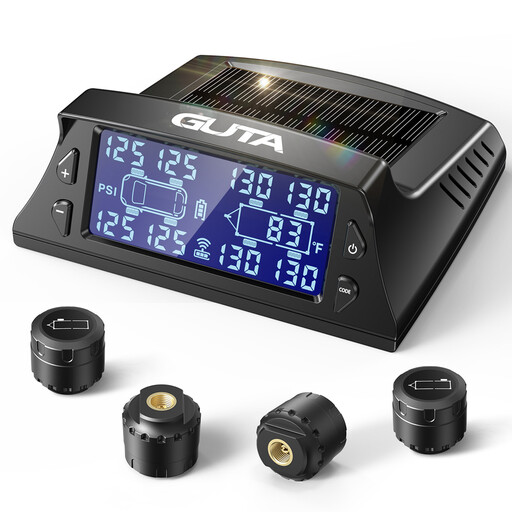
Why This Fits Their Persona: Designed for caravan, RV, trailer, horse-trailer and semi-trailer users who need a wider pressure range and position-specific alerts.
The stated 0–188 PSI range is suitable for higher-pressure applications, and the instructions specify metal valve stems and repeater use for longer vehicles.
Four sensors, solar charging support, temperature monitoring and alarms for leakage, pressure, temperature and sensor voltage.
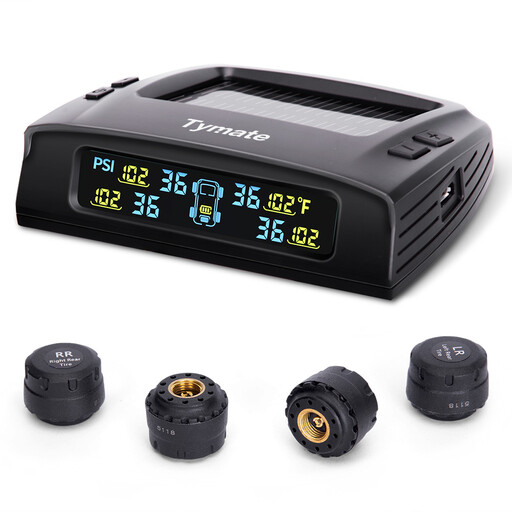
Why This Fits Their Persona: A practical option for cars, SUVs and family vehicles that need continuous pressure and temperature information without relying on a phone app.
Its stated 0–116 PSI range and ≤20-foot vehicle guidance make the compatibility criteria clearer than relying on a generic wireless TPMS description.
Four external sensors, solar-powered monitor support, automatic sleep and wake-up, and a colour LCD display.
We have compiled a complete, real-time list of products that fully satisfy these strict selection criteria and UK safety regulations.
No. Use the TPMS as an additional warning system, then check the tyres when parked safely. Confirm cold tyre pressure against the vehicle’s placard, inspect for visible damage and check tread condition. External sensors may also need recalibration after a tyre change or rotation.
They can be, provided the pressure range, sensor design and communication distance match the outfit. A trailer TPMS may need a repeater, particularly with a long trailer or metal-bodied vehicle. Check whether the kit supports the number of wheels you want to monitor and whether metal valve stems are recommended.
A cordless tyre inflator mainly requires electricity for recharging, while a 12V compressor draws power from the vehicle. Running costs are usually modest, but battery replacement and charging time should be considered. For occasional emergency use, a wired pump may avoid battery storage concerns; for frequent travel, cordless operation can reduce cable handling.