Shoppers carrying a sweet treat
If you want Fairtrade caramel or toffee flavour in your gym bag, check the exact certification wording and choose a pack size you can carry and portion. It remains confectionery rather than a sports-nutrition product.


For a gym bag, choose Fairtrade caramel or toffee chocolate as a sweet treat if its flavour, pack size and allergen statement suit you—not as sports nutrition. A caramel bar matches the flavour brief, while individual mini bars may be easier to portion but need not taste of toffee. Check the mark on the pack: the Fairtrade Foundation distinguishes between its classic mark, which covers all ingredients that can be Fairtrade certified, and its Sourced Ingredient mark, which covers a named ingredient.
If you want Fairtrade caramel or toffee flavour in your gym bag, check the exact certification wording and choose a pack size you can carry and portion. It remains confectionery rather than a sports-nutrition product.
Flavour alone is not enough if milk, nuts, gluten or soya affect your choice. The cited caramel and nut-chocolate examples have different ingredient and precautionary allergen statements, so read the current pack for the product you intend to buy.
Fairtrade certification does not change how confectionery is treated under school-food rules. For food covered by the Requirements for School Food Regulations 2014 in England, the regulations state that confectionery must not be provided; check the rules’ applicability and exceptions for the setting.
Start with the Fairtrade claim and the flavour you actually want, then compare the format, storage instructions and current food label.
| Priority | What to check | Your needs |
|---|---|---|
| Fairtrade coverage | Read the mark and nearby ingredient wording. The Fairtrade Foundation says its classic mark covers all ingredients that can be Fairtrade certified; its Sourced Ingredient mark covers one named ingredient. Check any mass-balance wording rather than assuming physical separation in the finished bar. | I want to know whether the claim covers cocoa, sugar or other relevant ingredients, not just see Fairtrade mentioned on the front of the pack. |
| Flavour and format | Check whether the product contains toffee, caramel pieces or merely caramelised nuts. Divine Chocolate describes its salted-caramel bar as 90g with 10% caramel crisp; its 4.2g plain milk-chocolate mini bars offer a different flavour in smaller pieces. | Caramel flavour matters to me, but I also need a pack I can carry and portion deliberately. |
| Storage | Read the chosen pack’s storage directions and consider whether it will be kept away from heat. Waitrose directs shoppers to keep its cited chocolate bar in a cool, dry place away from direct heat or light. | My snack may spend time in a gym bag, so I need to account for where I will leave it. |
| Nutrition label | Compare values on the same basis, such as per 100g and per serving where shown. Divine Chocolate lists 52.7g sugars per 100g for its 90g salted-caramel bar; a Fairtrade claim describes sourcing, not the bar’s nutritional role. | I am choosing confectionery as a sweet treat, not assuming it serves a workout-nutrition purpose. |
| Allergens | Read the current pack’s ingredients and precautionary statements. Divine Chocolate lists milk and possible gluten and nuts for its salted-caramel bar; the cited Waitrose alternative contains several nuts. | Before buying, I need the allergen statement for the exact product and pack I will use. |
The Fairtrade Foundation distinguishes its classic mark from the Fairtrade Sourced Ingredient mark, which identifies a named ingredient. Mass-balance wording can also mean certified and non-certified commodities are mixed during processing.
Check the mark, the named ingredients and any mass-balance explanation on the pack before deciding whether its sourcing claim meets your preference.
A larger caramel bar may suit the flavour you want but requires you to decide how to portion and carry it. Plain mini chocolate changes that format without meeting a strict toffee-flavour preference.
Compare the stated pack and piece sizes, then follow the chosen product’s directions for keeping it away from heat.
For school food covered by the Requirements for School Food Regulations 2014 in England, confectionery must not be provided. Fairtrade sourcing does not change that rule.
For a covered school-food purchase in England, check the regulations’ applicability and exceptions and choose an option permitted for that setting. Rules outside England need to be checked separately.
The cited caramel and nut-chocolate products list milk or nuts, and ingredients and allergen statements can change when products are reformulated.
Check the current physical pack for the exact product before buying or eating it.
Divine Chocolate’s 90g salted-caramel milk-chocolate bar is a caramel-flavoured example for checking Fairtrade ingredients and pack details.
Waitrose offers an own-label Fairtrade chocolate reference with caramelised nuts rather than toffee.
A dark chocolate with toffee pieces appears within a 395g Green & Black's tasting collection listed by Tesco.
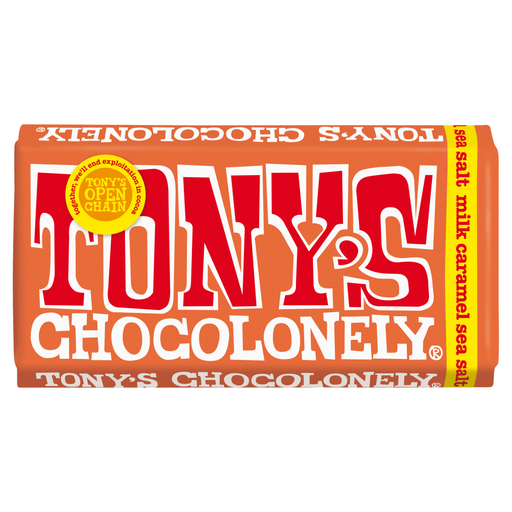
The Joybuy option here is a caramel-and-sea-salt milk-chocolate bar to consider if that flavour and a 180g pack suit what you want to carry.
 No image available
For a caramel-flavoured sweet treat in a gym bag, decide whether the 180g bar suits how you will portion and carry it, and keep it away from heat. Check the current pack’s Fairtrade mark and allergen statement; the listing identifies milk and soya and notes possible other allergens.
Not necessarily. The Fairtrade Foundation says its classic FAIRTRADE Mark covers all ingredients that can be Fairtrade certified, whereas the Fairtrade Sourced Ingredient mark identifies one Fairtrade-sourced ingredient. Read the mark and accompanying wording rather than assuming cocoa, sugar and every caramel ingredient have the same coverage.
You can consider it as a sweet treat if you can store it as directed and its allergens suit you; Fairtrade certification does not make it a sports-nutrition product. Divine Chocolate lists 52.7g sugars per 100g for its salted-caramel bar, so compare the nutrition panel and the portion you intend to carry.
Check the current pack for the exact product. Divine Chocolate says its salted-caramel bar contains milk and may contain gluten and nuts; the cited Waitrose caramelised-nut bar contains hazelnuts, cashews and pistachios. Ingredient and precautionary statements differ between products and can change.
For school food covered by the Requirements for School Food Regulations 2014 in England, confectionery must not be provided; a Fairtrade claim does not change that requirement. Check whether the rules and any exceptions apply to the particular setting. The Department for Education’s September 2026 guidance describes proposed changes from September 2027 as subject to Parliamentary approval, not as rules already in force.