Small-worktop latte makers
If counter width is scarce, consider not just whether the machine fits, but whether you can reach its water tank, drip tray and milk wand while making a drink.


For a small kitchen, choose by usable worktop space and how you want to prepare latte milk. A narrow manual espresso machine suits you if width is tight and you are willing to steam milk yourself; automatic milk texturing reduces that hands-on step, while a grinder-equipped machine makes more sense if grinding fresh beans matters more than keeping the appliance small.
If counter width is scarce, consider not just whether the machine fits, but whether you can reach its water tank, drip tray and milk wand while making a drink.
If you make milk drinks often but do not want to practise manual steaming, an automatic milk system may suit your routine. Sage says the Bambino Plus lets you adjust milk temperature and texture.
If grinding beans immediately before brewing is a priority, consider whether a grinder-equipped machine fits your available space and the preparation you want to do. De’Longhi describes the La Specialista Arte Compact as a manual bean-to-cup machine.
Measure the space needed to use the machine, then decide how much milk preparation and grinding you want to do yourself.
| Concern | What to check | Who this matters to |
|---|---|---|
| Worktop fit and access | Measure width, depth and cupboard clearance, including room to remove the tank and use the steam wand. Check your usual latte glass against the stated cup clearance. | If my worktop is narrow, the machine still needs to leave me room to make and serve a latte. Around 42% of consumers would put usable counter space first. |
| Milk preparation | Choose between a manual wand and automatic milk texturing; check how the milk-contact parts are cleaned. | When I make lattes regularly, I want a milk routine that matches how much steaming practice I am willing to do. For around 33% of consumers, milk preparation would be the primary concern. |
| Fresh grinding | Decide whether you will use ground coffee, grind beans separately or choose an integrated grinder. Allow access to any hopper and cleaning points. | I would rather grind beans for each drink, even if the equipment takes more room and attention. Fresh grinding would come first for around 25% of consumers. |
A stated pressure does not tell you how convenient a machine will be for making milk drinks or cleaning up afterwards.
Compare the working footprint, milk system and cleaning instructions. Look for independent testing of the exact model where available.
A slim body can still be awkward beneath cupboards or beside a wall if you cannot reach the tank, drip tray or steam wand. A tall latte glass may also need more clearance than an espresso cup.
Measure the space you will use for the whole drink-making routine. De’Longhi states that the cited Dedica Style configuration accommodates glasses up to 12 cm tall; check the figure for the model you intend to buy.
Descaling is part of the upkeep, and De’Longhi says the frequency for its Dedica machines depends on water hardness.
Check your water hardness and follow the selected model’s care instructions rather than applying another machine’s procedure.
Allow for the specified descaling product and time to carry out the procedure.
The term can describe a narrow ground-coffee machine, an automatic-milk model or a machine with a grinder. Each needs space for its controls, supplies and cleaning access.
Compare full model dimensions and working clearances, not the description ‘compact’ on its own.
Its Dedica range is relevant to narrow manual espresso setups; La Specialista Arte Compact represents a grinder-equipped manual bean-to-cup approach.
The Bambino Plus is an espresso-machine option for buyers interested in automatic milk texturing.
The VCF149 Bijou is a traditional espresso-machine alternative included in Which? UK coffee-machine reviews.
These choices include manual espresso machines, an automatic-milk espresso machine and a capsule-based milk-drink option. For a small kitchen, compare each one against the space needed to fill it, froth milk and fit your usual latte glass.
 No image available
Consider this machine if you are willing to froth latte milk with a manual steam wand. Its product title specifies a 15-bar espresso machine; check the full working clearance and the height of your usual glass before choosing it.
 No image available
This manual-milk option is worth considering when counter width drives the decision. The product title specifies a steam wand and cold-brew function; measure depth, height and tank access as well as the available width.
 No image available
The automatic milk frother may appeal if you would rather not steam latte milk by hand. The product title also specifies ground-coffee use; check counter access and the milk-system cleaning instructions for your routine.
 No image available
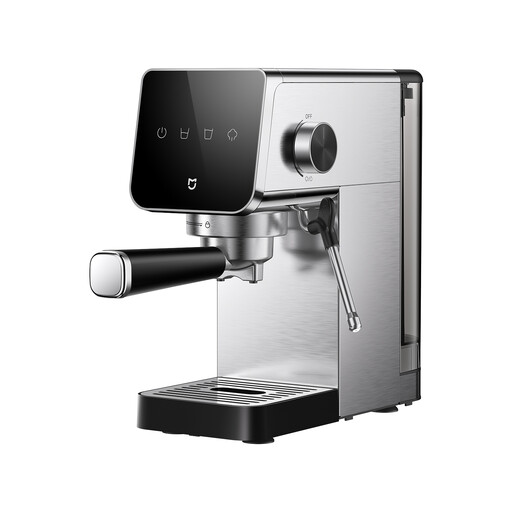
If you are considering this machine for a narrow worktop, confirm its full dimensions, tank access and milk-frothing method before buying. The product title identifies it as a semi-automatic espresso machine with a 20-bar pump; that figure alone does not establish drink quality.
 No image available
This is a capsule-based choice if you prefer that coffee format for milk drinks. Its product title specifies an integrated hot-and-cold milk frother and a 1.1 L water tank; check that A Modo Mio capsules suit you and measure the machine’s working space.
Yes, if you are happy to prepare the espresso and steam the milk yourself. De’Longhi describes its 15 cm-wide Dedica Style as having manual milk frothing; for the cited configuration, it specifies room for glasses up to 12 cm tall. Check the cup clearance and working space of the exact model you choose.
Choose a manual wand if you want to control the steaming yourself and are willing to practise; consider automatic texturing if reducing that hands-on step matters more. Sage specifies three milk-temperature settings and three texture levels for the Bambino Plus automatic steam wand. Either approach still needs model-specific cleaning.
Hardness affects how often some machines need descaling: De’Longhi says the frequency for its Dedica machines depends on local water hardness. Follow the instructions for your chosen model rather than assuming another brand uses the same schedule or procedure.
Check the exact listing and manufacturer documentation for the plug specification, applicable product marking and support offered for the machine. GOV.UK explains that CE marking continues to be recognised alongside UKCA marking in relevant cases for products placed on the Great Britain market; the applicable requirements depend on the product.