
24/7 Customer Support

Free returns

Same-day & Next-day Delivery

Quality Guaranteed

Unlock Your Welcome Offers: FREE Delivery | Up to 80% OFF | Free 30-day JoyPlus trial
Download the APP
Carbonara instant noodles combine a creamy, cheese-style seasoning with chilli heat, creating a convenient alternative to standard noodle soup. They are popular with students, busy professionals, Korean food enthusiasts and anyone looking for quick spicy meals without extensive preparation.
However, packaging can make similar products appear interchangeable when the eating experience can differ considerably. Before buying Samyang Buldak Carbonara noodles, Paldo Volcano Carbonara noodles or another spicy carbonara ramen, check the format, portion size, heat level and allergen information.
Not all Korean carbonara noodles are soup-based. Many are designed to be drained, leaving a small amount of water before mixing the sauce and powder through the noodles. A carbonara noodle cup may require draining through lid holes, while packet noodles usually need a saucepan and colander.
If you expect a broth but purchase stir-fried noodles, the texture and preparation method may not suit you. Check whether the product is described as stir-fried, drained or soup-style before ordering.
The carbonara description generally refers to a creamy, cheesy or milky flavour profile. It does not necessarily indicate a gentle chilli level. Products containing hot chicken flavour, habanero seasoning, chilli extract or red pepper oil can be very spicy.
Heat tolerance is personal, so consider starting with part of the sauce sachet rather than automatically adding everything. This also lets you adjust the balance between creaminess and chilli.
An individual 80g cup is convenient for a work lunch or evening snack, whereas a 130g packet is more substantial. Multipacks can reduce the cost per serving, but only if you genuinely expect to use them before the stated date and have enough storage space.
Compare the total weight, number of servings, packaging format and preparation time rather than judging value from the pack size alone.
Always follow the instructions printed on the packaging. Use boiling water carefully, especially when draining hot noodles or handling a filled cup.
The supplied products range from approximately 69g to 130g per serving. Larger portions may feel more filling, but they can also contain considerable amounts of energy, fat and salt. For example, the listed Samyang 80g cup provides 478kcal and 3.5g salt per 100g, while the Samyang six-cup listing provides 423kcal and 2.6g salt per 100g.
These figures are not directly interchangeable with a prepared serving, so check both the per 100g and per serving information where available. If you are managing your salt, saturated fat or energy intake, treat creamy spicy instant noodles as an occasional convenience meal and consider adding vegetables or another unsalted ingredient.
Many Korean carbonara noodles contain wheat, gluten, soya and milk. Some products also list celery or possible traces of egg, fish, shellfish, peanuts, sesame and tree nuts. Product descriptions and packaging can change, so read the latest label before eating, particularly if you have an allergy or intolerance.
Do not rely on the presence of “chicken flavour” to determine whether a product contains meat. Instead, check the full ingredient list and dietary information. Preparation instructions may also state whether the food needs to reach a particular temperature.
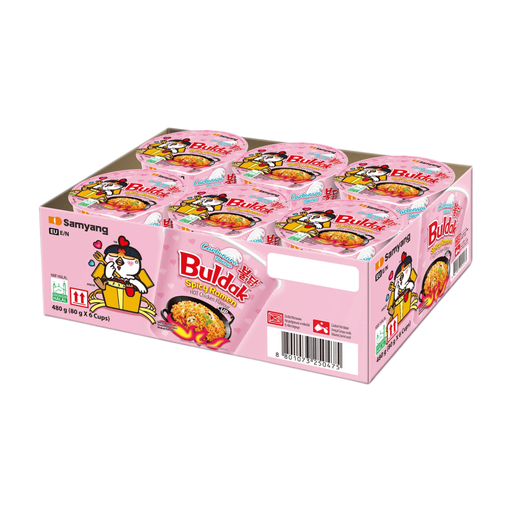
Why This Fits Their Persona: Six individually packed 80g bowls offer a straightforward way to try Korean carbonara noodles while keeping preparation simple for shared flats, student kitchens or work lunches.
The six-cup format makes the number of portions clear and avoids buying a large packet case before knowing whether the creamy chilli flavour suits you.
Individual cups, 80g portions and hot-water preparation. The noodles are designed as a stir-fried style meal rather than a soup.
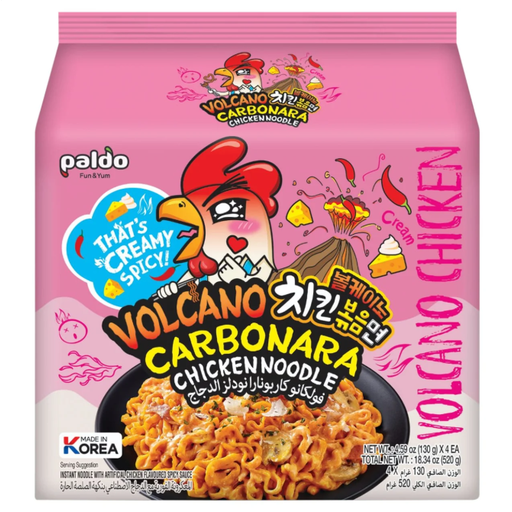
Why This Fits Their Persona: The 130g packet format suits shoppers who prefer thicker noodles and a sauce-led, pasta-like texture with separate powder and sauce sachets.
The packet instructions specify boiling, draining and mixing, so buyers can distinguish it from ready-to-steep carbonara noodle cups.
Four 130g packs, chewy noodles and a separate creamy sauce and seasoning powder. The sauce quantity can be adjusted to taste.

Why This Fits Their Persona: Five full-size packets work for regular buyers who want a cupboard supply for quick spicy meals and have access to a hob.
The five-pack gives a defined household quantity, while the packet format makes it easier to control cooking time and sauce amounts.
Five individual packets, 130g portions and chewy noodles with liquid sauce and soup powder supplied separately.
We have compiled a complete, real-time list of products that fully satisfy these strict selection criteria and UK safety regulations.
For a richer bowl, add spring onions, sweetcorn, mushrooms or a fried egg. These additions change the portion and nutrition, so use them according to your needs. A small amount of cheese can increase creaminess, while extra water can loosen a sauce that feels too concentrated.
Do not eat the noodles uncooked. Drain hot water carefully, avoid touching the heated cup or bowl, and consume the prepared noodles immediately where the label instructs. Do not store leftovers unless the packaging specifically permits it.
Many are not. Samyang Buldak Carbonara noodles and Paldo Volcano Carbonara noodles are commonly prepared by boiling or steeping, draining most of the water, then mixing in sauce and powder. Check the instructions for the exact product.
Most listed cup formats require around three to four minutes after adding boiling water. Packet varieties can take approximately four to five minutes on the hob. Preparation time can vary, so follow the printed instructions rather than relying on the product category.
Keep sealed packs in a cool, dry place away from direct sunlight. Once prepared, consume immediately and check the packaging for storage and date guidance. For households buying several multipacks, rotate older stock forward so it is used first.