
24/7 Customer Support

Free returns

Same-day & Next-day Delivery

Quality Guaranteed

Unlock Your Welcome Offers: FREE Delivery | Up to 80% OFF | Free 30-day JoyPlus trial
Download the APP
Choosing carbonated soft drinks can seem straightforward until you compare sugar levels, serving sizes, ingredients and multipack value. Whether you are filling an office fridge, planning a party or looking for Japanese soda and Korean soft drinks, the label often tells a more useful story than the front of the packaging.
Three common buying traps are worth avoiding:
For everyday drinking, compare the nutrition panel per 100ml and per can or bottle. This makes it easier to compare cola multipacks, lemonade multipacks and smaller international drinks.
For example, Coca-Cola Original Taste contains 42kcal and 10.6g of sugars per 100ml, equating to 139kcal and 35g of sugars in a 330ml can. By contrast, Tango Apple Sugar-Free lists 3kcal and 0g of sugars per 100ml, while 7UP Zero lists approximately 0.5kcal and 0g of sugars per 100ml.
Sugar-free soft drinks commonly use sweeteners such as sucralose, acesulfame K, aspartame or cyclamates. Products containing aspartame must carry the relevant phenylalanine warning, so read the allergen and ingredient information if this is important to you.
The right pack depends on how you plan to serve it:
Glass bottles such as ramune can create a more distinctive serving experience, but they require careful handling. A marble stopper may present a choking risk to young children.
Check whether the drink contains milk, soya, caffeine, sulphites or a source of phenylalanine. Creamy Korean soft drinks often contain milk powder or milk derivatives, while some products may also contain soya polysaccharides.
Carbonation also affects storage. Keep unopened drinks in a cool, dry place away from direct sunlight. Chill before serving, open pressurised containers carefully and refrigerate suitable products after opening. Always use the packaging as the final reference because formulations and labelling can change.
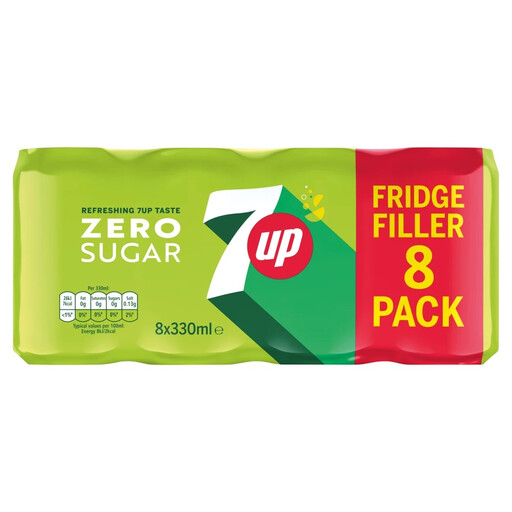
Why This Fits Their Persona: An accessible eight-can format for shoppers who want lemon-and-lime refreshment without buying a large case.
The label states zero sugar and approximately 2 calories per 330ml can, making the nutrition position easy to compare.
Eight 330ml cans; zero sugar; zero caffeine; suitable for vegetarians and vegans according to the supplied product information.
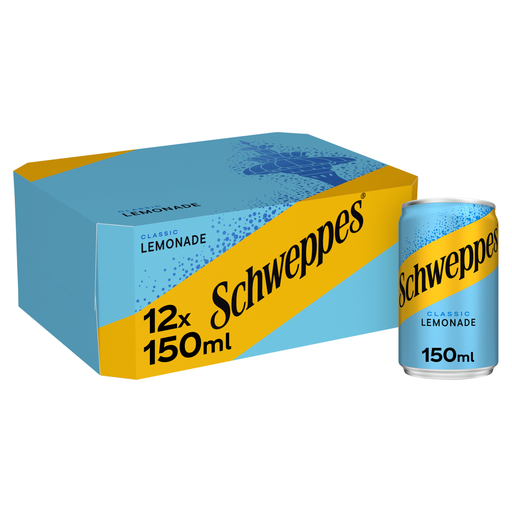
Why This Fits Their Persona: A compact serving format for dinners, entertaining and cocktail or mocktail preparation.
The 150ml can size helps avoid opening a larger bottle when only a mixer or small serving is required.
Twelve individual cans; lemon juice from concentrate; 18kcal per 100ml. Contains a source of phenylalanine.

Why This Fits Their Persona: A larger case for parties, barbecues, shared fridges and households that regularly serve fruit-flavoured fizzy drinks.
The full case quantity and per-can nutrition figures are clearly stated, reducing uncertainty when planning servings.
Twenty-four 330ml cans; 0g sugar and 10 calories per can; contains 4% apple juice from concentrate.

Why This Fits Their Persona: A Korean soft drink for shoppers seeking a creamy, yoghurt-style flavour alongside carbonation, particularly with spicy meals.
Its milk content is declared rather than hidden behind a generic flavour description, allowing shoppers to assess allergen suitability first.
340ml can; contains milk; listed at 51kcal and 12g sugars per 100g; caffeine-free according to the supplied information.
We have compiled a complete, real-time list of products that fully satisfy these strict selection criteria and UK safety regulations.
For fruit-led refreshment, compare Sangaria Grape Flavoured Soda, Sangaria Melon Flavoured Soda, SANKO Pineapple Soda and Hata Melon Ramune. For a lower-calorie functional option, Living Things Peach & Blood Orange, Rhubarb & Apple and Raspberry & Pomegranate provide labelled live cultures and fibre, with nutrition figures shown on their product pages.
Fans of international drinks can also consider Milkis Banana, Milkis Strawberry Soda, SINGHA Original Lemon Soda Zero Sugar and Jarritos Mexican Cola. Always check country-of-origin details, allergens, sweeteners and serving instructions before ordering.
Sugar-free soft drinks can help reduce sugar and calorie intake compared with their full-sugar equivalents, but they should still form part of a varied diet. Check the sweetener list and any required warnings, particularly where aspartame is included.
Store unopened cans and bottles in a cool, dry place away from sunlight and heat. Refrigerate before serving for a crisper taste. After opening, reseal bottles where possible and follow the product’s instructions for refrigeration and consumption.
Multipacks can reduce the cost per can, but this depends on the current selling price, delivery charges and pack size. Divide the total price by the number of cans or litres, then check the best-before date and available storage space before buying.