
24/7 Customer Support

Free returns

Same-day & Next-day Delivery

Quality Guaranteed

Unlock Your Welcome Offers: FREE Delivery | Up to 80% OFF | Free 30-day JoyPlus trial
Download the APP
Whether you are sending online orders, moving home, organising a garage or preparing baked goods for a local event, the right cardboard boxes can save space, reduce packing waste and help prevent avoidable damage. However, packaging descriptions can make similar-looking products seem interchangeable when their dimensions, construction and intended use differ significantly.
This guide explains the practical details to check before buying, including the difference between single wall cardboard boxes, corrugated board grades, flat-packed designs and reusable storage alternatives.
A box advertised as 9 x 6 x 6 inches may refer to its usable internal dimensions or the measurement around the outside. This difference matters when packing products, books or household items.
Always check:
Leave enough room for protective paper or bubble wrap without forcing the flaps closed.
Single wall cardboard boxes are lightweight and economical, but they are not automatically suitable for heavy, fragile or moisture-sensitive goods. A B-flute box, for example, uses a corrugated layer designed to balance rigidity with low weight. It is generally more suitable for lightweight everyday packing than very heavy equipment.
For valuable or fragile products, consider the board grade, cushioning materials, sealing method and how the parcel will be handled in transit.
A pack of 25 packing boxes can offer convenience for an online seller or home move, but unused boxes still take up space. Flat-packed boxes help reduce this problem, while smaller packs may be more practical for occasional household use.
Do not store cardboard in a damp shed, garage or loft. Moisture can weaken the board before the boxes are needed.
Measure the item at its widest, longest and tallest points. Compare these measurements with the box’s internal size rather than relying only on approximate imperial dimensions.
For example, a box with internal dimensions of 229 x 152 x 152mm is suited to compact items, small retail products and lightweight household goods. A 305 x 229 x 152mm box offers a longer and wider footprint for larger products while remaining relatively shallow.
Avoid leaving excessive empty space. Contents can move during delivery, increasing the likelihood of dents or breakage.
Single wall cardboard boxes contain one corrugated layer between paper liners. They are commonly used for shipping, moving and storage where the contents are not excessively heavy.
The product range featured here uses B-flute corrugated cardboard, approximately 3mm thick, with a 125K/T board grade. These are objective specifications worth comparing because they provide more useful information than vague phrases such as “extra strong”.
For heavy tools, dense books or long-term storage, a reusable plastic container may be more appropriate than a single wall box.
The FEFCO 0201 format uses four flaps and is straightforward to assemble with packing tape. Seal the base before loading, distribute weight evenly and close the top securely.
Some cardboard boxes are made with a high proportion of recycled content and can be recycled through kerbside collections. Local council rules differ, so remove excessive tape and check your collection guidance before disposal. Keep recyclable cardboard dry and free from food contamination.
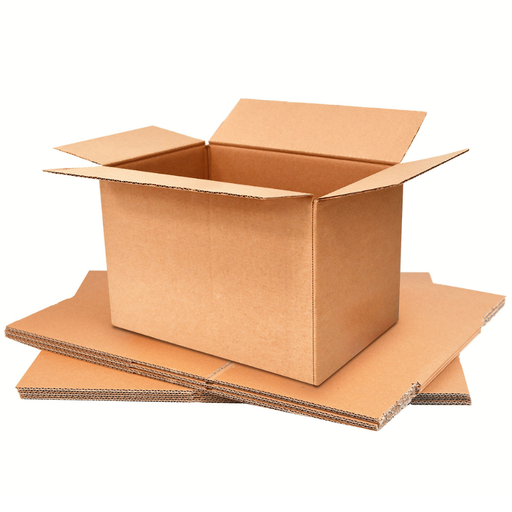
Why This Fits Their Persona: A five-box pack suits households, occasional sellers and people who need a modest supply without committing to a larger case.
The stated internal dimensions, B-flute construction and flat-packed format make it easier to judge capacity and storage needs before purchase.
Five boxes; 229 x 152 x 152mm internal size; approximately 90% recycled content and no plastic content stated.
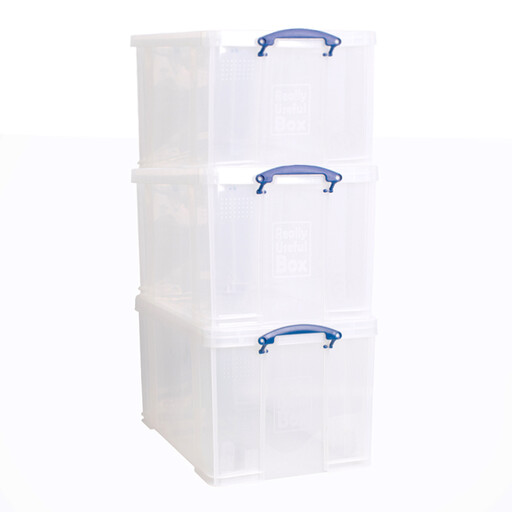
Why This Fits Their Persona: For garages, lofts, offices and workshops where long-term organisation and repeated access matter more than disposable packaging.
It avoids relying on cardboard for damp-prone or repeated-use storage, with a lid, locking handles and stackable structure.
Three 84-litre boxes; clear polypropylene construction; locking handles and recessed lids for stacking.
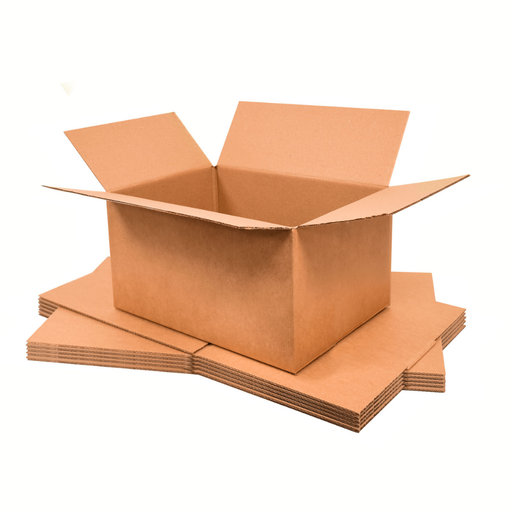
Why This Fits Their Persona: A 25-pack is practical for online shops, offices, stockrooms and home movers who pack items regularly.
The larger footprint is stated in millimetres, helping users compare usable capacity rather than choosing by an approximate label alone.
25 flat-packed boxes; 305 x 229 x 152mm internal size; four-flap FEFCO 0201 design.
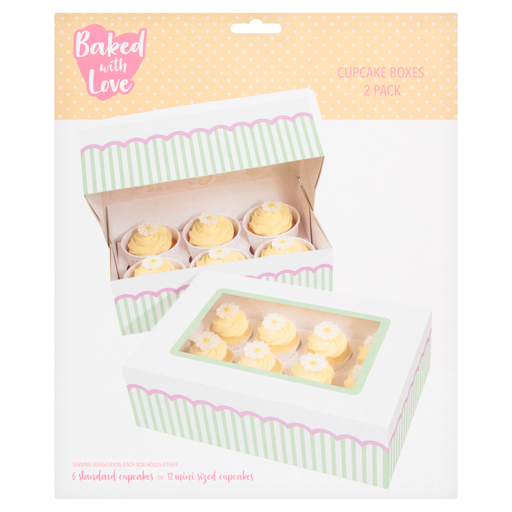
Why This Fits Their Persona: Designed for presenting homemade cakes at parties, markets, birthdays and family gatherings.
Its insert tray is made for either six standard cupcakes or 12 mini fairy cakes, reducing movement compared with a general-purpose box.
Dual insert tray; transparent window; stated for food contact use only. Do not use in ovens or microwaves.
We have compiled a complete, real-time list of products that fully satisfy these strict selection criteria and UK safety regulations.
Yes, moving boxes can be suitable for clothes, books, kitchen items and other lightweight household goods. Choose sizes that are manageable when full, avoid overloading single wall boxes and reinforce the base with packing tape. Fragile items should be wrapped and separated with suitable cushioning.
Keep flat-packed boxes in a dry, clean indoor location away from leaks, condensation and direct heat. Storing them flat helps reduce clutter and prevents assembled boxes from taking up unnecessary room. Replace any box that has become soft, crushed or damp.
They serve different purposes. Recyclable cardboard boxes are lightweight, flat-packed and convenient for shipping or short-term storage. Plastic storage boxes are reusable and may be more suitable for damp-prone areas, repeated handling or long-term organisation. Compare the intended use, available space and expected lifespan rather than choosing solely on material.