Teams serving individual cups with a kettle
Coffee bags that brew in the cup can fit drinks rounds at tables, in lounges or during activities without handling loose grounds at each serving point. Check the instructions for the particular pack.


An 80-serving box is a choice of preparation format, not simply a larger pack of loose ground coffee. Individually wrapped coffee bags suit one-cup service with a kettle; decaffeinated portions specified for an espresso-machine group handle suit homes with that equipment; and loose ground coffee suits an established multi-serve routine that can manage opened-pack storage. Use resident records and preferences to decide which drinks to offer rather than assuming one caffeinated format suits everyone.
Start with the way staff prepare and serve drinks, then check that the offer fits individual residents.
Coffee bags that brew in the cup can fit drinks rounds at tables, in lounges or during activities without handling loose grounds at each serving point. Check the instructions for the particular pack.
Where resident records call for a decaffeinated choice, individually portioned ground coffee is one possible format if staff have a compatible espresso-machine group handle. The 80-portion Lavazza DEK listing specifies that equipment, not mug-and-kettle preparation.
Loose ground coffee can fit an existing cafetière or filter-machine service when staff can follow the pack’s preparation and opened-pack storage instructions. It is not the same as buying 80 individually wrapped servings.
Choose when: Staff need individually wrapped servings prepared in a cup with boiled water; the Coffee Supplies Direct listing specifies 80 servings for Taylors Rich Italian Coffee Bags.
Trade-off: This caffeinated format cannot by itself cover residents who need a decaffeinated choice.
Choose when: A decaffeinated serving is needed and the drinks station uses a compatible espresso-machine group handle; Next Day Coffee lists Lavazza DEK as 80 individually wrapped portions.
Trade-off: These portions are not coffee bags for a kettle-and-mug service.
Choose when: Staff already prepare several cups using equipment covered by the particular product’s instructions.
Trade-off: Servings are not individually wrapped, so dosing and storage after opening become part of the routine.
| Priority | What to check | Your needs |
|---|---|---|
| Resident choice | Check recorded preferences and dietary needs, including whether a distinct decaffeinated option is required. Make the chosen drink clear to serving staff. | I need to offer the drink recorded for each resident, rather than use one caffeinated coffee for everyone. The Care Quality Commission’s guidance for regulated adult social-care providers in England requires nutrition and hydration needs and individual preferences to be considered; GOV.UK guidance for institutional caterers calls for a process that communicates care-record dietary needs to serving staff. |
| Accessible service | Check whether the serving point has the equipment the format requires, and whether each resident needs help or an easy-to-handle vessel. | For a drinks round away from the main kitchen, I need a preparation method staff can use there. NHS South West London’s care-home hydration guidance also highlights support, fluids within reach and suitable containers. |
| Pack format | Confirm the stated serving count and whether the contents are bags for cups, espresso portions or loose grounds. Match the preparation instructions to the actual equipment. | An order for 80 servings needs an explicit count: a pack weight or a familiar product name does not tell me how many individually wrapped cups it provides. |
| Storage after opening | Read the delivered pack’s storage and use-by instructions. For Sainsbury’s 227 g House Blend, the retailer instructs refrigeration and use within two weeks after opening, or freezing and use within four weeks. | When coffee demand varies, I need a pack size and storage routine that staff can follow before buying loose grounds in quantity. |
The Coffee Supplies Direct listing describes Taylors coffee bags that brew in a cup with boiled water. Next Day Coffee specifies an espresso-machine group handle for its 80 Lavazza DEK portions.
Match the exact pack instructions to the drinks station before ordering.
A single format does not account for every recorded preference or dietary need. For regulated adult social-care providers in England, the Care Quality Commission says individual nutrition and hydration needs and preferences must be considered.
Use resident records to decide whether a separate decaffeinated option is needed, and make that choice clear to staff serving drinks.
Loose grounds need an opened-pack routine. Sainsbury’s instructs users of its 227 g House Blend to refrigerate it after opening and use it within two weeks, or freeze it and use it within four weeks.
Consider how many cups the home actually prepares before choosing a multi-serve pack, and follow the delivered product’s own instructions.
An opened pack that cannot be used within its stated storage period may leave coffee unused.
Tesco Groceries warns that food products can be reformulated and that product information may change.
Check the delivered pack’s ingredients, date, storage directions and preparation instructions before adding it to the drinks routine.
These brand examples cover different preparation methods; a brand’s wider range should not be treated as a single interchangeable coffee format.
Coffee Supplies Direct lists Rich Italian Coffee Bags as an 80-serving pack of individually wrapped, ground-Arabica bags for brewing in a cup with boiled water.
Lavazza lists ground coffee for several brewing methods, while Next Day Coffee lists a separate 80-portion DEK decaffeinated format.
Illy lists a 125 g tin of decaffeinated ground espresso coffee.
Rombouts lists regular and decaffeinated ground coffee, as well as a separate one-cup filter range.
Tesco Groceries lists Café Blend as a 227 g loose roast-and-ground coffee.
Sainsbury’s lists 227 g House Blend ground coffee with cafetière and filter-machine instructions, alongside a separate decaffeinated House Blend in its range.
These Taylors coffee-bag packs are options for individual cups in care-home drinks service. Check the bag count on the pack if the order must provide exactly 80 servings.
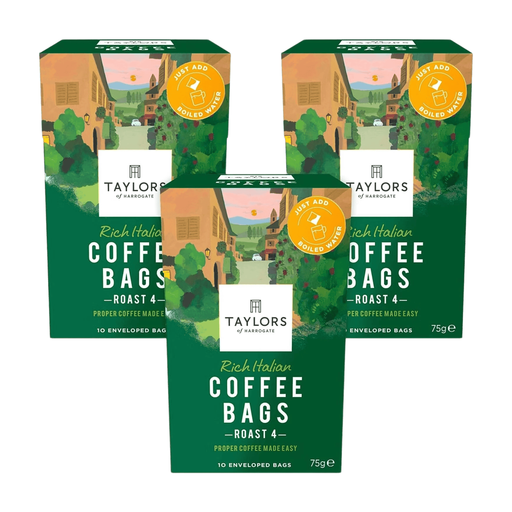 No image available
Single-serve coffee bags offer a cup-brewing option for individual drinks rounds. This 75g x 3 bundle is described as roasted and ground Arabica coffee; confirm its bag count against an 80-serving requirement. Its listing identifies the coffee as caffeinated, so check the delivered label and resident records when planning the drinks offer.
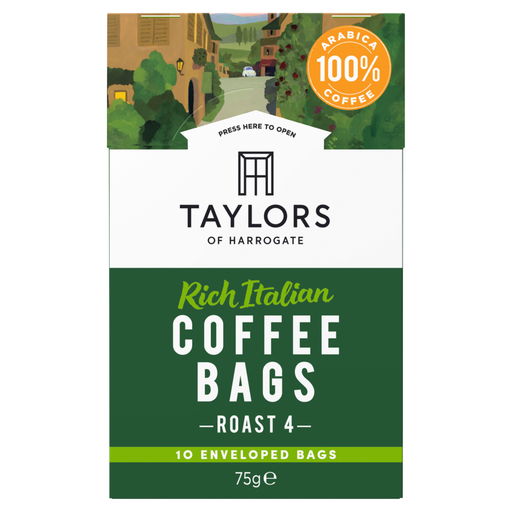 No image available
Individually wrapped coffee bags offer single-cup preparation where loose-ground brewing is inconvenient. This is the 75g pack, not the 75g x 3 bundle; confirm the number of bags if 80 servings are required. Check the delivered label for caffeine information when matching drinks to resident records.
No: an 80 count describes the servings in the particular listed format, not ordinary loose grounds. Coffee Supplies Direct lists 80 individually wrapped Taylors coffee bags for brewing in a cup, while Next Day Coffee lists 80 individually wrapped Lavazza DEK decaffeinated portions for an espresso-machine group handle. Check both the count and preparation method.
Do not assume that one caffeinated product fits every resident. For regulated adult social-care providers in England, the Care Quality Commission says provision must account for nutrition and hydration needs and individual preferences, including cultural and religious backgrounds. Use resident records to plan the offer and communicate the intended option to serving staff.
Yes. NHS South West London’s care-home hydration guidance includes tea and coffee among suitable fluids, while also highlighting support with drinking, fluids within reach and suitable containers. Account for those individual needs when serving coffee as part of the wider drinks routine.
Use a process that communicates each resident’s recorded dietary needs to serving staff, as GOV.UK guidance for institutional caterers describes for care homes. Check the current labels of the coffee and anything served with it, such as milk, creamers, syrups or biscuits.
Follow the instructions on the specific delivered pack. Sainsbury’s says to refrigerate its 227 g House Blend after opening and use it within two weeks, or freeze it and use it within four weeks. Check dates and storage directions separately for individually wrapped bags or portions.