Care-home catering teams
Teams buying milk for drinks, cereal, sauces and puddings need pack sizes and opened-life instructions that fit each service point’s turnover and chilled storage.


For care-home dining, a larger standard fresh pack suits predictable daily use, while filtered fresh milk is worth considering where its longer stated life could prevent waste. UHT skimmed milk offers a reserve that can be stored unopened without refrigeration. None should become the default for every resident: milk choices must also fit individual nutrition needs and care plans.
Teams buying milk for drinks, cereal, sauces and puddings need pack sizes and opened-life instructions that fit each service point’s turnover and chilled storage.
Managers need purchasing choices that accommodate residents’ assessed needs and preferences as well as safe storage and service. Norfolk and Waveney Integrated Care System’s care-home guidance calls for nutritional needs to be assessed and reviewed regularly.
Skimmed milk can remain an option for general catering, but a resident who needs more energy may require a different milk or a fortified drink in line with their individual plan. University Hospitals Sussex NHS Foundation Trust distinguishes skimmed milk from its higher-energy fortified-milk preparation.
Start with residents’ requirements, then match the milk format to how quickly each kitchen or service point uses an opened pack.
| Priority | What to check | Your needs |
|---|---|---|
| Resident suitability | Check individual nutrition plans, preferences and the delivered pack’s nutrition and allergen information. Norfolk and Waveney Integrated Care System advises regular assessment and review of care-home residents’ nutritional needs. | I need skimmed milk for residents and menu uses where it is appropriate, without replacing a higher-energy or fortified option specified for someone else. |
| Daily turnover | Match pack size to use after opening. Sainsbury’s labels its standard 2.27L fresh skimmed milk for refrigeration below 5°C and consumption within three days of opening. | A larger fresh pack makes sense for my kitchen if it will be used within the period on that pack’s label. |
| Variable demand | Compare each filtered product’s unopened and opened life with actual stock rotation. Arla states up to three weeks unopened and seven days opened for Cravendale 2L when stored at 0–5°C; Waitrose states up to one month unopened and seven days opened for its 2L filtered milk. | In a lower-turnover wing, I want to know whether the longer stated life would prevent milk being discarded. |
| Reserve stock | Check unopened storage instructions, carton dates and the procedure after opening. Sainsbury’s 1L UHT skimmed milk is stored cool and dry unopened, then refrigerated and used within three days once opened. | I want a reserve for a delayed delivery, with a plan to rotate it and refrigerate opened cartons. |
| Supply and service | Confirm delivery arrangements, case quantities, substitutions and chilled handling with the intended supplier. Use product-specific storage instructions in the home’s food-safety procedures. | My team needs a suitable substitute and clear instructions when a regular product cannot be delivered. |
A lower-fat milk may not fit a resident’s plan if they need more energy. Norfolk and Waveney Integrated Care System advises regular nutrition assessment in care homes, while University Hospitals Sussex NHS Foundation Trust describes a higher-energy fortified-milk preparation.
Check the individual plan before changing the milk served to a resident, and raise nutrition concerns with the relevant care or dietetic team.
A longer stated life matters most where standard fresh milk would otherwise be discarded; a busy kitchen may use its opened packs well within their labelled period.
Compare opened-pack waste and delivery patterns at each service point before deciding where filtered milk is useful.
Sainsbury’s standard fresh skimmed milk specifies three days after opening, whereas Arla’s Cravendale filtered milk states up to seven days when stored as directed. One product’s instructions should not be applied to another.
Record when packs are opened, follow each label’s storage and use-by instructions, and incorporate those steps into the home’s food-safety procedures.
A listed carton size does not establish whether the intended supplier can meet a home’s delivery schedule, quantities or substitution requirements.
Confirm those arrangements, including chilled handling where needed, before standardising a product.
These examples show how pack format and label instructions differ; they are not a list of care-home suppliers.
Arla’s filtered fresh skimmed milk comes in a 2L pack for buyers considering a longer stated life.
Tesco lists standard and filtered own-label skimmed milk alongside branded options.
Its standard chilled and UHT skimmed-milk listings illustrate two different stock-rotation choices.
Its 568ml skimmed-milk pack is a smaller chilled option to consider where use at a service point is limited.
Its 2L filtered skimmed milk is another option for comparing stated life with a home’s rate of use.
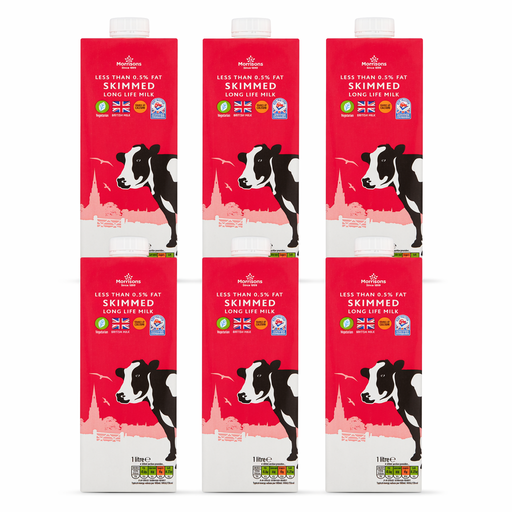
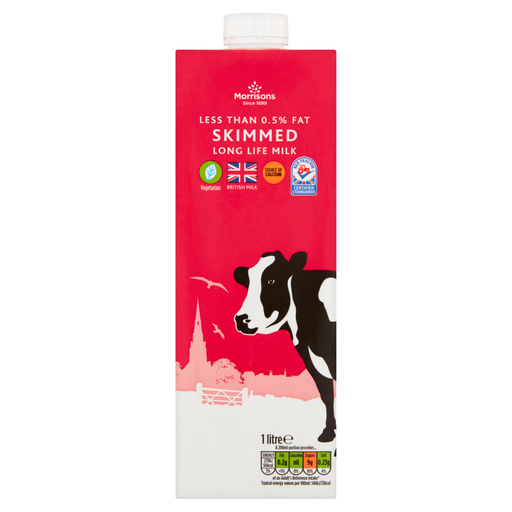
These Morrisons UHT skimmed-milk cartons represent the unopened reserve-stock option, in a six-pack and a single-carton format. Choosing milk for routine fresh service or for an individual resident remains a separate decision.
 No image available
The six-carton format may suit a reserve spread across several service points. The product information specifies cool, dry storage before opening, then refrigeration and use within three days; check each carton’s date when rotating stock.
Product information lists 33 kcal and 0.1 g fat per 100 ml. Check residents’ individual nutrition plans before using skimmed milk in place of a higher-energy option.
 No image available
A single carton may suit a smaller reserve at one service point. The product information specifies cool, dry storage before opening, then refrigeration and use within three days; check the carton date when planning stock rotation.
Product information lists 33 kcal and 0.1 g fat per 100 ml. Check residents’ individual nutrition plans before using skimmed milk in place of a higher-energy option.
No single milk type suits every resident. Norfolk and Waveney Integrated Care System advises that care-home residents’ nutritional needs be assessed and reviewed regularly; use the individual plan when deciding whether skimmed, higher-energy or fortified milk is appropriate.
Not for the products described here. Sainsbury’s standard fresh skimmed milk specifies use within three days of opening, while Arla states up to seven days for its Cravendale filtered milk when stored at 0–5°C. Follow the instructions on the particular pack being served.
Yes, a sealed UHT pack can serve as reserve stock when its label permits storage without refrigeration. Sainsbury’s 1L UHT skimmed milk specifies cool, dry storage unopened, followed by refrigeration and use within three days after opening. Rotate cartons by their dates and check whether the milk suits the residents who will receive it.
Check the delivered pack’s allergen label against the resident’s current allergy information and care plan before service. The skimmed-milk products discussed here contain milk; an older online listing should not replace the label on the carton being used.