Buying priorities
Start with the resident’s care plan, then check the exact pack and preparation method before selecting a portion size or flavour.
| Priority |
What to check |
Your needs |
| Individual nutrition |
Compare the dry sachet with the planned milk, toppings, fortification and finished serving size. Use protein-enriched recipes only where the resident’s plan supports them. |
The breakfast needs to fit an individual nutrition, hydration and dietary plan rather than simply offering a convenient portion. The Care Quality Commission states that providers must assess nutritional needs where applicable and provide food to meet them. |
| Allergen suitability |
Read the current ingredients, allergen statement and suitability information on the physical pack. Check cross-contact wording as well as named ingredients. |
I need the chosen sachet to match the resident’s allergy, intolerance or coeliac-disease record. A plain or organic recipe does not by itself establish that it is suitable. |
| Preparation and texture |
Follow the stated liquid amount, heating method, stirring and standing instructions. Check hot food before service and test the final texture under intended serving conditions where an IDDSI prescription applies. |
I need a repeatable preparation method without assuming that ordinary porridge meets a prescribed texture. IDDSI says food should be tested under the conditions in which it will be served. |
| Portion flexibility |
Compare sachet sizes such as 27 g, 35 g and approximately 36 g with the planned breakfast. Consider whether flavour, sugars and additions fit the menu. |
I want a manageable dry portion without making every resident have the same finished bowl. Plain sachets leave more room for individually approved additions than fixed sweet flavours. |
Joybuy product options
These Joybuy options cover individually portioned instant-oat products for care-home breakfast planning, including larger plain sachets, protein-enriched choices and fixed-flavour varieties.
 No image available
Quaker Oat So Simple Big Bowl Original 6 x 38.5 g
A larger plain-oat dry base for residents whose planned breakfast suits a 38.5 g sachet.
- Six 38.5 g sachets with water-or-milk preparation and a stated 2½-minute microwave method.
- Listed as plain wholegrain oats without a preselected flavour.
- Check the current allergen statement and test the finished bowl where an IDDSI texture is prescribed.
Joybuy
 No image available
Quaker Peanut Butter Protein Sachets 8 x 43 g
A protein-enriched option only where peanut flavour, soy and the individual nutrition plan are suitable.
- Eight 43 g sachets, stated 9 g plant protein per serving and 180 ml water-or-milk preparation.
- Microwave and hob methods are listed.
- Contains soy and may contain milk, peanuts and nuts; it does not replace prescribed nutritional supplements.
Joybuy
 No image available
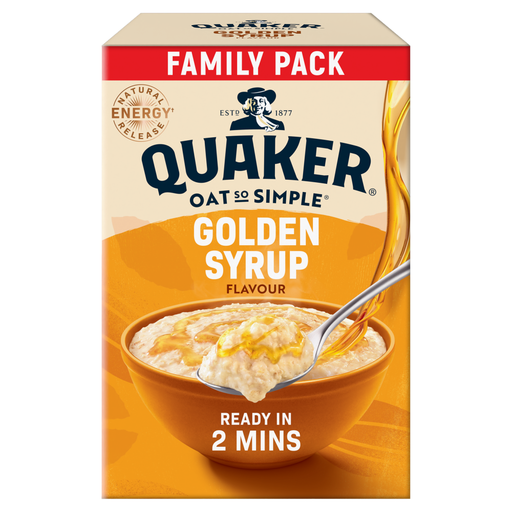
Quaker Oat So Simple Golden Syrup 20 x 36 g
A larger fixed-flavour sachet for menus where golden syrup flavour and the listed sugars fit the resident’s plan.
- Twenty 36 g sachets with an approximate 180 ml milk measure, two-minute 900 W microwave method and one-minute standing time.
- The golden-syrup recipe is less adaptable than a plain base.
- May contain barley, wheat and soy; test the prepared serving if an IDDSI texture is required.
Joybuy
 No image available
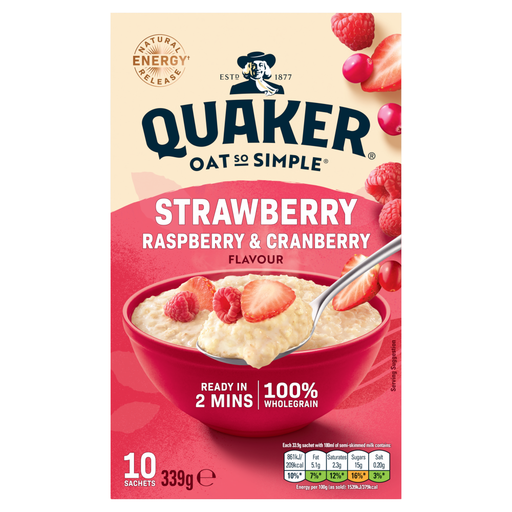
Quaker Strawberry, Raspberry & Cranberry 10 x 33.9 g
A fruity single-serve choice where the specified flavour and ingredients suit the individual resident.
- Ten 33.9 g sachets with milk measured in the empty sachet and a stated two-minute 900 W microwave method.
- The method includes stirring after heating.
- Contains sugar and may contain barley, soy and wheat; check the physical pack before service.
Joybuy
 No image available
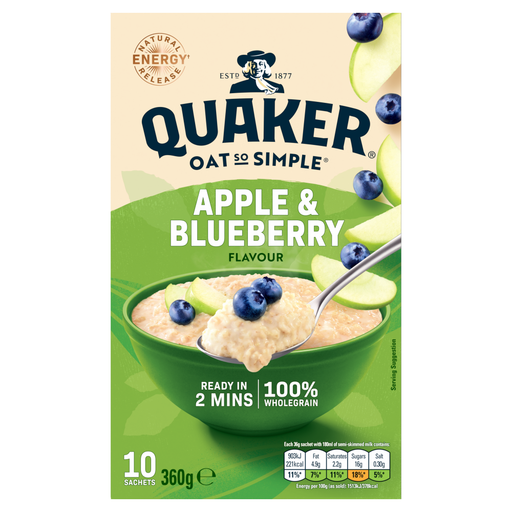
Quaker Apple & Blueberry Porridge 10 x 36 g
A portioned apple-and-blueberry option for residents whose menu allows a sweetened fruit flavour.
- The listing gives ten 36 g portions and a stated two-minute preparation time.
- Confirm the actual pack format and complete preparation instructions before procurement.
- May contain wheat, barley and soybeans; check the current pack and test the finished serving where required.
Joybuy
Frequently asked questions
Are single-serve instant-oat sachets suitable for every care-home resident?
No. They can standardise the dry oat portion, but the Care Quality Commission requires food provision to meet each person’s assessed nutritional and hydration needs where applicable. Select both the sachet and the finished bowl for the individual resident, rather than for kitchen convenience alone.
Can staff use ordinary instant porridge for a resident on an IDDSI texture-modified diet?
Not without checking the finished porridge under its intended serving conditions and following the resident’s clinician-led recommendation. IDDSI states that its tests confirm a food’s flow or texture at the time of testing.
What should staff check for allergies and coeliac disease?
Check the current physical pack’s ingredients, allergen statement and suitability information whenever products are received or reformulated. Quaker Original lists possible wheat, barley and soya, M&S Traditional Porridge states it is not suitable for coeliacs or people with specified allergies, and Flahavan’s Organic sachets may contain traces of milk.
Does a higher-protein porridge sachet replace prescribed nutrition support?
No. A higher-protein sachet is a food option, not an automatic replacement for prescribed nutritional supplements. The Care Quality Commission includes prescribed supplements within the nutritional needs providers must meet when applicable.
How should porridge be prepared safely for service?
Follow the exact pack method, including liquid amount, microwave power or hob method, stirring and standing time. Tesco Natural Oats instructs staff to check that food is piping hot throughout; allow a safe serving temperature while maintaining any required texture specification.


