Menu planners managing added salt
Care-home cooks and menu planners choosing pasta, sauce and seasoning as parts of the same meal. NHS guidance counts salt already in food as well as salt added during cooking.


Choose reduced-salt tinned pasta when its current label, availability and prepared form fit the menu and the residents being served. Dry pasta with a separately selected sauce gives the kitchen more control over added salt, but requires more preparation and consistent recipes. Neither route replaces checks against individual nutrition plans, allergens and prescribed textures.
Care-home cooks and menu planners choosing pasta, sauce and seasoning as parts of the same meal. NHS guidance counts salt already in food as well as salt added during cooking.
Staff selecting meals for residents whose assessed intake or nutrition requirements may take priority over a general reduced-salt menu change. Norfolk and Waveney ICB guidance notes the increased risk of malnutrition among people living in care homes.
Staff who need to assess the prepared pasta dish against a resident’s prescribed texture and check the ingredients and allergens of the exact products supplied.
Consider it when: The exact tin carries a reduced-salt claim and its current label, prepared form and supply fit the menu.
Trade-off: Fewer preparation steps do not remove the need to check salt per serving or resident-specific requirements.
Consider it when: The kitchen needs to choose the sauce, portion it and control salt added during cooking.
Trade-off: This approach needs more preparation and a consistent recipe; sauce and toppings still contribute to the finished meal.
| Concern | What to check | Who this matters to |
|---|---|---|
| Salt in the served meal | Compare current labels on the same per-100g or serving basis; account for sauce, toppings and cooking-water salt. | When planning a reduced-salt dish, I need to know what the complete serving contains, not just what the front of the tin or jar claims. About 31% of consumers put salt control first. |
| Individual nutrition | Check the resident’s care plan and the planned portion and nutritional contribution of the complete meal. | If a resident has an individual nutrition plan, maintaining suitable intake matters more to me than making a blanket product swap. Individual nutrition is the primary concern for about 31% of consumers. |
| Prescribed texture | Confirm the prescribed IDDSI level and assess the prepared pasta and sauce using the relevant method. | For a resident on a texture-modified diet, I need the dish as served to meet their prescription; a soft-looking pasta shape is not enough. Texture is the first concern for about 25% of consumers. |
| Supply and allergens | Confirm supply and inspect the exact delivered pack’s ingredients and allergen information. | When keeping a menu in service, I need a dependable product and pack details I can check for residents with allergen requirements. About 13% of consumers prioritise supply and allergen assurance. |
Sauce, cheese, stock, other ingredients and cooking-water salt can change the amount in the served dish. NHS guidance includes salt added during cooking as well as salt already in food.
Work from the quantities actually served and compare alternatives on a consistent per-100g or per-portion basis.
A general salt-reduction goal does not replace an individual nutrition plan, particularly where maintaining intake is a concern.
Check the resident’s assessed needs and relevant professional advice before changing an established meal.
Ordinary spaghetti or tinned pasta is not automatically suitable for someone with a prescribed texture-modified diet. The sauce and added ingredients affect the final dish.
Prepare and assess the complete serving against that resident’s prescribed IDDSI level.
Supply and formulations can change. Tesco Groceries lists reduced-sugar-and-salt spaghetti letters, but its listing alone cannot establish what will be available or printed on a delivered pack.
Confirm the product supplied, then check its current salt declaration, ingredients and allergens before approving it for the menu.
An own-label route to check for specifically labelled reduced-salt tinned pasta.
A dry-pasta option for kitchens selecting sauce and seasoning separately.
A jarred-sauce brand whose individual products need their own salt comparison.
A retailer to check for individual pasta-sauce candidates.
A retailer with jarred pasta sauces to assess product by product.
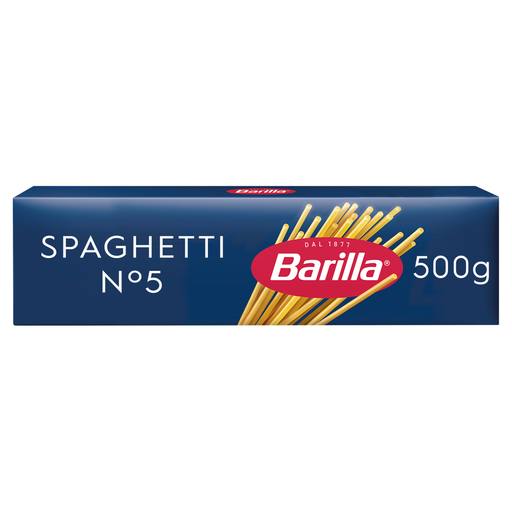
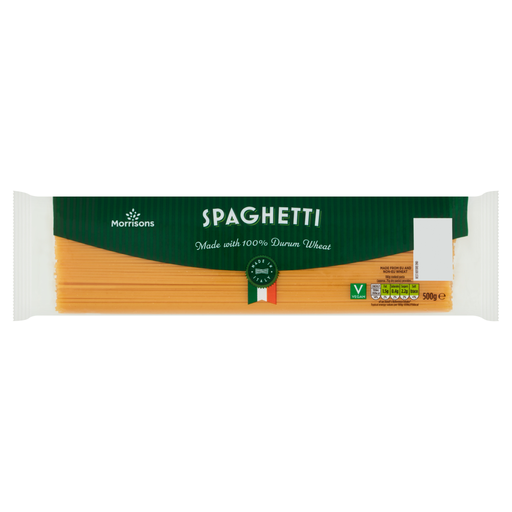
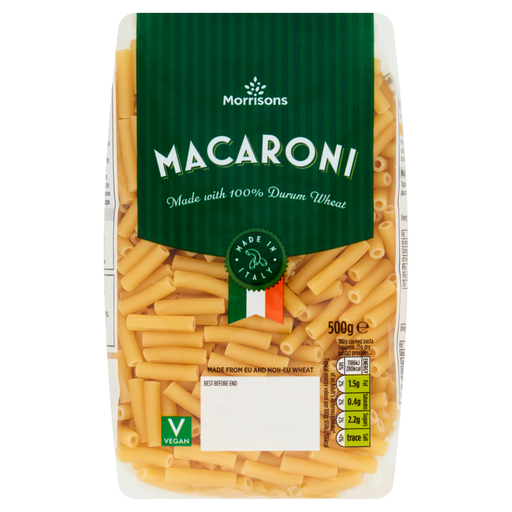
These dry pasta products fit a kitchen-controlled approach: choose and portion the sauce separately, and decide how much salt to add during cooking. Check each delivered pack and the prepared dish before including either in a resident’s menu.
 No image available
This dry spaghetti suits a recipe in which the kitchen chooses the sauce and controls added cooking salt. Check the current pack label and assess the finished dish against each resident’s requirements.
 No image available
This dry spaghetti lets the kitchen select and portion the sauce separately. Check salt on the current pack on the stated preparation basis, and include cooking-water seasoning in the recipe.
 No image available
This dry spaghetti can be served with a separately selected sauce under a controlled recipe. Its listed salt description uses a cooked-pasta basis, so check the current pack before comparing it with dry-pasta figures.
 No image available
This dry macaroni offers another shape for a recipe with separately chosen sauce and controlled seasoning. Confirm a numeric salt declaration on the current pack before using it in a reduced-salt comparison, and assess the prepared texture for the resident.
Not necessarily: those claims describe different characteristics. For example, ASDA Groceries lists 0.75g salt per 112g portion for Dolmio Low Fat Bolognese. Check salt independently on the exact sauce’s current label.
No blanket swap is appropriate without checking individual needs. Norfolk and Waveney ICB guidance notes increased malnutrition risk among people living in care homes; compare the proposed meal with each resident’s assessed nutrition plan and relevant professional advice.
Only when the prepared dish meets that resident’s prescribed texture requirements. Assess the pasta, sauce and any additions using the relevant IDDSI method rather than relying on the pasta shape or a description such as soft.
NHS guidance gives a general adult maximum of 6g of salt a day, including salt in food and salt added during cooking. That is not an individual therapeutic prescription: check resident-specific advice and calculate the salt contribution of the portion actually served.