Care-home catering teams planning routine stock
For teams serving soup regularly, pack quantity needs to match expected use and menu rotation. Recipe choice, allergens and the contents of each served portion matter alongside storage space.


Choose multipacks when a care home can use the recipe within its menu and stock-rotation plans; choose individual tins when flexibility matters more. Compare the served portion, ingredients and allergens as well as pack size. A soup that looks smooth must not be assumed suitable for a resident on a prescribed texture-modified diet: the International Dysphagia Diet Standardisation Initiative (IDDSI) says to test food under its intended serving conditions, especially temperature.
The same tin can raise different questions for stock planning, menu planning and an individual resident’s care plan.
For teams serving soup regularly, pack quantity needs to match expected use and menu rotation. Recipe choice, allergens and the contents of each served portion matter alongside storage space.
For residents with a prescribed IDDSI level, the prepared soup needs assessment at the temperature and in the form in which it will be served. A smooth product name or appearance is not a texture classification, as IDDSI’s testing guidance makes clear.
The British Dietetic Association’s Care Home Digest treats nutrition care plans, dysphagia and food allergy as distinct considerations. Staff need to check the exact soup against the resident’s plan rather than assume one recipe suits everyone.
Start with what residents can be served, then choose a recipe and pack quantity that fit the menu.
| Priority | What to check | Your needs |
|---|---|---|
| Served texture | Check for pieces, pasta or barley and follow the resident’s prescribed IDDSI level. IDDSI says to test the prepared food under intended serving conditions, especially temperature. | If I’m serving someone on a texture-modified diet, I need the soup assessed as served, not judged by whether the tin says “smooth”. |
| Allergens | Read the exact delivered tin and keep kitchen records current. ASDA Groceries lists milk in Heinz Cream of Tomato and wheat in Heinz Vegetable Soup; Tesco warns that recipes and labels can change. | For a resident with an allergy, I need information for the actual recipe being served, not a similar tin or an older online listing. |
| Nutrition per portion | Compare nutrition using the portion the home will serve, then check it against any individual care plan. ASDA Groceries lists 1.1g salt and 1.7g protein per 200g half-can serving of Heinz Cream of Tomato. | When a resident has a nutrition and hydration plan, I need to know how the soup fits the planned meal rather than treating a tin as the whole plan. |
| Recipe choice | Check whether a tomato, vegetable, broth or chicken recipe fits the menu and residents’ dietary requirements. Pieces and declared allergens differ between recipes. | I may want menu variety, but each new recipe needs its own ingredient and texture checks before service. |
| Pack quantity | Match the number and size of tins to expected use, storage and stock rotation. ASDA Groceries lists Heinz tomato and vegetable soup in 4 x 400g packs; the Joybuy options below are 6 x 400g packs. | If demand for one recipe varies, individual tins may give me more flexibility than keeping several packs of that recipe in stock. |
A multipack commits storage space to that recipe and can reduce flexibility if resident needs or menus change.
Check expected use, delivery-date shelf life and stock rotation before choosing a larger pack.
Preparation and serving temperature can affect a soup’s texture. A resident’s prescribed IDDSI level cannot be established from the product name.
Follow the resident’s plan and the home’s approved process for assessing and testing the prepared soup under its intended serving conditions, in line with IDDSI guidance.
Ingredients and allergen information can change when a product is reformulated, as Tesco’s product information warns.
Check the delivered tin and update kitchen and menu records when a recipe or supplier pack changes. The Food Standards Agency provides allergen guidance specifically for institutional caterers, including care homes.
A convenient menu item does not replace the assessment and food-based nutrition support addressed in the British Dietetic Association’s Care Home Digest.
For a resident at risk of malnutrition, use the resident’s nutrition and hydration care plan when deciding whether and how the soup fits a meal.
These examples show recipe and format differences to check; they do not indicate that every listed product is available through Joybuy.
ASDA Groceries lists 4 x 400g packs of Heinz Cream of Tomato and Vegetable Soup, while Sainsbury’s lists a 400g No Added Sugar Cream of Tomato tin.
Tesco Groceries lists own-label 400g Cream of Tomato and Low Fat Tomato soups alongside branded tomato soups.
Tesco Groceries lists Campbell's Condensed Cream of Tomato Soup in a 295g can.
Marks & Spencer lists a vegetarian 400g Cream of Tomato Soup containing milk ingredients.
Sainsbury's lists Heinz No Added Sugar Cream of Tomato Soup as an individual 400g tin.
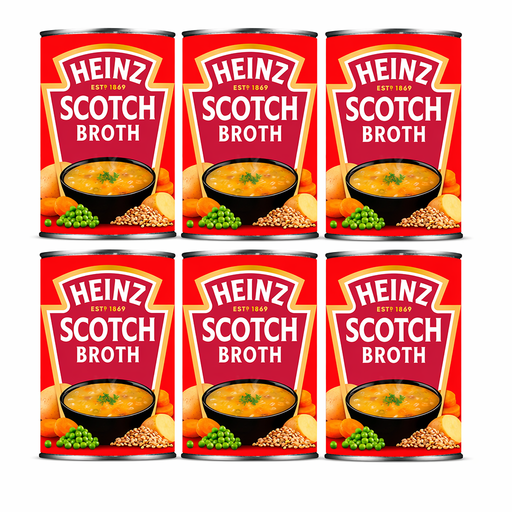
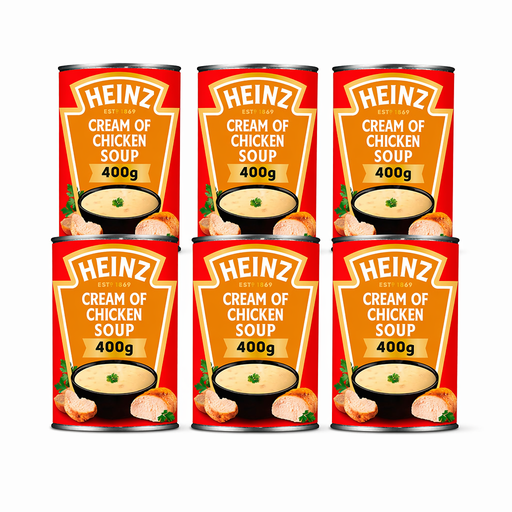
These 6 x 400g soup packs are options for planned care-home stock. Both recipes contain pieces, so assess their ingredients and served texture for the residents who may receive them.
 No image available
The six-tin pack suits a menu that uses Scotch broth regularly. The recipe includes mutton, pearl barley and vegetables, with gluten from barley and wheat. Check dietary requirements and assess the prepared soup against any prescribed IDDSI level; its pieces do not establish texture suitability.
 No image available
This six-tin pack is a chicken-soup option for a menu with predictable use. The description identifies chicken pieces and milk and wheat allergens. Assess its served texture for residents with a prescribed IDDSI level, and use the physical can label when recording nutrition for menu planning.
No. A smooth appearance does not establish that a soup matches a resident’s prescribed IDDSI level. IDDSI says food should be tested under its intended serving conditions, especially temperature; follow the resident’s plan and the home’s approved assessment process.
Yes. Check the current delivered tin and keep the kitchen’s allergen records aligned with the recipe being served. The Food Standards Agency’s institutional-caterer guidance covers care homes, and Tesco warns that reformulation can change ingredients and allergens.
No. A recipe’s salt content is one menu consideration, not a substitute for a resident’s nutrition and hydration plan. The British Dietetic Association’s Care Home Digest addresses malnutrition screening, care plans and food-based nutrition support as distinct processes.
No. The Food Standards Agency’s Safer food, better business supplement for residential care homes says it is not intended for nursing homes, which require other food-safety procedures. That distinction concerns food-safety management, not the suitability of an individual soup.