Plain spring-water tuna is not usefully distinguished by a reduced-sugar search alone: the cited Princes, Sainsbury's, M&S, Tesco and John West labels state 0.0g to less than 0.5g sugars per 100g drained. Start with each resident's assessed diet, fish allergy and any prescribed food texture; where tuna is suitable, compare salt on the same label basis and consider the complete dish before service.
Who is choosing the tuna?
Care-menu planners managing individual diets
Match a proposed dish to each resident's assessed needs and preferences rather than applying one low-sugar rule across the menu. Norfolk and Waveney Integrated Care System advises regular assessment and review of residents' nutritional needs.
Caterers comparing plain tuna labels
Check salt as well as sugars when choosing between spring-water tins. The cited Princes, Sainsbury's and M&S labels show that products with little labelled sugar can have different salt values per 100g drained.
Teams preparing texture-modified meals
Assess the prepared dish against each resident's prescribed International Dysphagia Diet Standardisation Initiative (IDDSI) level. A tin described as tuna chunks does not establish the texture of the food served.
What matters when buying?
Check whether tuna fits the individual meal plan before using the tin's nutrition panel or pack format to choose between products.
| Concern |
What to check |
Who this matters to |
| Individual diet |
Check the current care plan, fish allergy and ingredients in the complete dish. |
If a resident has individual dietary requirements, I need to establish that the whole meal fits their plan before choosing a tin. About 31% of consumers put that individual fit first. |
| Sugars and salt |
Compare sugars and salt per 100g drained where labels use that basis; account for other recipe ingredients. |
When plain tuna has been approved for a menu, I want to compare its label without letting a low sugar figure obscure salt. For about 25% of consumers, that nutrition comparison is the primary concern. |
| Food texture |
Check the prescribed IDDSI level and test the prepared dish against its applicable criteria. |
If a resident needs texture-modified food, I cannot treat canned chunks as a ready-to-serve texture. Meeting the prescribed texture is the main concern for about 25% of consumers. |
| Kitchen handling |
Check pack size, any bone warning and the delivered tin's instructions for opened contents. |
Once the dish is suitable, I need a pack staff can handle and store according to its label without avoidable leftovers. About 19% of consumers prioritise these kitchen requirements. |
What should kitchens avoid assuming?
-
That reduced sugar is the deciding label claim
The cited plain spring-water tins already list 0.0g to less than 0.5g sugars per 100g drained. Their salt values differ: the Sainsbury's label lists 0.12g and the Princes label lists 0.85g on that basis.
Compare like-for-like label values and follow the resident's individual meal plan rather than choosing by a sugar description alone.
-
That canned chunks meet a prescribed texture
The texture of the served dish depends on its preparation, not the word “chunks” on the tin. IDDSI's Level 5 audit tool, for example, specifies appearance, fork-pressure and spoon-tilt checks.
Use the resident's prescribed IDDSI level and the applicable checks for the dish at service.
-
That fish allergy and bones need no further attention
Tuna contains fish, while the cited M&S and John West product information warns that bones may remain.
Check the resident's allergy requirements and the delivered tin, then inspect and prepare the fish as the meal plan requires.
-
That a website description replaces the tin label
The delivered product's ingredients, allergen statement and instructions are the details staff need when preparing and storing it.
Read the current tin before service and follow its instructions for any opened contents.
Leftovers kept beyond the tin's stated post-opening period may have to be discarded.
Brands to consider
Sainsbury's
Its cited 145g own-brand spring-water tuna is a plain chunk option for comparing drained-weight labels.
- Sainsbury's lists less than 0.5g sugars and 0.12g salt per 100g drained for this product.
- It contains fish, and its chunk format does not establish suitability for a prescribed texture.
Princes
Its cited spring-water chunks are a plain-tuna option; Princes lists tuna and spring water as the ingredients.
- Princes lists 0.0g sugars per 100g drained for the cited product.
- Its listed 0.85g salt per 100g drained is higher than the cited Sainsbury's and M&S products, so compare salt separately from sugars.
Tesco
Its cited own-brand spring-water tuna chunks come in a four-can format.
- Tesco lists less than 0.1g sugars per 100g drained for this product.
- The same label lists 0.8g salt per 100g drained and identifies fish as an allergen.
M&S
Its cited 160g spring-water tuna chunks offer another plain product to compare on the label.
- M&S lists 0.0g sugars and 0.75g salt per 100g for this product.
- M&S warns that bones may be present; check the delivered can before preparation.
John West
The cited spring-water chunks come in an ECOTWIST multipack with a stated twist-open format.
- Sainsbury's lists less than 0.1g sugars per 100g drained for this John West multipack.
- The cited listing also gives 0.8g salt per 100g drained and warns that bones may remain. An opening format does not establish texture suitability.
Joybuy tinned tuna selections
These Joybuy selections include spring-water tuna in several pack formats and one brine option. Choose between them only after checking the resident's meal plan and the delivered product label; a brine tin should not be treated as interchangeable with spring-water tuna.
 Image unavailable
John West Tuna Chunks in Springwater, 4 x 125g
Consider this four-can spring-water format where plain tuna fits the resident's meal plan. Check the delivered label for nutrition and allergens, and assess the prepared dish against any prescribed texture.
View on Joybuy
 Image unavailable
Morrisons Fad Free Tuna Chunks in Spring Water, 145g (6 Packs)
The six-pack format may suit a kitchen planning several meals with plain spring-water tuna. Check the current tin's ingredients and nutrition values against the individual meal plan before serving.
View on Joybuy
 Image unavailable
John West No Drain Tuna Chunks in Springwater, 3 x 100g
This three-can no-drain format offers a different handling option when spring-water tuna is appropriate. Before comparing nutrition values with drained-weight tins, check the basis printed on the delivered label; no-drain packaging does not establish the dish's texture.
View on Joybuy
 Image unavailable
Topical Sun Tuna Chunks in Springwater, 160g
This 160g spring-water tin is an option to assess when plain tuna fits the planned dish. Check the delivered label for allergens and the basis of its nutrition values before making a drained-weight comparison.
View on Joybuy
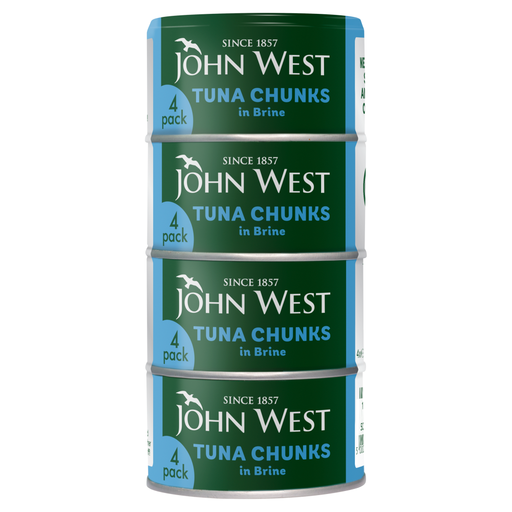 Image unavailable
John West Tuna Chunks in Brine, 4 x 125g
Consider this four-can brine format only if brine fits the planned recipe and the resident's requirements. Check its current nutrition label before comparing it with spring-water products, and inspect the fish during preparation because the product information warns that bones may remain.
View on Joybuy
Care home tuna questions
Does reduced sugar identify a more suitable tinned tuna?
Not on its own for the cited plain spring-water products. Princes, Sainsbury's, M&S, Tesco and John West list 0.0g to less than 0.5g sugars per 100g drained for those tins; check the resident's requirements, other label values and the ingredients in the finished dish.
Can ordinary tuna chunks be served on a texture-modified diet?
The word “chunks” cannot establish that the prepared dish meets a prescribed IDDSI level. Use the resident's specified level and test the food as served; IDDSI's Level 5 audit tool includes appearance, fork-pressure and spoon-tilt checks.
What must regulated care providers in England consider?
The Care Quality Commission's Regulation 14 requires regulated providers in England to assess people's nutritional needs and provide food that meets those needs. It does not make a particular tuna product suitable for every resident; providers elsewhere should check the requirements applicable in their nation.
How should a care kitchen handle tuna left after opening?
Follow the delivered tin's instructions for storing and using opened contents. Check those instructions when planning portions, as the cited Sainsbury's, Tesco, M&S and John West product information gives product-specific post-opening periods.


