Resident-engagement leads
You are choosing a supervised activity or interaction and need to distinguish responsive companion devices from conversational robots without assuming either will reduce loneliness.


Choose a robot by the task: a responsive companion may suit supervised engagement, a conversational robot needs a clearly defined interaction or communication role, and a physical-support device requires a separately assessed reablement pathway. Before introducing one, consider resident preferences, staff responsibilities, consent and data handling; a product feature or supplier claim does not establish a care outcome or suitability for a particular setting.
You are choosing a supervised activity or interaction and need to distinguish responsive companion devices from conversational robots without assuming either will reduce loneliness.
You need a robot for a defined physical task and must distinguish gait training from staff-facing assistance or resident transfers.
You need to assess consent, safeguarding, data use, staff involvement and supplier support before a pilot or wider rollout.
| Concern | What to check when buying | Who this matters to |
|---|---|---|
| Resident acceptance and interaction | Consider the intended activity, the device’s responses and the staff support it needs; check cleaning instructions if it will be shared. | If the priority is a supervised activity residents welcome, around 27% of consumers put resident acceptance and meaningful interaction first. |
| Fit to a physical task | Check the device’s stated intended purpose, supervision needs and fit with the person’s assessed care plan. | When a defined reablement or physical-care task is the priority, around 20% of consumers focus first on whether the device fits that assessed task. |
| Staff workflow and oversight | Map who sets up, monitors, responds to and reviews each function; consider worker-data implications if staff activity is monitored. | If prompts, calls or interactions need a clear place in staffed care delivery, around 20% of consumers prioritise workflow and oversight. |
| Consent and data governance | Identify affected people, data collected, recipients, access and retention; assess consent and whether a DPIA is needed for the proposed processing. | Where consent, safeguarding and lawful data use come first, around 20% of consumers prioritise governance before deployment. |
| Evaluation and ongoing support | Set a pilot objective and review point, then confirm training, cleaning, maintenance, service and exit arrangements for the actual offer. | If suitability and continuing support need to be tested before committing, around 13% of consumers put evaluation and support first. |
A study of specified Joy for All devices involved eight care homes in Cornwall; it does not establish outcomes for every robot, resident or setting. Supplier statements about wellbeing are not guaranteed results.
Set an individual, observable aim and review residents’ responses. When discussing outcomes, keep claims tied to evidence for the specific intervention and population.
A poorly matched activity can use staff time without meeting the resident’s objective.
Thor Assistive Technologies describes ExoAtlet II as a gait-training and rehabilitation device, not a universal physical-care aid.
Write down the intended physical task and compare it with the model’s stated purpose before procurement; involve the relevant professional team in assessing suitability.
Assessment, training and support may be needed for the intended task.
Care consent and personal-data processing are separate considerations. The relevant checks depend on the robot’s actual functions and how it will be used.
Review enabled functions, affected people and human oversight before introduction. Screen proposed personal-data processing for DPIA requirements.
The products considered range from a shared-use battery-powered companion pet to connected services and distributor-supported rehabilitation equipment.
Before comparing offers, ask for model-specific upkeep instructions and written terms for support, maintenance and exit arrangements.
Cleaning, maintenance and any ongoing platform service can affect the practical commitment; the details depend on the offer.
Companion Pet cats and dogs are animal-like devices to consider for interactive engagement.
A responsive robotic seal to consider where an animal-like device is preferred to speech or a screen.
Pepper is a semi-humanoid interaction platform to assess for a specific, staffed application.
A provider-facing companion described as offering reminders, activities, video calls and a care portal.
ExoAtlet II is listed by Thor Assistive Technologies for gait training and rehabilitation within an assessed physical-support pathway.
These Joybuy listings are for interactive companion and semi-humanoid robots. Their listed features do not establish suitability for adult social-care use; assess the intended task, operating conditions and oversight before considering deployment.
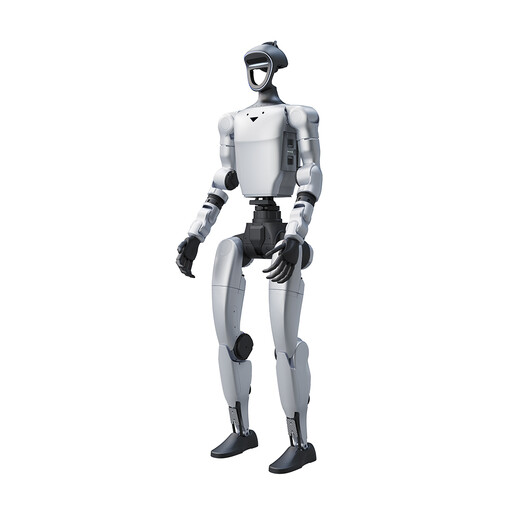 No image available
The listing describes interactive companionship and entertainment uses; it does not establish suitability for a care activity.
The product name states 29 total degrees of freedom. The listing recommends an open area of at least 6 m × 6 m for large movements and warns of moving-joint pinch hazards. Keep the surrounding area clear and supervise operation.
 No image available
The product name describes a companion robot dog with voice interaction; this does not establish suitability for resident engagement.
The name also lists follow and obstacle-avoidance functions. The listing recommends an open area of at least 6 m × 6 m and warns against touching the robot while it is moving.
 No image available
The product name describes intelligent interaction and motion-control features; it does not show that the robot is suitable for a care setting.
The listing describes autonomous navigation and obstacle avoidance and recommends an open area of at least 6 m × 6 m for large movements. It also warns of moving-joint pinch hazards. Its description lists an interactive RGB camera with facial-recognition capability, so assess any use involving identifiable information under applicable data-protection requirements.
 No image available
The product name describes intelligent interaction and motion control; these features do not establish suitability for a particular resident or care task.
The product warning says the robot may generate significant force and speed, requires adult supervision and needs sufficient clear space to reduce collision risk.
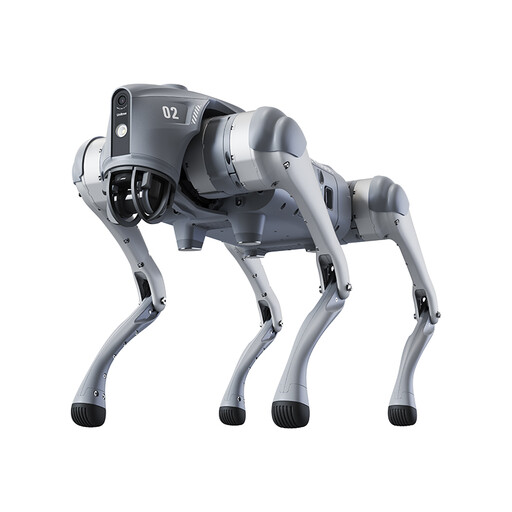 No image available
The product name describes an electronic pet and companion robot dog; the listed features do not demonstrate suitability for a care activity.
The product name lists a maximum speed of 4.7 m/s and battery life of 90 mins, alongside panoramic vision, SLAM navigation and AI modes. The description says it is not a toy and is unsuitable for people under 14; follow the listed operating instructions.
No. For care or treatment in services regulated by the Care Quality Commission in England, people must usually give consent; personal-data processing needs its own applicable assessment. Whether a particular robot processes personal data depends on its enabled functions and use.
No. The Information Commissioner’s Office says a DPIA is required where proposed personal-data processing is likely to result in high risk. Screen the actual functions, people affected and context before processing.
Assess worker monitoring separately for lawful and fair processing. Information Commissioner’s Office guidance says employers planning monitoring should seek and document workers’ or their representatives’ views unless there is a good reason not to; this does not mean every robot monitors staff.
Follow the exact model’s instructions and your setting’s procedures. For its Companion Pet cat, Ageless Innovation / Joy for All advises hand hygiene around shared use; those instructions do not apply to other robots.
Do not assume that they do. Medicines and Healthcare products Regulatory Agency guidance distinguishes Great Britain from Northern Ireland for medical-device rules. Check whether the particular product is a medical device, its intended purpose and the rules applying in the deployment jurisdiction.