
24/7 Customer Support

Free returns

Same-day & Next-day Delivery

Quality Guaranteed

Unlock Your Welcome Offers: FREE Delivery | Up to 80% OFF | Free 30-day JoyPlus trial
Download the APP
Whether you are fitting skirting boards, framing timber, installing cabinetry or tackling a weekend renovation, a dependable marking pencil can save time and reduce layout errors. However, not all carpenter pencils suit every surface or working condition.
The traditional flat shape is useful because it resists rolling on uneven floors and workbenches, but the lead grade, pack size and sharpening method can make a noticeable difference. This guide explains what to check before buying, followed by practical recommendations for different UK users.
A hard lead may create a fine line on timber, but it can be less visible on rough or dusty materials. A soft lead generally produces darker marks, although it may wear down more quickly. Medium-grade carpenter’s marking pencils offer a compromise for everyday layout work.
Buying a large pack of one grade is not always economical if your work involves wood, metal, concrete or plasterboard. An assorted pack can be more useful when marking requirements change from one job to the next.
Marketing descriptions often focus on strength without explaining the practical design. Check for a wood casing, a robust graphite-and-clay core where specified and a flat rectangular profile. The shape helps prevent pencils from rolling away and can provide a more secure grip when wearing work gloves.
You should also check whether the pencil is supplied pre-sharpened and whether it is compatible with a standard carpenter pencil sharpener. A difficult-to-sharpen pencil can slow down repeated marking during a busy installation.
A three-pack may be suitable for occasional DIY jobs, while professional carpenters or builders may prefer 10- or 12-packs to keep spare pencils in a tool bag, van and workshop. However, quantity alone does not indicate value. Compare the grade, material, sharpening compatibility and intended surfaces before choosing a pack.
There is no universal grade for every project. If you regularly move between fine cabinet work and rough construction marking, assorted pencils may reduce interruptions.
Flat carpenter pencils are less likely to roll from a sloping board or scaffold platform. Their broad sides can also be used for wider marks, while the edge can create a finer line after sharpening.
Use a suitable carpenter pencil sharpener or a knife designed for controlled sharpening. When using a blade, cut away from your body and keep fingers clear. Store sharpened pencils in a dry place to reduce the risk of warped wood and damaged points.
Look for product information that specifically mentions pencils for marking wood and metal if your work covers more than timber. For concrete, plasterboard and rough construction materials, a clearly visible soft or medium line may be more practical than a fine hard-grade mark.
For accurate layout, use the pencil alongside a square or straightedge. For example, a combination square with metric and imperial scales can help create repeatable 90-degree and 45-degree marks. The WORKPRO 12-inch combination square includes a bubble level and integrated scriber, while the 6-inch adjustable version is easier to carry for smaller jobs.
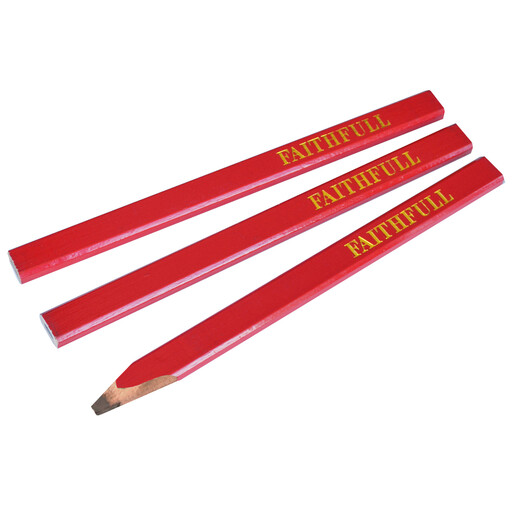
Why This Fits Their Persona: A compact three-pack suits students, occasional DIY users and homeowners who need dependable marking pencils without storing a large quantity.
The medium grade avoids committing to an overly hard or soft lead for general marking, while the flat shape helps prevent rolling.
Medium-grade lead; flat rectangular wood design; suitable for wood, metal and construction materials.
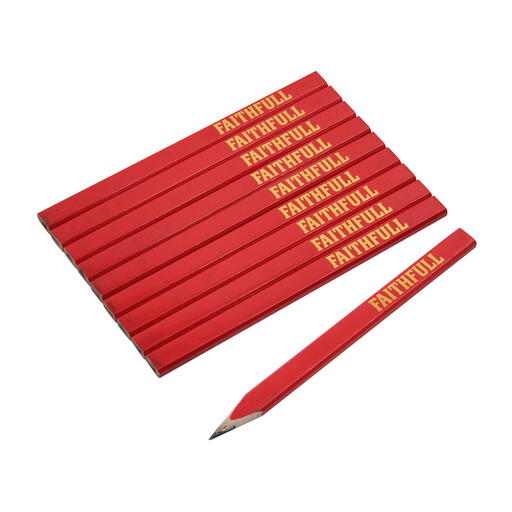
Why This Fits Their Persona: Suitable for buyers who want a medium-grade everyday pencil and who specifically look for FSC-certified wood in their purchasing decisions.
The product specification identifies FSC-certified wood, rather than leaving material sourcing unclear, and states the lead grade directly.
FSC-certified wood; 10-pencil pack; medium lead; flat profile compatible with a standard carpenter’s pencil sharpener.
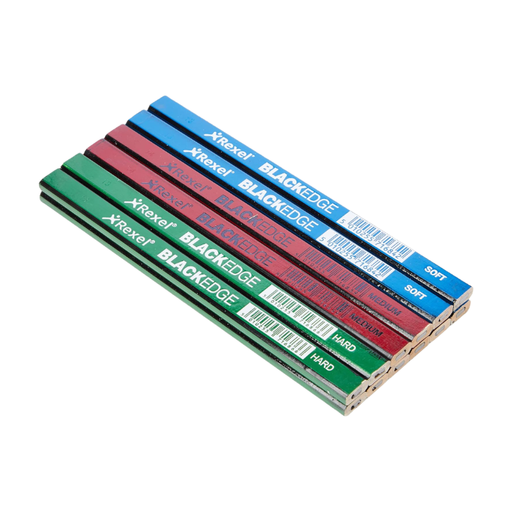
Why This Fits Their Persona: A 12-pack with three grades is practical for tradespeople, workshops and active renovation projects involving multiple materials and marking styles.
The assorted grades reduce the need to use one unsuitable pencil for every surface, while the larger quantity provides spares for a tool bag or workshop.
Hard, medium and soft grades; 12-pencil quantity; suitable for wood, metal and concrete marking.
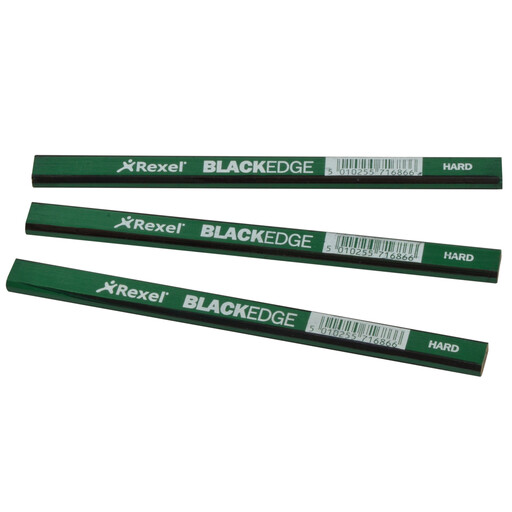
Why This Fits Their Persona: Designed for users who regularly need fine, controlled marks for joinery, engineering layouts or detailed woodworking.
The stated hard grade addresses the need for a finer mark, while the 12-pack helps reduce interruptions when pencils are worn or misplaced.
Hard-grade lead; flat rectangular shape; high-quality wood casing; compatible with a standard carpenter’s pencil sharpener.
We have compiled a complete, real-time list of products that fully satisfy these strict selection criteria and UK safety regulations.
Keep pencils away from prolonged moisture and avoid leaving them loose in a tool bag with heavy metal equipment. Sharpen gradually rather than applying excessive force, which can split the casing or break the core. For repeated site work, keep one pencil in a pocket or pouch and store spare pencils in a dry compartment.
Pair your pencil with a suitable straightedge, combination square or marking gauge. The WORKPRO carpentry squares set includes an 8-inch try square and a 9-inch adjustable sliding bevel, with metric and imperial scales for woodworking and layout tasks.
Many woodworking pencils are specified for marking wood, metal and other construction materials, but visibility depends on the lead grade and surface finish. Medium and soft grades generally create more noticeable marks, while hard grades are useful when a narrower line is needed.
Lifespan depends on how often the pencil is sharpened, the roughness of the surface and the pressure applied. A pencil used on smooth timber may last considerably longer than one used on concrete or abrasive boards. Buying a multi-pack helps ensure a replacement is available when the working point becomes too short.
A carpenter pencil sharpener is preferable because the flat rectangular casing requires a wider, shaped opening than a standard round writing pencil. Some products can also be sharpened with a suitable knife. Always sharpen away from your body and store the pencil safely after use.