
24/7 Customer Support

Free returns

Same-day & Next-day Delivery

Quality Guaranteed

Unlock Your Welcome Offers: FREE Delivery | Up to 80% OFF | Free 30-day JoyPlus trial
Download the APP
Driving a car from the last decade can feel like being stuck in a technological time warp. While newer models boast large, integrated touchscreens with seamless smartphone connectivity, you might be left fumbling with a phone mount for navigation and missing the peace of mind a dash cam provides. The good news is that you don't need to buy a new car to get these modern features.
A CarPlay screen with dash cam is a brilliant all-in-one solution that brings your vehicle into the present day. These devices offer a plug and play car stereo screen experience, giving you access to navigation, music and hands-free calls, all while recording your journey for safety. This guide will walk you through what to consider when choosing a device and highlight a few of our top recommendations to help you make a confident choice.
Choosing the right device can feel overwhelming with all the technical specifications. Here are a few key points to focus on to find the perfect fit for your needs.
The main appeal is the large, user-friendly display. Look for a screen size that is comfortable to view without obstructing your vision, typically around 10 inches. Crucially, check for wireless Android Auto screen and Apple CarPlay support. Wireless connectivity means your phone will connect automatically once you start the car, providing a seamless experience for maps, music and messaging. A simple plug and play setup, usually powered by your car's 12V cigarette lighter socket, means you can be up and running in minutes without any permanent modifications.
The dash cam is a vital safety feature. A 4K dash cam with CarPlay offers superior video clarity, making it much easier to read number plates and see fine details, which can be invaluable in the event of an incident. Also, consider the number of channels. A single-channel camera records the road ahead, while a dual-channel system adds a car screen with backup camera for easier parking and recording what's happening behind you. Some models even offer a third interior camera, ideal for ride-share drivers or families.
How will you hear your navigation prompts and music? These portable screens have built-in speakers, but for better audio quality, you'll want to route the sound through your car's stereo system. Look for devices that offer multiple audio output options, such as an AUX cable, an FM transmitter or a direct Bluetooth connection to your car's head unit. This flexibility ensures you can achieve the clearest sound possible in your specific vehicle.
Here are a few standout options that cater to different needs, from all-in-one convenience to specialised recording performance.
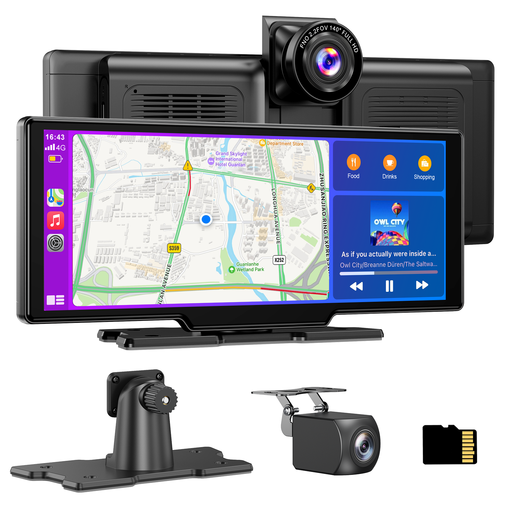
Why It Stands Out: This ESSGOO model is the quintessential all-in-one solution for a complete car infotainment upgrade. It combines a large 10.26-inch HD touchscreen with wireless CarPlay and Android Auto, a built-in 4K front dash cam and a 1080p rear backup camera. It even includes a 64GB memory card, so it's ready to use straight out of the box.
Pros:
Who is it for? This is the ideal choice for drivers who want to add CarPlay to their car along with robust safety features in one easy-to-install package. It's perfect for daily commuters and families looking for a complete and cost-effective modernisation of their vehicle's cabin.
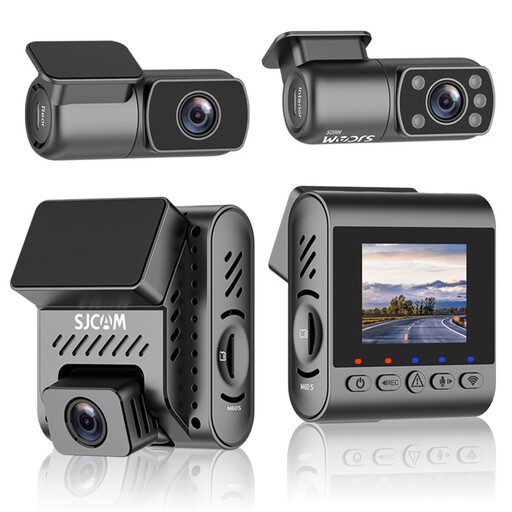
Why It Stands Out: If your priority is maximum video surveillance over an infotainment screen, the SJCAM M60S is a formidable option. This is a dedicated dash cam system, not a CarPlay display. Its strength lies in its tri-channel recording, capturing footage from the front, rear and inside the car simultaneously. The front camera records in sharp 4K, powered by a quality IMX335 sensor.
Pros:
Who is it for? This system is perfectly suited for ride-share drivers, professional drivers or anyone who requires complete video documentation of their vehicle's surroundings and interior. It's for the user who prioritises security and evidence collection above all else.
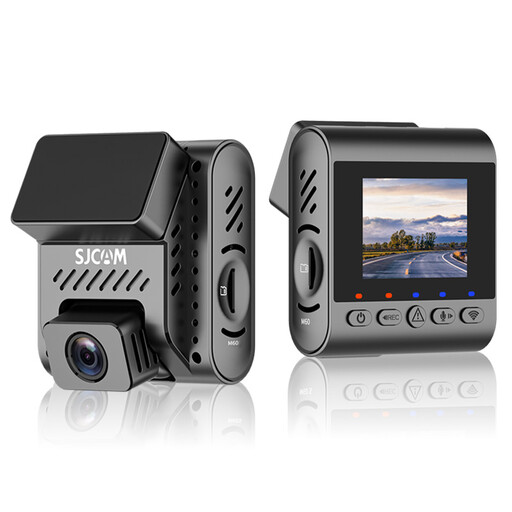
Why It Stands Out: For the driver who demands uncompromising video quality from a front-facing camera, the SJCAM M60 is a top contender. This is another dedicated dash cam, but its standout feature is the cutting-edge Sony Starvis 2 IMX678 sensor. This sensor delivers exceptional performance, especially in low-light conditions, producing incredibly clear and detailed 4K footage.
Pros:
Who is it for? This is for the discerning user who wants the best possible video evidence from a forward-facing camera. If your primary goal is to have the clearest recording of the road ahead and you don't need rear or interior views, this model offers professional-grade performance in a compact package.
These recommendations represent some of the most popular solutions for upgrading your drive. However, the world of in-car tech is vast. If you're exploring other ways to enhance your vehicle, from different camera systems to advanced phone mounts and chargers, browse our full range of driving accessories for more great finds.
1. Can I add CarPlay to any car? Yes, with a portable CarPlay display, you can easily add this functionality to almost any vehicle that has a 12V cigarette lighter socket. It is a non-permanent solution that sits on your dashboard or windscreen and doesn't require you to replace your car's original stereo.
2. Is a 4K dash cam with CarPlay worth it? A 4K resolution captures four times as many pixels as standard 1080p HD. This significant increase in detail can be crucial for identifying number plates, street signs or other small details in your footage, especially from a distance. If having clear and undeniable video evidence is a priority for you, the upgrade to 4K is a worthwhile investment.
3. How does the audio work on a portable car screen? These devices typically offer four methods for audio output. You can use the small built-in speaker for basic sound, but for a much better experience, you can transmit the audio to your car's speakers. This is usually done via a physical AUX cable, an FM transmitter (where you tune your car radio to a specific frequency) or a direct Bluetooth connection if your car stereo supports it.