For occasional carrot juice in a holiday cottage, start by considering a compact centrifugal juicer whose instructions permit carrots and whose parts you can clean easily. A cold-press model is worth considering if you will juice regularly and have room for its assembly and cleaning routine; for several servings at once, pulp capacity may matter more than a small footprint. Whichever route you choose, check the appliance’s electrical compatibility and the accommodation’s rules before use.
Who is each approach for?
Occasional cottage juice makers
If you want one or two glasses, packing space and the washing-up afterwards may matter more than batch capacity. Check the appliance’s dimensions and how its sieve and other removable parts are cleaned, rather than relying on a compact label alone.
Frequent carrot-juice drinkers
If you expect to make carrot juice repeatedly during the stay or afterwards, compare how individual models handle hard produce, foam, stoppages and cleaning. Which? assesses these as separate aspects of juicer performance; a juicer type alone does not settle the choice.
Family or group batch juicers
For several servings, check the pulp container and feed chute alongside the space the appliance needs. Braun specifies a large pulp container for its SJ7000GY, but capacity that helps with batches may be less useful when you need to pack and store the juicer in a small kitchen.
What matters when choosing?
Compact centrifugal juicer
Consider it when: The stay is short and packing or worktop space is a priority.
Allow for: Compact size does not establish carrot yield or make every sieve easy to wash; check the exact model’s instructions and cleaning steps.
Cold-press juicer
Consider it when: You plan to juice frequently and prefer an auger-based approach.
Allow for: Check the model’s storage dimensions, removable parts and carrot instructions. Ninja’s lower-foam and anti-clog statements for its JC151UK are manufacturer claims, not guarantees for cold-press juicers generally.
Larger centrifugal juicer
Consider it when: Several people want juice and pauses to empty pulp would be inconvenient.
Allow for: A larger appliance takes more packing and storage space; even a wide chute does not remove the need to wash carrots.
For carrot juice during a cottage stay, decide which of these needs comes first, then check the exact model against your kitchen space and its hard-produce instructions.
| Concern |
What to check |
Who this matters to |
| Packing and cleaning |
Check dimensions, removable parts and the manual’s sieve-cleaning and dishwasher instructions. |
I only want a glass or two, and I need the juicer to fit away and be washed before we leave. Around 42% of consumers put temporary-kitchen convenience first. |
| Handling carrots |
Check carrot preparation and permitted produce in the manual; compare model-specific evidence on extraction and stoppages where available. |
If I make carrot juice often, I care most about how the machine handles hard produce without repeated interruptions. For around 33% of consumers, carrot handling is the primary concern. |
| Group servings |
Check pulp and juice-container capacities, chute size and the space needed to store the appliance. |
Several of us want juice at breakfast, so I would rather avoid stopping to empty the pulp container between servings. Group capacity comes first for around 25% of consumers. |
Buying pitfalls to avoid
-
Using wattage as a shortcut for carrot-juice results
A motor rating does not tell you how much juice a model extracts or how often it needs clearing. Which? assesses extraction, foam, noise and ease of cleaning separately.
Use wattage as a specification, then check the exact model’s hard-produce instructions and any independent test results relevant to carrots.
-
Assuming a wide chute removes all preparation
A wider opening may accommodate larger pieces, but carrots still need washing. Health Well, Education Authority Northern Ireland advises washing vegetables under a running tap and rubbing them under water.
Remove visible soil and cut carrots as the juicer’s instructions require; do not force produce into the chute.
-
Choosing batch capacity for one or two glasses
A large chute and pulp container may reduce interruptions for a group, while a larger appliance can be less convenient to pack and store during a short stay.
Match capacity to the number of servings you expect to make, and check the appliance’s dimensions before taking it to the cottage.
-
Treating a cold-press claim as a model comparison
Ninja claims less foam and minimal clogging for its JC151UK compared with traditional centrifugal technology. That manufacturer comparison does not establish how every cold-press and centrifugal model will perform with carrots.
Compare the specific models you are considering, including their carrot instructions, cleaning steps and independent results where available.
Brands to consider for these juicer types
Philips
Relevant to a choice between a compact centrifugal model and a larger one.
- Philips describes its HR1836/00 as a half-size compact design and claims cleaning within one minute. Its HR1857/81 is specified with a 700 W motor, 2 L capacity, XL tube and pre-clean function.
- Those model-specific descriptions do not establish carrot-juice yield or cleaning time for other Philips juicers.
Ninja
Relevant if an auger-based cold-press model suits your intended routine.
- Ninja describes the JC151UK as having a high-torque motor, auger design and anti-clog filter.
- Its comparison claiming less foam and minimal clogging than traditional centrifugal technology is a manufacturer claim. Check the exact model’s cleaning and hard-vegetable instructions.
Braun
Relevant when a larger centrifugal model’s chute and pulp capacity could help with group servings.
- Braun specifies a 75 mm chute and 2 L pulp container for its SJ7000GY, with up to 2.5 L of juicing before the pulp container needs emptying.
- Those capacities do not establish carrot yield and must not be assumed to apply to a different Braun model.
Kenwood
Relevant to buyers considering a conventional centrifugal model with more than one speed.
- Kenwood describes its JE720 with a 700 W motor, an XXL metal feed tube, an anti-drip feature and two speeds.
- These are JE720 details, not specifications for the whole Kenwood range; follow the selected model’s produce instructions.
Joybuy product choices
These models offer compact centrifugal, masticating and group-serving centrifugal options to consider for cottage carrot juicing. Check carrot instructions, available space and electrical compatibility for the particular appliance before use.
 Image unavailable
Nutribullet Juicer, 800 W, 1.5 L pulp basin, 3-inch chute
Consider this centrifugal option for occasional carrot juice if its size suits the cottage worktop.
- The product name specifies an 800 W rating, 1.5 L pulp basin, 3-inch chute and dishwasher-safe design; check which individual parts the manual permits in a dishwasher.
- Confirm the selected unit’s voltage rating and UK plug compatibility before connecting it to the cottage mains supply.
Joybuy
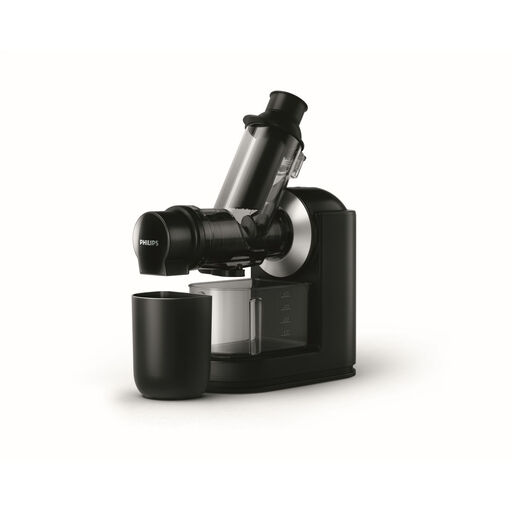 Image unavailable
Philips Viva Collection Masticating Juicer HR1889/71
Consider this masticating model if you expect to juice regularly and can accommodate its preparation and cleaning routine.
- Check the HR1889/71 manual for carrot suitability, preparation and cleaning instructions before choosing it for the stay.
- Measure the available worktop and storage space for this exact model.
Joybuy
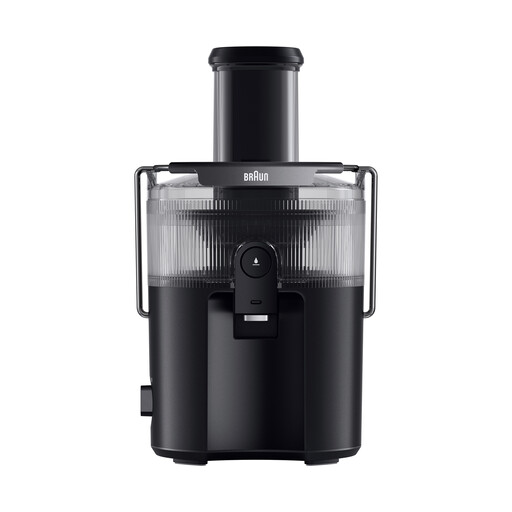 Image unavailable
Braun MultiJuice Juicer SJ5000, Black
If you plan to make several servings, consider whether this centrifugal model’s pulp-emptying routine and size suit the cottage.
- Check the SJ5000 manual for carrot preparation and cleaning instructions; specifications for the different SJ7000GY model do not apply to it.
- Confirm the selected unit’s electrical rating and UK plug compatibility before use.
Joybuy
Frequently asked questions
Does a juicer need a particular setting for carrots?
Follow the exact model’s instructions for hard produce and preparation. Braun says higher speeds are generally used for harder produce on its multi-speed juicers, but that guidance does not establish the correct setting for a different model.
How should I prepare carrots in a holiday cottage?
Wash carrots under a running tap and rub away visible soil before juicing. Health Well, Education Authority Northern Ireland gives this washing advice for vegetables; cut the carrots further if the juicer’s instructions require it.
What should I check before using a juicer at a holiday cottage?
Check that the appliance is suitable for the available mains supply, follow its instructions and observe the accommodation’s electrical-use rules. For a juicer supplied by small paying guest accommodation in England and Wales, Home Office fire-safety guidance calls for regular appliance checks in accordance with manufacturers’ instructions; arrangements for a particular property should be confirmed with its operator.


